
comparison
Two-Piece or Three-Piece Golf Balls? Choose by the Shot You Need
A practical framework for choosing between two-piece and three-piece golf balls without assuming the layer count alone predicts performance.
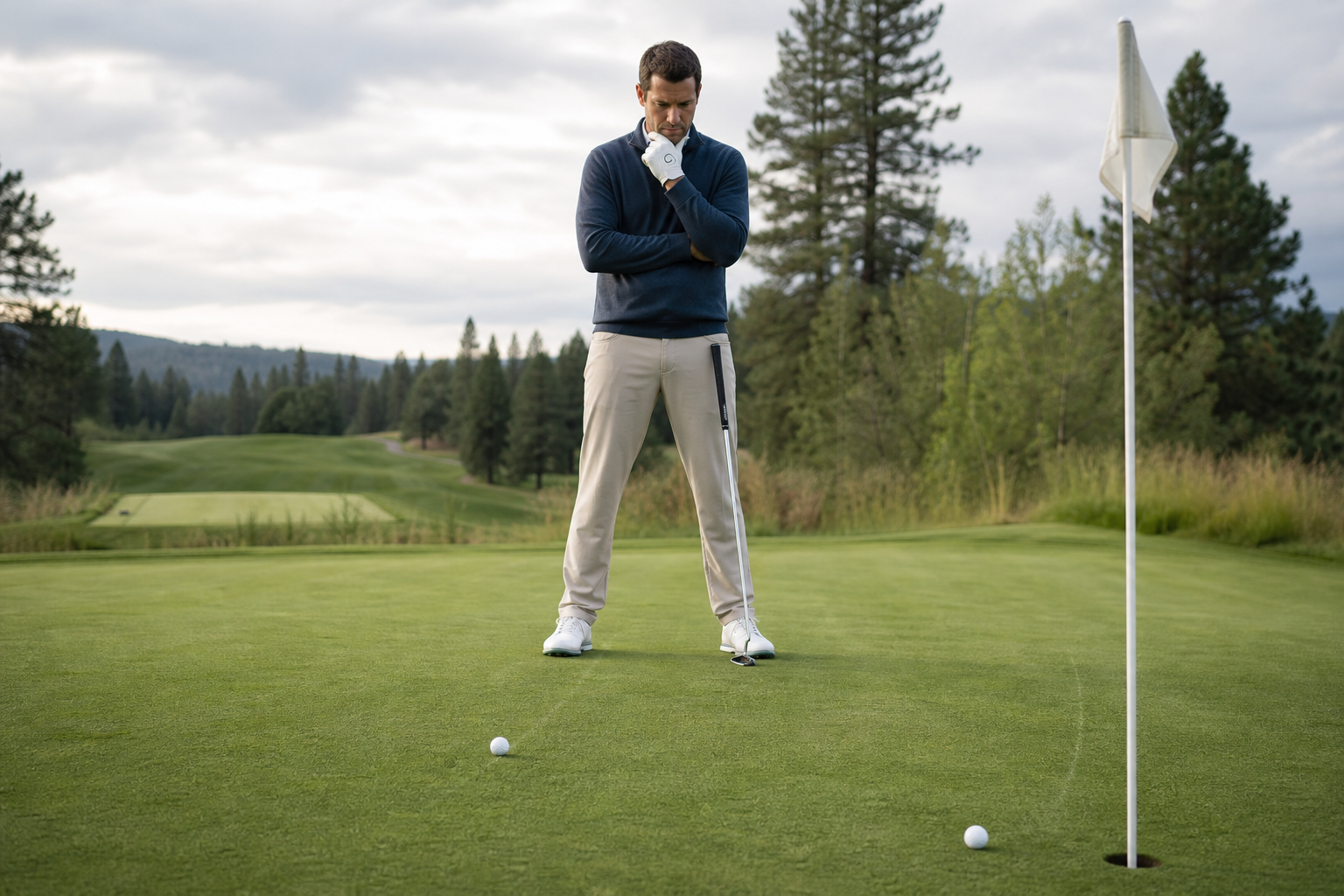
Built for: Golfers comparing golf-ball construction while balancing feel, durability, flight, and short-game control.
When a ball feels lively off the tee but leaves you uncertain around the green, it is tempting to blame its construction. Start with the shots that cost you strokes, then compare candidate balls by the flight, cover condition, and greenside response you can actually observe.
The quick verdict
Choose a ball by the on-course result you need most, not by the number printed in its construction description. A two-piece versus three-piece label is a useful shopping filter, but it does not by itself guarantee feel, durability, flight, or short-game control.
Best for Golfers willing to narrow their choice through a simple side-by-side test: use the construction category to build a short list, then keep the ball that produces the most useful and repeatable results on their own course.
Skip it if Skip a construction-first decision if you expect layer count alone to identify the best ball. Prioritize a conforming model and compare it in the scoring situations that matter to you instead.
The decision starts when one shot asks more of the ball than another
A golfer can be satisfied with tee shots for most of a round, then face a delicate chip over a bunker and wish for a different response. Another golfer may care less about a finesse shot than about putting a ball in play repeatedly through a long afternoon. Those are legitimate but different priorities. The useful question is not “Which construction is better?” It is “Which ball gives me the more dependable outcome on the shots that shape my score?”
Guild recommendation: Name one primary priority before shopping: predictable tee-shot flight, acceptable visible cover condition, preferred impact sensation, or more confidence on scoring shots near the green.
What the two-piece and three-piece labels can—and cannot—tell you
Construction labels can help organize a crowded shopping list, because they distinguish one ball category from another. They cannot settle the choice on their own. A three-piece label does not prove that a particular golfer will prefer a ball’s flight, durability, feel, or greenside behavior; neither does a two-piece label prove the opposite. Those outcomes must be judged from the individual model and from the golfer’s own shots.
Guild recommendation: Use construction count as a filter, not a promise. Compare two specific models under the same conditions and let the finish pattern of the shots make the decision.
Match the comparison to your actual constraint
If you lose confidence when a ball looks marked after normal play, visible cover condition belongs in the test. If a ball repeatedly finishes in an unhelpful place after chips, test that first instead of spending the whole session on full swings. A player who rarely attempts high, soft shots may value a simple running-chip comparison more than a dramatic specialty shot. Conversely, a golfer who frequently needs to carry trouble near the green should include that situation in the evaluation.
Guild recommendation: Build your test around the one recurring situation you would most like to make less uncertain, and record simple outcomes rather than chasing a perfect strike.
Keep the test honest enough to be useful
Golfers often change ball models after a poor swing and credit or blame the ball for a result that has many possible causes. Alternating the two candidates reduces that trap. Use one club, one target, and a modest number of shots. The goal is not to diagnose your swing or establish universal ball performance. It is to see whether one candidate gives you a more repeatable window and finish in your own hands.
Guild recommendation: Do not switch among a bag full of options. Compare two candidates, alternate them, and repeat the same test on another day if the first result is unclear.
Conformance still matters when the round matters
For play conducted under the Rules of Golf, the ball must meet applicable equipment requirements. The USGA Conforming Ball List identifies balls that have been submitted and evaluated for conformance. Before relying on a model for a competition or another round where conformance is important, check the current list and the event’s conditions.
Guild recommendation: Treat a current Conforming Ball List check as part of selecting a tournament ball, especially when switching models or buying an unfamiliar version.
Try this · 25 minutes
The Nine-Shot Ball Comparison
Bring two candidate conforming golf-ball models, three tees, and a practice green or short-game area with a clear landing spot. Use the same club for each set of shots and alternate balls so changing conditions do not favor one model.
- Hit three tee shots with Ball A and three with Ball B, alternating one ball at a time. Record only your starting line, general flight window, and where each finishes relative to your normal target area.
- From one consistent spot near the green, hit three running chips with each ball, again alternating. Note whether each ball finishes short, near, or beyond a chosen finish circle.
- From the same spot, hit three higher-trajectory shots with each ball if the facility and your game allow it. Observe the first bounce and the finish position without trying to create a particular spin result.
- Inspect both balls after the session for visible cover marks, then choose the model that gave you the more useful pattern on the shots you face most often.
What progress looks like: One ball produces a clearly more predictable finish pattern in your priority shot category, while its visible condition remains acceptable to you after the same session.
Put the guide to work
These searches are a starting point—not a substitute for the fit and comparison criteria above.
Compare construction categories first
Use this search only to assemble a short list. Confirm the stated construction in the listing, then compare the models on the same shots rather than treating the category as a performance verdict.
Find models for greenside comparison
This is useful if your decision is centered on short-game feel and control. Select a small number of candidates and use the same landing area for each during practice.
Find models for repeatable tee-shot comparison
This is useful if you want a focused set of candidates for tee-shot flight and visible cover-condition comparison. Keep the test to one or two models at a time.
If you buy through these links, Guild of Golf may earn a commission at no extra cost to you.
The practical takeaway
- A two-piece or three-piece description is a starting point for comparison, not a stand-alone prediction of performance.
- Choose a ball around the shot outcome that matters most to your scoring and confidence.
- Alternate two candidate models in the same practice session to make the comparison more useful.
- Evaluate visible cover condition alongside the tee-shot and greenside results you care about.
- Use a model that meets applicable equipment requirements when playing under the Rules of Golf, and consult the current Conforming Ball List when needed.
Frequently asked questions
Is a three-piece golf ball automatically better for short-game control?
No. Construction count alone does not establish how a particular model will perform for you around the green. Compare specific balls with the same club, landing area, and target finish area.
Should I choose a two-piece ball if durability is my priority?
Do not make that choice from construction count alone. Inspect candidate balls after equivalent practice shots and decide whether their visible condition is acceptable for your normal use.
How many balls should I compare at once?
Two is enough for a useful first comparison. Alternating between two candidates makes it easier to keep the club, target, and conditions consistent.
How can I check whether a ball is conforming?
Consult the USGA Conforming Ball List for balls submitted and evaluated for conformance, and review the requirements that apply to the round or competition you are playing.
Sources used for this draft
- USGA Equipment Rules — The statement that balls used under the Rules must meet applicable equipment requirements.
- USGA Conforming Ball List — The guidance to consult the list for balls submitted and evaluated for conformance.
Guild of Golf may earn a commission from qualifying purchases made through affiliated shopping links. This does not change the editorial recommendation to compare specific balls by the outcomes you can observe.