
comparison
Forged vs. Hollow-Body Irons: Let the Fit Decide, Not the Label
A practical framework for comparing forged and hollow-body irons without mistaking a construction label for an on-course answer.
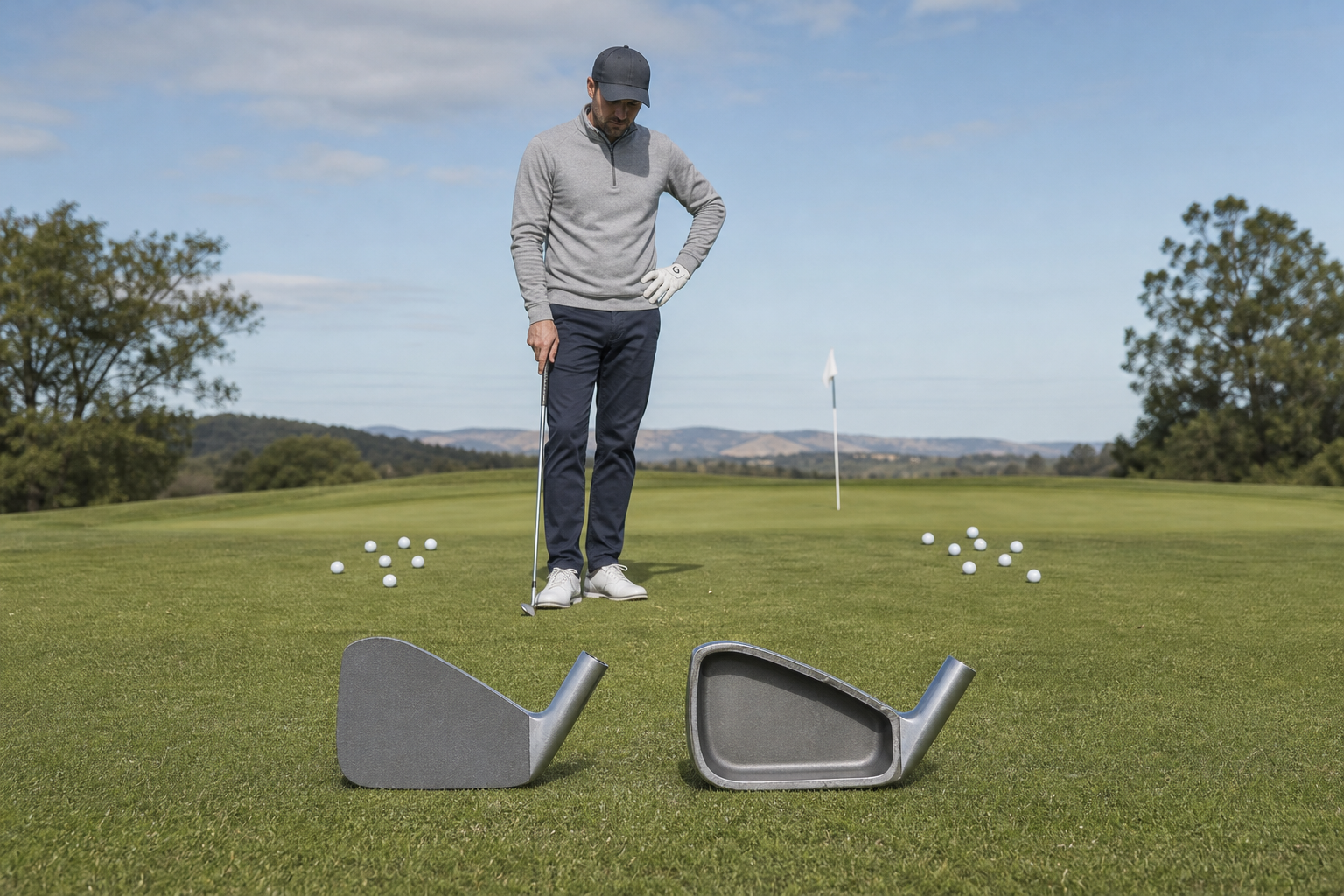
Built for: Golfers comparing iron constructions who want to separate manufacturing terms from on-course fit and performance.
When one iron looks inviting at address and another promises a different kind of feel, the easy move is to choose a side. A better move is to treat forged and hollow-body as starting points for a fitting conversation, then compare the ball flights and strike patterns you can actually reproduce.
The quick verdict
Neither label identifies the right iron by itself. Compare candidate clubs through a fitting process and measured results, while making sure the final club conforms to the applicable equipment rules.
Best for Golfers who can bring a short list of irons to a fitter and judge each option by repeatable shots rather than by a construction label alone.
Skip it if Skip a label-first purchase if you have not compared candidates with measured results or if you are assuming one construction guarantees a particular feel or outcome.
The on-course trap: choosing a story instead of a club
A golfer can stand on a par 3 with water short, remember that one iron felt satisfying on the range, and still have no useful reason to trust it for the shot at hand. “Forged” and “hollow-body” are construction labels encountered in the iron market, but a label does not replace a comparison of your own delivered shots. The PGA of America advises that fit and measured results matter when comparing club options. That is the productive tension here: respect the construction conversation, but make the final choice through evidence you can see.
Guild recommendation: Write down what you need the iron to do in your normal rounds, then ask for a comparison that produces measured results against that need.
Separate construction language from fitting evidence
Construction terms can help organize the clubs you want to try, but they should not be used as a shortcut to a promised outcome. A player who expects a certain feel from one category may overlook a better-fitting alternative; another may reject a club because its label does not match an identity they have built around their game. Treat the labels as a way to create two comparison groups, not as a verdict before the first shot.
Guild recommendation: When comparing options, keep as many decision variables as practical under discussion with the fitter and focus on the results you can repeat.
Make the comparison resemble a real iron decision
If your deciding shot is a 150-yard approach to a narrow green, an unfocused session of scattered range balls will not answer much. Pick a target, use the same routine, and alternate candidates. Notice the ball pattern first: where shots start, where they finish, and whether one option repeatedly creates a result you can plan around. Then add your response at impact. Feel matters because confidence matters, but it is most useful when it is considered beside the recorded pattern rather than ahead of it.
Guild recommendation: Use the alternating comparison plan before narrowing the list, and bring the notes to a qualified fitting appointment.
A fitting conversation should include rules, not just preference
The USGA Equipment Rules set conforming club requirements regardless of a club’s marketing category or construction method. That means a forged-versus-hollow-body decision does not remove the need to consider conformity where it matters to your play. It also keeps the comparison grounded: construction language is not an exemption from the same equipment framework that applies to other clubs.
Guild recommendation: If you play in events where conformity is relevant, confirm that the club you intend to use meets the applicable requirements before putting it in the bag.
Who should lean into this comparison—and who should pause
This comparison is especially useful for golfers who have narrowed their search to a few credible candidates and are willing to let the result challenge a preconception. It is less useful for someone trying to solve a broad ball-striking concern with an iron label alone. If your recorded shots vary so much that neither candidate forms a recognizable group, the honest next step is more fitting information, not a forced construction verdict.
Guild recommendation: Choose the club that supports the more repeatable, usable pattern in your fitting evidence, provided it also meets your comfort and conformity requirements.
Try this · 25 minutes.
The Alternating-Iron Comparison
Use two candidate irons of the same stated number if available, a consistent hitting area, and one clearly defined target. Have a notebook or phone note ready to record each shot without changing your normal swing between clubs.
- Hit three easy warm-up shots with whichever club you choose first, without recording a result.
- Alternate one shot with each candidate until you have hit six recorded shots per club, aiming at the same target each time.
- For every shot, record whether the ball started left, near, or right of the target line and whether it finished short, near, or beyond your intended landing area.
- Circle the shots that felt like your ordinary strike rather than an unusually good or poor one.
- Review the two groups before discussing them with a fitter, including which club produced the pattern you would be more comfortable taking onto the course.
What progress looks like: You finish with two documented groups of six shots and can describe a repeatable pattern, or honestly conclude that the sample was too mixed to separate the options.
Put the guide to work
These searches are a starting point—not a substitute for the fit and comparison criteria above.
Compare a forged option after establishing your fitting criteria.
Use this search only after deciding which club number, shaft options, and fitting measurements you need to compare.
Compare a hollow-body option under the same conditions.
Keep the candidate list narrow so that construction is not confused with changes in loft, shaft, set makeup, or other variables.
If you buy through these links, Guild of Golf may earn a commission at no extra cost to you.
The practical takeaway
- Forged and hollow-body labels can organize a search, but they do not settle fit on their own.
- Measured results are central to a meaningful club comparison.
- An alternating, target-based comparison makes it easier to see a pattern without trying to diagnose a swing.
- Conforming club requirements apply regardless of marketing category or construction method.
- If the evidence is mixed, delay the purchase decision and gather better fitting information.
Frequently asked questions
Does forged automatically mean an iron will fit me better?
No. The supplied fitting guidance emphasizes fit and measured results when comparing club options, so a construction label alone is not enough to establish suitability.
Does hollow-body construction determine whether an iron conforms to the rules?
No. The USGA states that conforming club requirements apply regardless of marketing category or construction method.
What should I bring to an iron fitting comparison?
Bring a clear on-course goal, such as a dependable approach pattern to a particular target distance, and keep notes on the results from each candidate. Ask the fitter to use measured results in the comparison.
What if I prefer the feel of one candidate but my results are unclear?
Do not force a conclusion from a small or inconsistent sample. Record additional comparable shots and discuss the measured results with a fitter before choosing.
Sources used for this draft
- USGA Equipment Rules — Conforming club requirements apply regardless of marketing category or construction method.
- PGA of America: Club Fitting — Fit and measured results matter when comparing club options.
Guild of Golf may earn a commission from qualifying purchases made through shopping links, at no additional cost to the reader.