
evergreen guide
Draw-Bias Drivers: Who They Suit and When to Look Elsewhere
A practical guide for right-handed golfers with a recurring right miss who need to distinguish a useful draw-bias fitting from a face, path, strike, or setup issue.
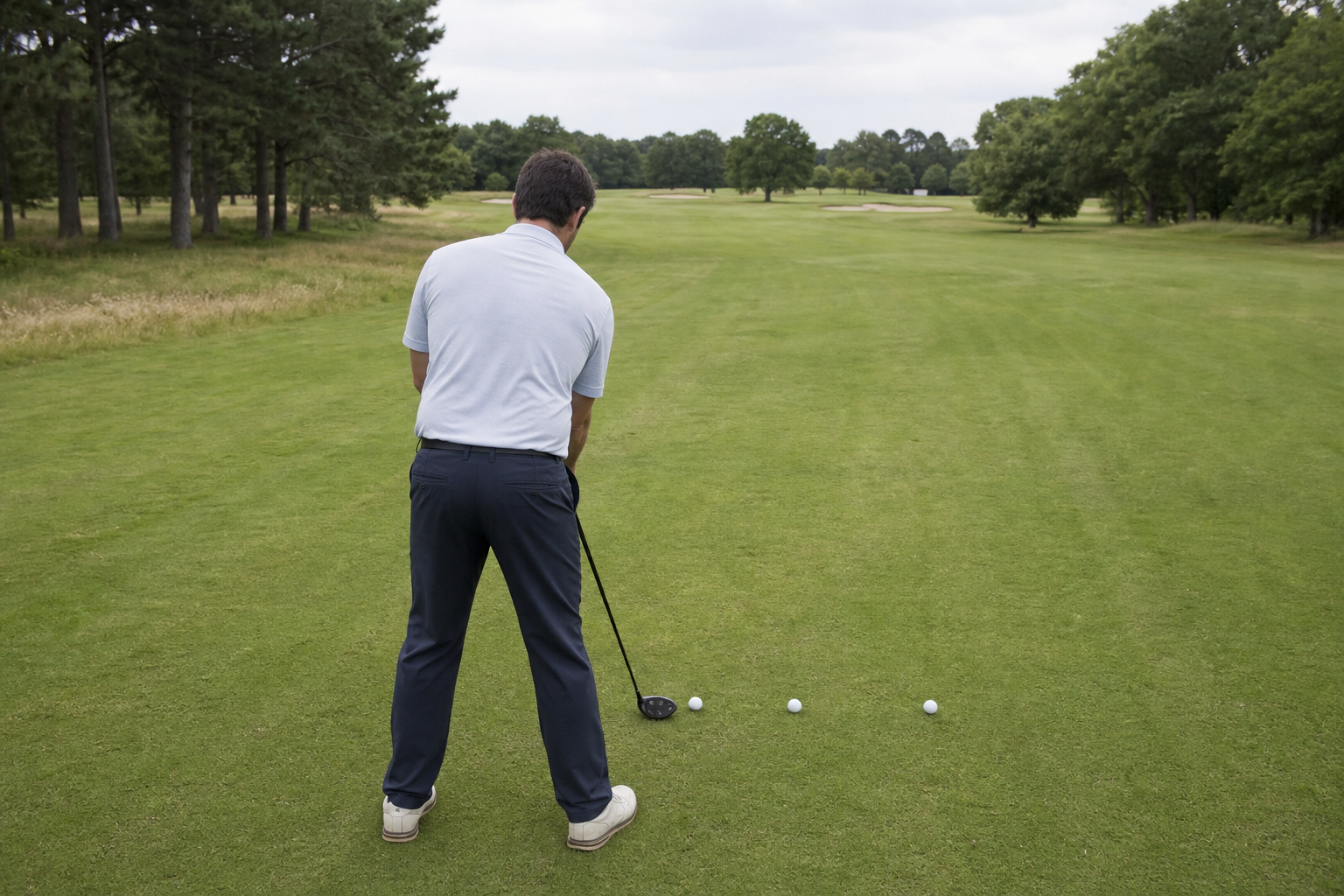
Built for: Right-handed golfers considering draw bias for a recurring right miss who need to separate face, path, strike, and setup effects.
The tee shot that starts right, stays right, and leaves a long second shot creates an understandable urge to buy help. A draw-bias driver may belong in the answer, but only after you identify the repeatable ball-flight pattern rather than treating every right miss as the same problem.
The quick verdict
A draw-bias driver is most sensible for the right-handed golfer whose measured, recurring tee-shot pattern is right of target and whose fitting session supports that choice. It is not a reliable shortcut for every ball that finishes right.
Best for Golfers who can describe a consistent right-side miss, bring that pattern to a fitting, and want equipment evaluated against their actual ball flight.
Skip it if Golfers whose right miss changes from shot to shot, whose contact location varies widely, or who have not first checked alignment and ball position.
A right miss is a destination, not a diagnosis
“It goes right” can describe several very different tee shots. One golfer watches the ball begin right and continue roughly straight. Another sees it begin near the target and curve right late. A third alternates between both flights because the strike location changes. A fourth is simply aimed farther right than intended. These are not interchangeable observations, so they should not lead automatically to the same club choice.
Guild recommendation: Describe the start direction, final direction, and strike sensation for several shots before assigning the miss a label.
The golfer a draw-bias conversation can fit
The strongest case begins with repetition. Imagine a right-handed player who hits a series of drives that consistently occupy the right side of the hole despite a stable target reference and broadly similar contact. That golfer has a defined pattern worth taking to a fitter. The PGA of America advises that club fitting account for the individual golfer and measured ball flight, which is the useful standard here: evaluate the club against what the ball actually does, not against the name printed on a category.
Guild recommendation: Ask a fitter to use your measured ball flight as the basis for comparison, and judge each option by whether it improves your repeated pattern rather than one especially good swing.
Four checks before blaming the driver
Start with setup. If your alignment or ball position changes, the shot pattern may change with it. Next, separate face observation from path observation by noting where the ball starts and how it travels afterward. Then note strike location, because a centered strike and a heel- or toe-side strike are different events even when both finish right. Finally, separate a repeatable miss from an occasional recovery swing. This process does not diagnose a swing; it prevents an equipment category from being asked to explain an unclear pattern.
Guild recommendation: Do not make a buying decision from one range session, one hole with trouble right, or one memorable slice.
What to compare in a fitting
Bring your usual driver, your normal tee height, and the ball-flight notes from the practice plan. Tell the fitter which right miss occurs most often, not only which one bothers you most. Compare candidates under similar conditions and note whether the starting direction, finishing direction, and contact pattern become more predictable. The aim is not to force a preferred label such as draw or fade. The aim is a driver choice that corresponds to your own measured pattern.
Guild recommendation: Choose the option that produces the most usable repeated flight for your course, not the option that produces the biggest correction on a single shot.
Adjustability is a fitting tool, not a guarantee
Some drivers offer adjustable features and others do not, but both adjustable and non-adjustable driver designs must conform to applicable equipment rules. Adjustability can create more fitting variables to compare; it does not remove the need to establish whether your miss is stable enough to fit. If changes to setup or contact overwhelm the result, a setting change may be difficult to interpret.
Guild recommendation: If you consider an adjustable model, change one fitting variable at a time with a fitter and compare it against a consistent target and ball-flight record.
When the better answer is not draw bias
Skip the draw-bias route for now when your notes show no dominant pattern. For example, a player who starts some balls left, some right, and rarely knows where contact occurred has a consistency question before an equipment-category question. Likewise, a player whose right miss disappears after a basic setup check should avoid treating a club purchase as the first solution. A fitter can still help, but the fitting conversation should begin with measured ball flight and the golfer’s individual needs.
Guild recommendation: Return to the three-ball audit on another day. If the same pattern remains, you have better information for a fitting.
Try this · 15 minutes.
The Three-Ball Right-Miss Audit
Use a practice tee or open range area with one clearly chosen target. Place an alignment stick or club on the ground aimed at that target if the facility permits, and use the same tee height and intended swing for each ball.
- Hit three groups of three tee shots without trying to manufacture a draw or a fade.
- After each shot, record only three observations: where the ball began relative to the target, where it finished relative to the target, and whether contact felt centered, heel-side, toe-side, high, or low.
- Before each new group, check that your feet and clubface appear aimed at the selected target and that the ball position is unchanged.
- Compare the nine observations. Look for the pattern that repeats most often, rather than giving extra weight to the single worst shot.
- Take the notes to a qualified fitter and ask to compare candidate drivers against that repeating ball flight.
What progress looks like: You finish with a simple record that identifies whether your common miss is a consistent right-start, a shot that curves right, a strike-location pattern, or an inconsistent mix.
Put the guide to work
These searches are a starting point—not a substitute for the fit and comparison criteria above.
Compare adjustable draw-bias driver options
Use this search only after you can state your recurring ball-flight pattern and want to compare fitting candidates.
Find a right-handed driver fitting tool
A fitting-oriented search is useful when your notes show a repeatable miss but do not establish which head or settings suit you.
Buy basic practice alignment aids
Alignment sticks can support a consistent target reference during the observation drill, rather than asking you to guess where you aimed.
If you buy through these links, Guild of Golf may earn a commission at no extra cost to you.
The practical takeaway
- A ball that finishes right may start right, curve right, reflect an off-center strike, or follow an inconsistent setup.
- A draw-bias driver is best considered when a right-side miss is repeatable and evaluated against measured ball flight.
- Use a brief observation drill to create useful fitting notes instead of guessing from one bad drive.
- Adjustable and non-adjustable drivers are both subject to applicable equipment rules.
- A fitting should account for the individual golfer and measured ball flight.
Frequently asked questions
Should every right-handed golfer who slices buy a draw-bias driver?
No. A right finish alone does not identify a single cause or a single equipment answer. First establish whether the recurring shot starts right, curves right, follows a particular strike pattern, or changes with setup.
What should I tell a fitter?
Describe the shot that occurs most often, including its start direction, finishing direction, usual contact sensation, and the conditions in which you observed it. Bring your current driver and use your normal tee height when possible.
Can an adjustable driver replace a fitting?
No. Adjustability gives a fitter more variables to compare, but the PGA of America recommends fitting that accounts for the individual golfer and measured ball flight.
Are draw-bias drivers legal?
Driver designs, whether adjustable or non-adjustable, must conform to applicable equipment rules. Check the specific model and its conforming status when competition use matters.
Sources used for this draft
- PGA of America: Club Fitting — The recommendation that club fitting account for the individual golfer and measured ball flight.
- USGA Equipment Rules — The statement that adjustable and non-adjustable driver designs must conform to applicable equipment rules.
Guild of Golf may earn a commission when readers purchase through qualifying links, at no additional cost to the reader.