
evergreen guide
Build Wedge Loft Gaps From Your Real Yardages, Not the Sole Stamp
A practical process for deciding whether a gap, sand, or lob wedge solves an actual scoring-distance problem.
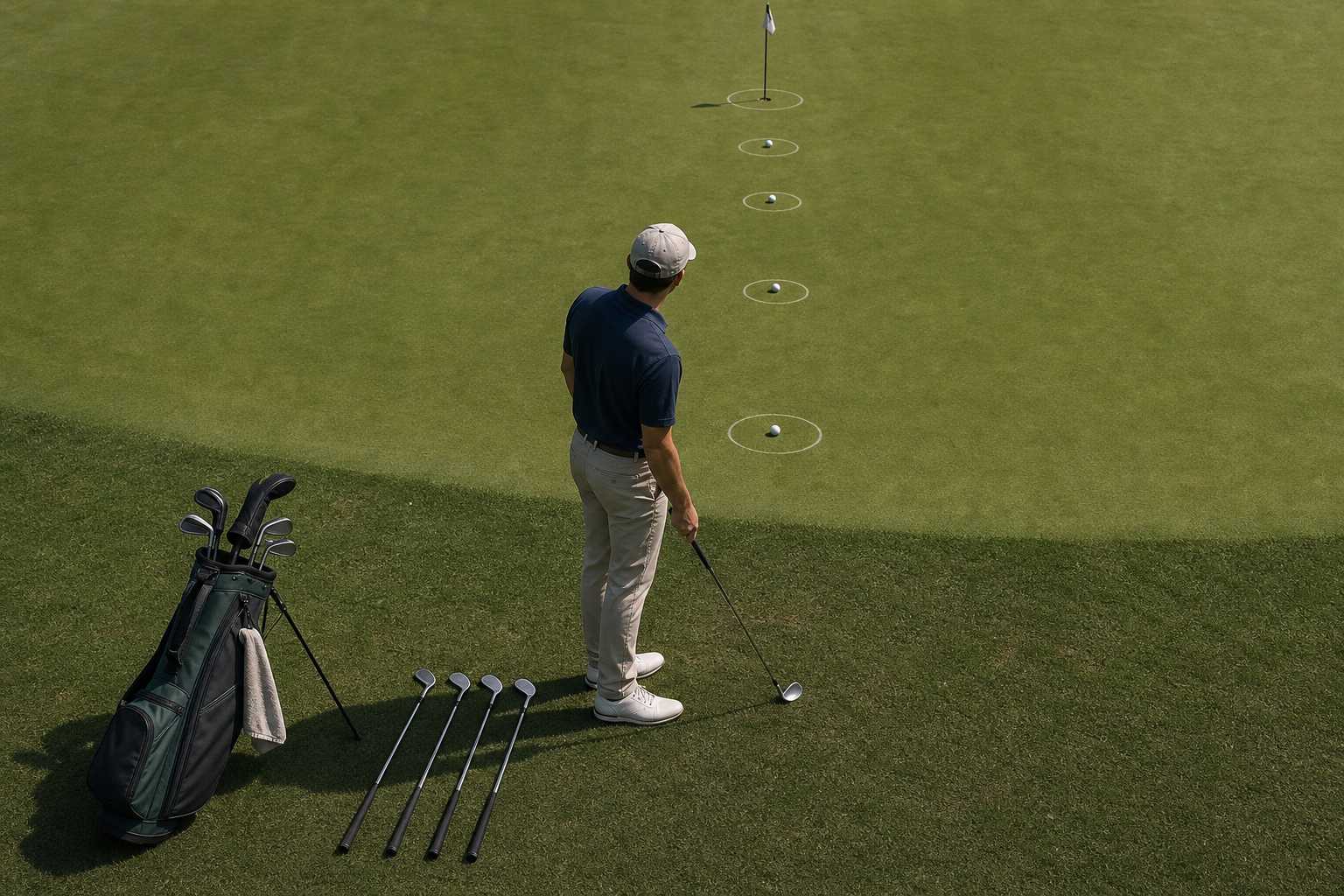
Built for: Golfers who have an awkward distance gap near the green and are considering a gap, sand, or lob wedge.
Before adding another wedge, map the clubs you already own, identify the shot that repeatedly leaves an uncomfortable in-between swing, and buy only if a new loft earns a clear job in the bag.
The quick verdict
The sensible wedge setup is the one that creates distinct, repeatable full-shot windows from your shortest iron through your highest-lofted wedge, while still leaving you confident around the green.
Best for Golfers who can name a recurring carry-distance problem and are willing to compare it with their existing wedges before shopping.
Skip it if Golfers who are hoping a new wedge will replace basic distance awareness or who have not yet measured how far their current wedges carry.
The familiar mistake: buying the club with the reassuring name
You catch a pitching wedge flush from a good fairway lie and finish farther from the flag than expected. The next wedge feels like too much club for a soft swing, yet too little for a confident full one. It is tempting to call the answer a “gap wedge” and start shopping. The better question is narrower: what carry distance or scoring shot is missing between the clubs you actually use? A sole stamp identifies a category, not a guaranteed place in your bag.
Guild recommendation: Start with the awkward shot, its usual lie, and the carry you need; do not begin with a wedge category.
Map the whole scoring end of the bag
Put your shortest iron or hybrid-to-wedge transition on the same list as the wedges. That first step matters because an unexpectedly strong or weak pitching wedge can create the gap that prompts the whole purchase. Use typical controlled carries rather than the occasional flushed shot. If two adjacent clubs repeatedly arrive at nearly the same place, they may be competing for one role. If one pair leaves a large, recurring decision zone, that is the opening a new wedge may fill.
Guild recommendation: Keep the club order, stated loft markings, and typical carries together in one simple note before comparing new models.
Separate full-shot spacing from greenside versatility
A golfer can have tidy full-shot spacing and still want a different option around the green. Conversely, a wedge that looks useful for short-sided shots may do little for the 80-yard approach that causes the real scoring trouble. Give a prospective wedge one primary assignment first. A full-approach club should earn its place through a distinct carry window. A greenside-focused club should earn it through a shot height, landing behavior, or lie situation you encounter often enough to practice.
Guild recommendation: Choose the club’s first job before considering its name, finish, or cosmetic appeal.
Use loft as the starting point, not the finish line
Loft markings help organize the conversation, but the outcome to protect is usable separation between clubs. Your delivery, ball contact, and existing set all influence what you see on the course, so copying another golfer’s loft list can create a duplicate rather than a solution. Bring the carry map when you compare options. Hit candidates between the two clubs they are meant to separate, then ask whether the new club creates a repeatable decision rather than another in-between choice.
Guild recommendation: Do not add a wedge unless it creates a clearly different carry result or a clearly different short-game task from the clubs already present.
Know when a fitting is the efficient next step
A fitting is especially useful when your recorded results do not match the loft labels in a way that makes sense, when several candidates appear plausible, or when the bag has been assembled across different purchases. The PGA of America describes club fitting as an evaluation of the golfer and the complete equipment setup, which is the right frame for a wedge decision. Bring your current clubs and the notes from the Wedge Window Check so the discussion starts with a real on-course constraint.
Guild recommendation: Seek a fitting when the map exposes an issue but does not point clearly to one added club or one removed duplicate.
Keep the decision legal and durable
If you play under the Rules of Golf, check that any club you intend to use in competition conforms to the applicable equipment rules. The USGA equipment rules govern club design and conformance. That check is separate from fit: a conforming club can still be the wrong spacing choice for your bag, while a well-planned setup should satisfy both concerns.
Guild recommendation: Confirm conformance through the applicable equipment rules and make the purchase only after the club has a defined role in the full set.
Try this · 30 to 40 minutes.
The Wedge Window Check
Use a level practice area or launch-monitor bay, the balls you normally practice with, your shortest iron, and every wedge currently in the bag. Choose one clearly defined target line and a safe landing area.
- Write down each club in order, beginning with the shortest iron and ending with the most-lofted wedge.
- Hit five controlled, ordinary full swings with the first club; do not chase maximum distance.
- Record the typical carry result for that group, then repeat with every remaining wedge.
- Circle any adjacent pair whose typical carries feel so close that you would choose between them by guesswork, and underline any pair that leaves a shot you often face with no comfortable club.
- For the underlined gap, note whether the missing shot is mainly a full approach, a partial approach, a bunker shot, or a greenside trajectory. Compare potential wedges only against that specific job.
What progress looks like: The exercise succeeds when you can describe one clear missing distance or shot task, or when you discover that your current clubs already cover the distances well enough.
Put the guide to work
These searches are a starting point—not a substitute for the fit and comparison criteria above.
Wedge loft and bounce options
Compare the loft markings alongside sole-design choices after you know the carry window and playing condition the club must address.
Single gap wedge
Use this search when the distance check identifies a missing slot between a pitching wedge and the next wedge.
Single lob wedge
Use this search only when a higher, shorter-shot option has a defined role that your present highest-lofted wedge cannot cover comfortably.
If you buy through these links, Guild of Golf may earn a commission at no extra cost to you.
The practical takeaway
- Measure typical carries before deciding that a named wedge category is missing.
- A new wedge should solve one observable distance gap or one repeatable scoring-shot need.
- Assess the shortest iron and pitching wedge with the wedges, because the gap may begin earlier in the set.
- Use a complete-set fitting when your recorded results reveal a problem but not an obvious solution.
- Check equipment conformance separately from whether a wedge fits your distance plan.
Frequently asked questions
How do I know whether I need a gap wedge?
You may need one when the Wedge Window Check shows a recurring full-shot carry window between your pitching wedge and next wedge that neither club covers with a comfortable swing.
Should I choose a sand wedge or lob wedge for an awkward yardage?
Choose based on the job you documented. If the issue is a full-approach carry, compare candidates by the distinct carry they create. If the issue is a particular greenside shot, prioritize whether that club gives you a useful, practiceable option in that situation.
Can I choose wedges from loft markings alone?
Loft markings are a useful starting point, but they do not replace recording how your own clubs perform or assessing the rest of the set.
What should I bring to a wedge fitting?
Bring every club around the scoring end of your bag and a written list of typical carries, recurring awkward distances, and the shots you want to improve.
Sources used for this draft
- USGA Equipment Rules — The statement that club design and conformance are governed by the equipment rules.
- PGA of America: Club Fitting — The recommendation to evaluate wedge choices as part of the golfer’s complete equipment setup.
Guild of Golf may earn a commission from qualifying purchases made through eligible links, at no additional cost to the reader.