
comparison
Forged vs. Hollow-Body Irons: Choose by Your Miss, Not the Label
A practical comparison of forged and hollow-body iron labels that centers fitting, repeatable shots, and the feedback a golfer can actually use.
Built for: Golfers comparing iron constructions who want to separate manufacturing terms from on-course fit and performance.
A flushed 7-iron can make any head feel persuasive, but the better choice is the one that gives you a clearer, more useful result when contact and distance control are less than perfect. Treat forged and hollow-body as construction labels; make the decision with measured fitting results and a focused on-course test.
The quick verdict
Neither label is a shortcut to the right iron. Compare the candidates in a fitting, then favor the set that produces the most usable distance pattern, start lines, and strike feedback for your normal swing.
Best for Golfers who can describe the shots they need to hit and are willing to let measured results settle a close decision.
Skip it if Skip a label-first purchase if you have not compared the actual clubs with a fitter or established what result you need to improve.
The decision usually appears after one good shot
You hit two iron models well in a fitting bay or on a range. One may feel more satisfying at impact; the other may make a less-than-perfect strike easier to accept. That moment creates the wrong question: which construction is better? The more useful question is which club gives your ordinary swing a result you can predict and explain. A construction term can help organize the comparison, but it cannot replace the evidence from the club in your hands.
Guild recommendation: Write down the problem you are trying to solve before comparing models: a recurring short-side miss, uncertain distance into greens, an awkward long-iron replacement, or simply a need for clearer strike feedback.
Separate the label from the fitting decision
Forged and hollow-body are construction labels, not a complete fitting prescription. A set also has to work through the clubs you will actually use, at the lengths and lofts that suit your game. The PGA of America advises golfers to use fitting and measured results when comparing club options. That makes the fitting session the place to compare the shots, not merely the categories printed in a product description.
Guild recommendation: Ask a fitter to compare candidates at the same intended job in the bag. Look at the repeatability of your results before drawing conclusions from a single longest shot.
Make “feel” specific enough to matter
Feel becomes useful when it changes a decision. Instead of saying one iron simply feels better, describe what you noticed: perhaps you could distinguish a centered strike from a heel or toe strike, or perhaps one club left you more confident about committing to a target. Those observations are worth bringing to a fitting because they connect sensation to a repeatable shot decision. They are less useful when they are based on one clean strike with no target and no record of where the ball finished.
Guild recommendation: During a comparison, use the same target and write one short note after each shot. A compact record is more revealing than trying to remember the best impact sensation at the end.
Use a miss-pattern test, not a highlight-reel test
A golfer who repeatedly finishes right of a green needs a different answer from a golfer whose approach distances vary widely, even if both prefer the same impact sensation. Compare your normal miss and your normal contact, not a swing you produced once while trying to impress a launch monitor. The useful club is the one that helps you choose a target with a realistic expectation of where the ball will finish. Measured fitting results give that comparison more weight than assumption.
Guild recommendation: Hit enough shots to include normal contact, not just your best contact. If one model only looks compelling when you make an unusually good swing, treat that as a tradeoff rather than a verdict.
Build the set around jobs, not ideology
You do not need to make a construction label your identity. The long end of the bag, scoring irons, and the clubs used for recovery shots may ask different things of you. Start with the shots that cost you strokes or create indecision, then compare the available options for those jobs. Whatever construction you choose, conforming club requirements still apply regardless of marketing category or construction method under the USGA Equipment Rules.
Guild recommendation: Bring your current yardage gaps and the clubs you use most often to the fitting. Discuss each candidate as a replacement for a specific club and shot, rather than as a vote for one construction camp.
A sensible buying sequence
First, identify the shot outcome you want to improve. Next, compare candidates in a fitting with measured results and a target-based practice check. Then choose the setup that gives you a repeatable pattern and feedback you understand. Only after that should you shop broadly, because a broad search is useful for locating the kind of candidate you have already learned to compare. It is not a substitute for the comparison itself.
Guild recommendation: Keep the final decision simple: choose the candidate that best matches your intended use, measured results, and ability to recognize what happened on a normal strike.
Try this · 25 minutes.
The Two-Club Pattern Check
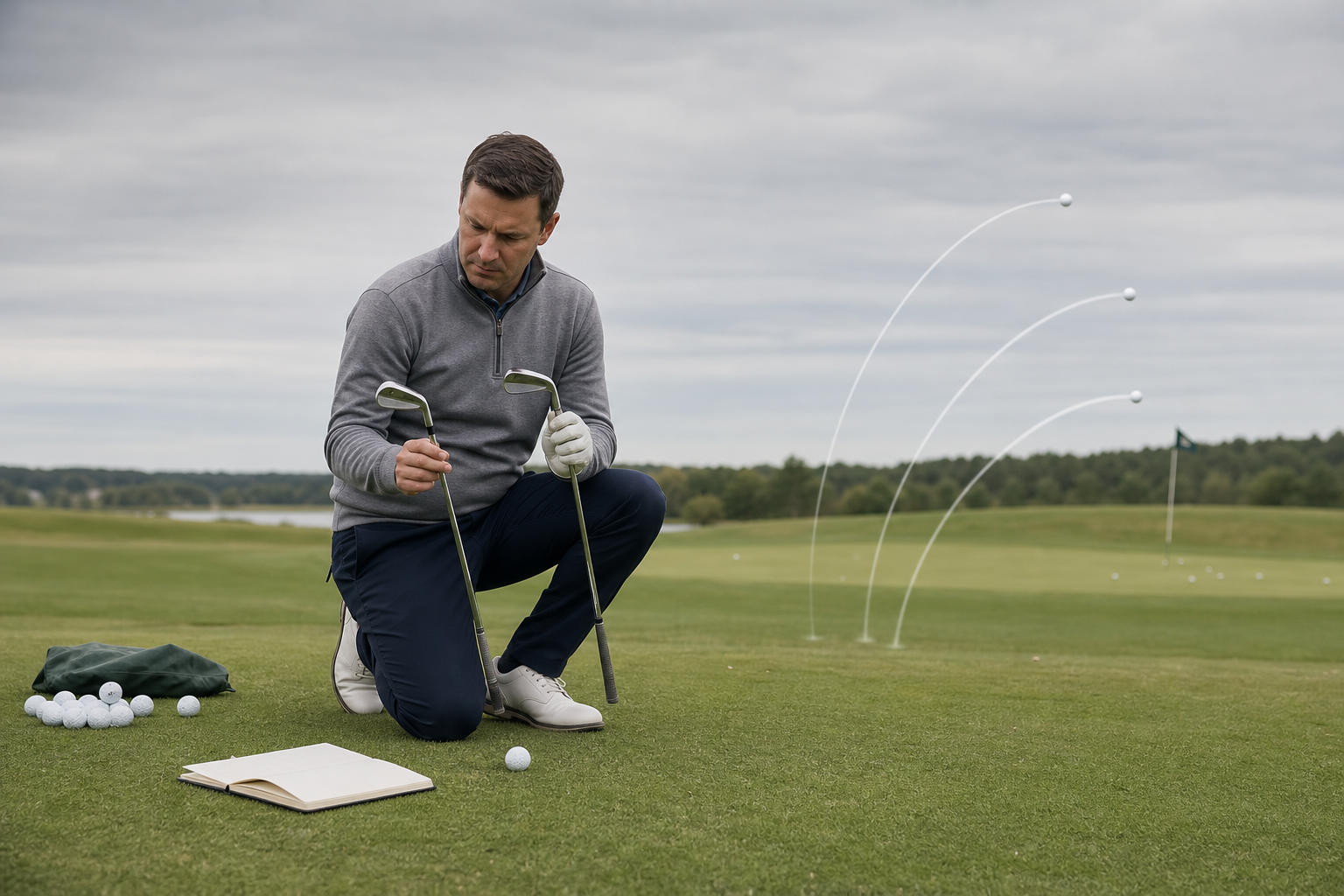
Bring two candidate 7-irons, or two irons that cover a similar intended distance, to a range with a clearly visible target. Use the same ball type for every shot, choose a target that is comfortably within your normal 7-iron range, and make a simple note of start direction, finish area, and strike impression after each shot.
- Hit five warm-up shots with a club you already know, without judging the result.
- With the first candidate, hit eight shots at the same target using your normal pre-shot routine. Record only whether each ball started near the target line, finished short, near, or long of the intended area, and whether contact felt clear enough for you to identify.
- Repeat the eight-shot sequence with the second candidate after a short break.
- Hit four alternating shots, switching clubs after every ball. Keep the target and intended shot unchanged.
- Review the notes before hitting any more balls. Identify which club gave you the more repeatable finish area and the more understandable response on strikes that were not centered.
What progress looks like: The useful winner is the club whose eight-shot pattern is easier to describe and whose off-center strikes give feedback you can use without changing your swing to chase a single excellent shot.
Put the guide to work
These searches are a starting point—not a substitute for the fit and comparison criteria above.
Compare forged iron candidates
Use this search after you know the head shape, loft window, and fitting result you want to compare.
Compare hollow-body iron candidates
Use this search to place similarly fitted hollow-body candidates beside the forged options rather than treating the category as a performance guarantee.
Find a fitting tool for notes
A simple record of carry, finish area, and strike feedback can make a fitting conversation more specific.
If you buy through these links, Guild of Golf may earn a commission at no extra cost to you.
The practical takeaway
- Forged and hollow-body are labels that organize a search; they do not settle fit on their own.
- A fitting should compare measurable shot results and the specific job each iron must do in your bag.
- Make feel actionable by connecting it to strike recognition, target commitment, and a repeatable finish area.
- Judge candidates by normal swings and normal misses, not by one exceptional shot.
- All conforming clubs remain subject to the same USGA equipment requirements regardless of construction category.
Frequently asked questions
Should I choose forged irons if I care about feel?
Choose the iron whose feedback you can turn into a better next shot. If feel matters to you, describe it in practical terms during a fitting and compare it alongside measured results.
Are hollow-body irons automatically the right answer for longer approaches?
No construction label automatically answers a shot problem. Compare candidates for the specific long-approach job, using fitting results and a target-based shot pattern.
Can I compare these irons without a formal fitting?
You can perform a disciplined target comparison, but a fitting adds measured results to the decision. The PGA of America identifies fit and measured results as important when comparing club options.
Do forged and hollow-body irons follow different conformity rules?
No. The USGA states that conforming club requirements apply regardless of marketing category or construction method.
Sources used for this draft
- PGA of America: Club Fitting — The recommendation to prioritize fitting and measured results when comparing club options.
- USGA Equipment Rules — The statement that conforming club requirements apply regardless of marketing category or construction method.
Guild of Golf may earn a commission from qualifying purchases made through shopping links, at no extra cost to you.