
evergreen guide
How to Buy a Used Golf Driver Online Without Guesswork
A listing-by-listing checklist for value-conscious golfers who need to judge a used driver from photos, descriptions, and seller communication.
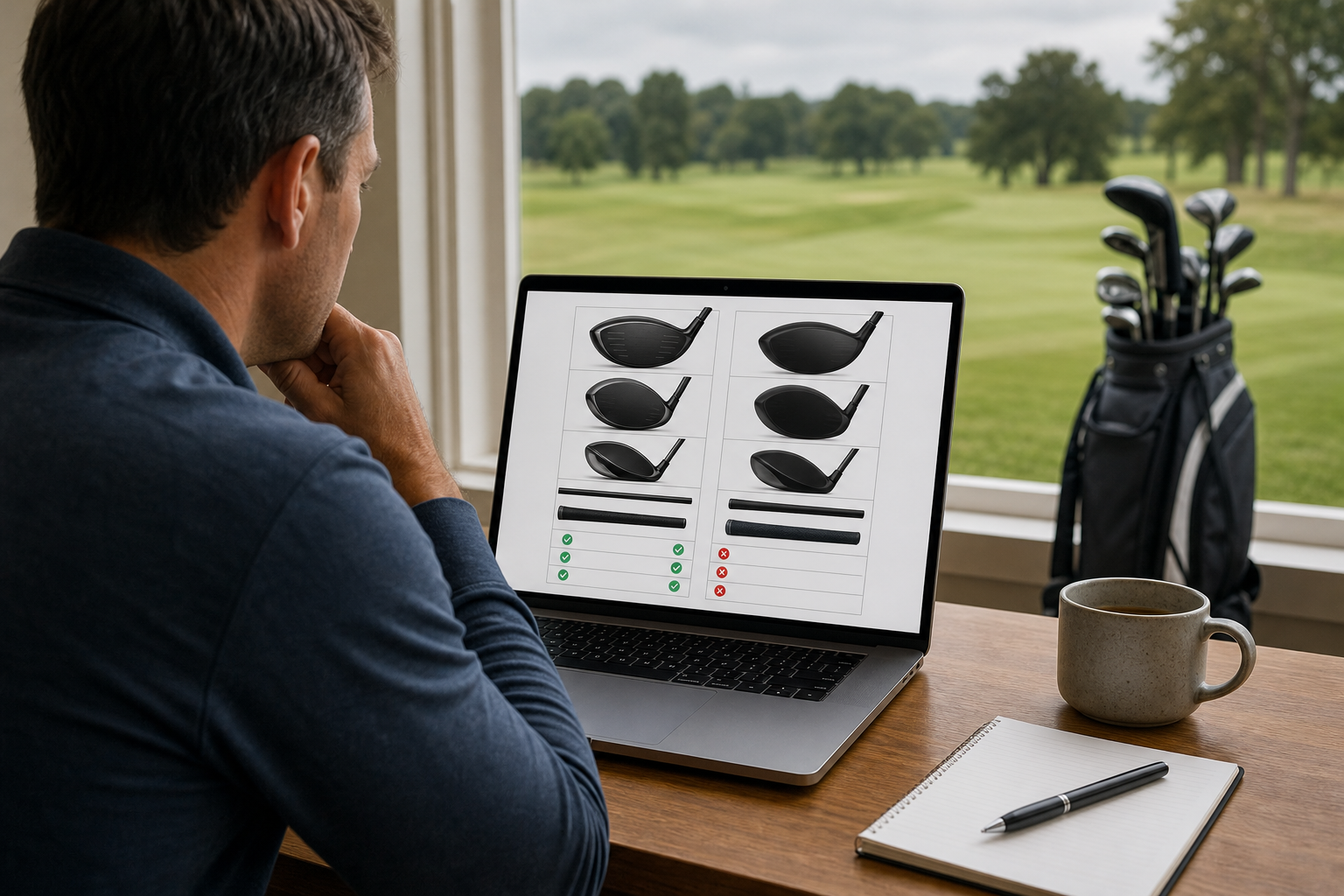
Built for: Value-conscious golfers evaluating a used driver listing without being able to inspect the club in person.
A used driver can be a smart way to stretch a club budget, but one vague photo or missing detail can turn a bargain into a club that does not match your needs. Use this checklist to compare listings on evidence, ask focused questions, and keep the decision tied to a fair outcome rather than a tempting headline price.
The quick verdict
Buy the listing, not the promise: proceed when the photos, stated condition, club details, and seller answers agree; walk away when important information remains unclear.
Best for Golfers who can compare several listings patiently and are willing to prioritize complete, consistent evidence over the lowest asking price.
Skip it if Skip used-driver listings when you need certainty about condition, exact setup, or return options that the seller cannot clearly provide.
Start with the problem the listing must solve
The familiar trap is seeing a driver at a comfortable price, imagining a few extra yards, and clicking before you know whether the club actually fits the role you need. Begin with a simple job statement: perhaps you want a dependable tee club, a backup, or a lower-cost experiment with a different setup. That statement creates useful limits. A backup can tolerate cosmetic wear; a driver intended to become your main tee club deserves clearer evidence about its condition and details.
Guild recommendation: Write down your intended role, a spending ceiling, and the one or two details you will not compromise on before opening listings.
Read the listing as a consistency test
A strong listing makes it easy to connect the title, description, and photographs. Look for a clear statement of what is included, the club’s stated model and configuration, and photos that appear to show the same club from more than one angle. Treat omissions as questions rather than automatic deal-breakers. A missing view of the face, crown, sole, shaft, grip, or headcover status is a reason to ask for clarification, because each missing detail limits how confidently you can compare the listing with another one.
Guild recommendation: Favor the listing that answers more of your questions before you contact the seller, even if another listing has a slightly lower asking price.
Use photos to separate wear from uncertainty
Photos cannot replace holding the club, but they can show whether a seller has documented it carefully. Inspect the face, crown, sole, shaft, grip, and any area where parts join. Look at both wide shots and close views when available. The key question is not whether a used club looks new; it is whether the visible condition matches the written description. If the description says minor wear but the only relevant area is blurred, cropped, shadowed, or absent, you do not have enough evidence to accept that claim at face value.
Guild recommendation: Ask for specific additional photos, naming the area and angle you need, rather than sending a general request for more pictures.
Ask questions that produce a decision
A useful seller message is brief and answerable. Ask whether the photos show the exact club being sold, whether the club has any known changes or repairs, what is included, and whether there is damage the seller wants you to know about. If a detail matters to your decision, ask for it directly rather than assuming it from a stock-style description. Advertising claims should be truthful, non-deceptive, and supported, which is a useful standard for reading any sales presentation: compare the claim with the evidence supplied in the listing and the answer you receive. See the FTC’s guidance at https://www.ftc.gov/business-guidance/advertising-marketing.
Guild recommendation: Keep a copy of the listing and the seller’s answers so that the promised condition and included items remain clear through the transaction.
Confirm the club is eligible for the golf you play
If you play in events where equipment conformance matters, verify the driver rather than relying solely on a listing label. The USGA Informational Club Database can be used to check driver conformance information at https://www.usga.org/InfoClubsDB/index.html. This is especially worthwhile when a listing is unclear about the exact club or when your purchase is intended for competition use. Database checking does not answer every condition or fit question, but it gives you a separate reference point for the conformance question.
Guild recommendation: Use the database before purchase when conformance is important, and do not assume that a generic claim such as tournament legal resolves an unclear listing.
Compare the complete transaction, not the sticker price
The cheapest driver is not necessarily the best value if its condition is poorly documented, its included items are unclear, or the transaction terms leave no room for a problem. Put comparable listings side by side and score each one on photo completeness, detail completeness, seller responsiveness, stated condition, and the overall cost you would accept. This approach prevents a common mistake: paying less for a club that carries more unanswered questions than a slightly higher-priced alternative.
Guild recommendation: Choose the lowest-risk listing that satisfies your stated role and budget, then keep the confirmation messages and listing record until the transaction is complete.
Inspect promptly when the driver arrives
When the club arrives, compare it with the saved listing photos and the seller’s written answers before you take it to the course or make changes. Check that the club and included items match what was represented, then document any discrepancy with clear photographs. A calm, evidence-based record is more useful than a vague complaint if you need to discuss an issue with the seller or marketplace.
Guild recommendation: Do not discard packaging or alter the club until you have confirmed that it matches the listing you agreed to buy.
Try this · 15 minutes.
The Three-Ball Driver Fit Check
Bring the used driver, a familiar driver or fairway-finder club for comparison, six balls, and a target line at a practice range or open practice area.
- Hit three controlled shots with the familiar club toward the same target, using your normal pre-shot routine.
- Hit three controlled shots with the used driver at the same target and with the same intent; do not try to swing harder to force a result.
- Repeat the sequence once if space and balls allow, then note whether the used driver lets you start the ball near your intended line with a contact pattern and balance that feel repeatable.
- If the club repeatedly makes you change your setup or effort simply to produce a playable shot, pause before treating it as a keeper and seek qualified fitting or repair advice if needed.
What progress looks like: The useful signal is not one longest shot; it is several controlled swings in which the club produces a predictable starting direction and contact without requiring an unusual adjustment.
Put the guide to work
These searches are a starting point—not a substitute for the fit and comparison criteria above.
Replacement grip comparison
Compare grip size, texture, and installation options only after confirming that the driver itself has sufficient listing evidence to merit consideration.
Driver headcover comparison
A headcover can help protect a club after purchase, but it should not influence the evaluation of the driver’s condition or originality.
Golf club cleaning supplies
Basic cleaning supplies can make routine care easier after purchase, but cleaning should never be used to conceal unanswered condition questions.
If you buy through these links, Guild of Golf may earn a commission at no extra cost to you.
The practical takeaway
- A used driver is a better value when its photos, description, and seller answers tell the same story.
- Condition does not need to be perfect, but the evidence needs to be clear enough for the role you expect the club to fill.
- Specific questions about the exact club, known changes, included items, and missing photo angles produce better decisions than broad requests for reassurance.
- Use the USGA Informational Club Database when driver conformance is relevant to the golf you play.
- A repeatable on-range result matters more than a single standout shot after the club arrives.
Frequently asked questions
What should I ask a seller before buying a used driver online?
Ask whether the photos show the exact club, whether the seller knows of any changes, repairs, or damage, what is included, and whether they can provide clear images of any area not already shown.
Should cosmetic wear stop me from buying a used driver?
Not necessarily. Cosmetic wear may be acceptable for a value purchase, but it should be visible, described consistently, and acceptable for the role you have chosen for the club.
How can I check whether a driver conforms?
Use the USGA Informational Club Database to check driver conformance information at https://www.usga.org/InfoClubsDB/index.html when that question matters for your play.
What is the biggest warning sign in a used-driver listing?
The biggest warning sign is unresolved inconsistency: a condition claim, photo set, or seller answer that does not clearly match the exact club being offered.
Sources used for this draft
- USGA Informational Club Database — The availability of a database that can be used to check driver conformance information.
- FTC Advertising and Marketing Basics — The principle that advertising claims should be truthful, non-deceptive, and supported.
Guild of Golf may earn a commission from qualifying purchases made through eligible links, at no additional cost to the buyer.