
comparison
Two-Piece vs. Three-Piece Golf Balls: Choose by Your On-Course Priority
A practical way to compare two-piece and three-piece golf balls without assuming construction alone will deliver a certain feel, flight, durability, or greenside result.
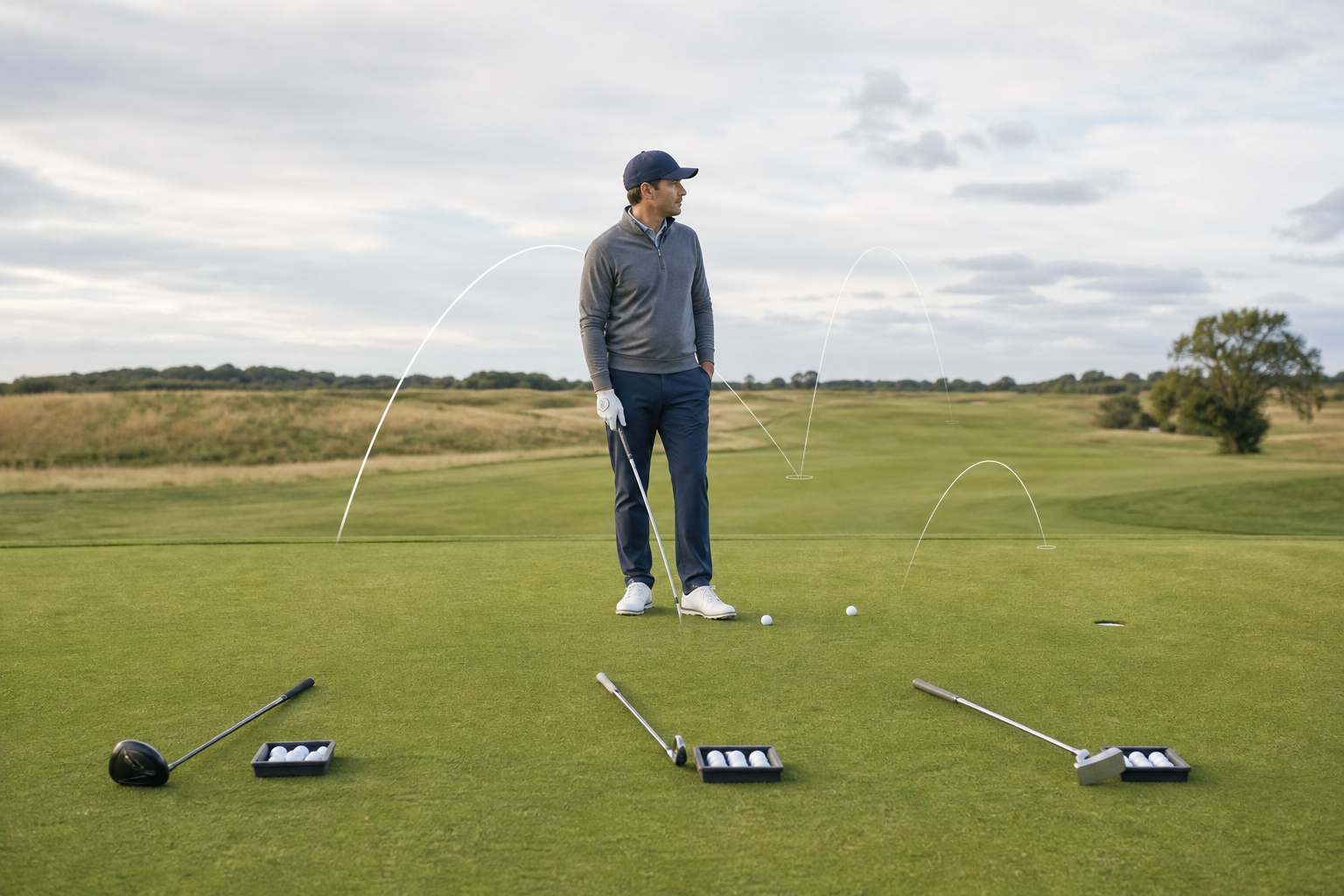
Built for: Golfers comparing golf-ball construction while balancing feel, durability, flight, and short-game control.
A ball that feels dependable on the first tee can become a frustrating choice when a partial wedge must finish near the flag. Rather than treating two-piece or three-piece construction as a verdict, compare candidate balls in the shots that create your most costly misses.
The quick verdict
Use two-piece and three-piece labels as a starting filter, not a performance promise. Choose the ball that produces the most repeatable result in your priority shot, then confirm that its exact model appears on the USGA Conforming Ball List when you need a ball eligible under the Rules.
Best for Golfers willing to compare two or three candidate balls through a simple, repeatable on-course practice session and make a choice based on visible launch, finish, durability, and confidence.
Skip it if Skip a construction-led decision if you expect the layer count alone to guarantee more distance, more spin, softer feel, or better durability; those outcomes need to be observed with the specific balls you are considering.
Start with the shot that creates your expensive miss
Construction becomes relevant only when it helps you narrow a field of candidates; it does not replace a decision about your golf. A player who routinely reaches the green but leaves awkward pitches should place greater weight on controlled wedge results. A golfer who loses balls before the green, or simply wants a ball that remains visually trustworthy through a round, may place more weight on finding the ball, cover condition, and confidence from the tee. Neither priority is more correct. They ask different questions of the same ball.
Write down one primary priority before shopping: dependable tee-shot behavior, visible cover condition, predictable wedge finishes, or pace on short putts. That constraint prevents a familiar mistake: selecting a ball because it sounds right in a product description, then discovering it does not help on the shot you actually face most often.
Guild recommendation: Choose your primary scoring priority first, then evaluate no more than two or three ball models against it.
What a two-piece or three-piece label cannot tell you by itself
The construction label is a category, not a complete playing report. It cannot, on its own, tell you exactly how a particular ball will launch for your swing, where it will finish after a wedge lands, how its cover will look after use, or whether its sound and feel will help you judge a short putt. Those are model-specific, player-specific observations.
This matters when two golfers use the same phrase, such as “soft feel,” to mean different things. One may mean the sound at impact. Another may mean confidence on a delicate putt. A third may mean that a wedge shot finishes closer to the first bounce. Keep the language attached to a shot and an observable result. Instead of saying a ball has better control, say that six similarly struck pitches finished in a tighter area during your comparison.
Guild recommendation: Do not buy solely on layer count. Use the label to build a short list, then judge the exact ball on a repeatable shot.
Build your choice around the priority, not a universal winner
If durability is your leading concern, inspect the ball after equivalent use. The useful outcome is not a claim that one construction category is always tougher; it is knowing whether a particular candidate remains a ball you are comfortable playing after your normal shots. A ball that looks compromised to you can create doubt before the next swing, even if its performance has not been measured.
If flight is the priority, compare candidates on the same hole or practice target under as similar conditions as possible. Watch the starting direction, the approximate landing area, and whether the outcome fits the shot you want to play. Avoid declaring a winner from one drive, particularly when wind, strike location, and tee height can change the result.
For short-game control, use a landing target and watch the finish. A ball that repeatedly gives you a usable expectation after it lands is more valuable than a ball that delivers one exceptional checker and five uncertain results. For feel, let the putter settle the question: the better choice is the one whose pace you can repeatedly judge without changing your usual stroke.
Guild recommendation: Match the test to the job: cover inspection for durability, a repeatable target for flight, a landing-and-finish test for wedges, and a pace test for putting.
Keep rules eligibility separate from performance preference
When you are playing in a setting governed by the Rules of Golf, the ball used must meet the applicable equipment requirements. The USGA’s Conforming Ball List identifies balls that have been submitted and evaluated for conformance. That check answers an eligibility question; it does not identify which construction, feel, flight, or short-game result will suit you best.
Check the exact model name rather than assuming that a similar name, a prior version, or a general construction category has the same status. Then return to your own comparison. A conforming ball still has to earn its place in your bag by fitting the shots you are trying to improve.
Guild recommendation: For competition use, verify the exact ball on the USGA Conforming Ball List before treating it as an option.
Try this · 30 to 40 minutes.
The Three-Shot Ball Comparison
Bring equal numbers of two candidate ball models to a practice area with a target for tee shots, a clear 30-to-60-yard wedge landing area, and a short putting surface. Use the same club for each station, alternate ball models after every shot, and avoid judging a ball after a single unusually good or poor strike.
- Start with six tee shots per ball. Note only observable outcomes: whether you can find the ball easily, the general starting line, the landing area, and any visible cover marks after the shots.
- Hit six controlled wedge shots per ball to the same target. Watch the first landing point and where the ball finishes relative to that point; record whether the result is predictable enough for your usual approach strategy.
- Roll six putts per ball from the same distance on a straight or nearly straight line. Notice whether you can repeatedly judge the initial pace and whether either ball distracts you at address.
- Inspect each ball after the session. Set aside any ball whose cover condition makes you reluctant to keep it in play, then choose the remaining model that gave you the most repeatable result in the station that matters most to your scoring.
What progress looks like: You can name one candidate ball that repeatedly produced the result you value most—such as a predictable finish on wedge shots or a dependable visual condition after use—without relying on one standout swing.
Put the guide to work
These searches are a starting point—not a substitute for the fit and comparison criteria above.
Compare construction options
Use this search only after deciding which performance observations matter most to you, then compare the product descriptions and your own trial results rather than assuming construction settles the choice.
Find balls for a short-game comparison
This is useful for golfers whose decision will be driven by controlled wedge shots and putting feel during the practice plan.
Find balls for a durability-focused comparison
This is useful for golfers who intend to inspect cover condition and want a small group of candidates for the same repeatable test.
If you buy through these links, Guild of Golf may earn a commission at no extra cost to you.
The practical takeaway
- A two-piece or three-piece label is a useful way to organize choices, but it is not a guarantee of feel, durability, flight, or greenside behavior.
- Choose based on the shot that most often costs you strokes, and define success with an observable outcome.
- Alternate candidate balls during testing so one warm-up period, one wind change, or one excellent strike does not decide the result.
- When conformance matters, verify the exact model on the USGA Conforming Ball List.
Frequently asked questions
Is a three-piece ball automatically better for short-game control?
No. Construction alone does not establish the result you will see with a particular model and your own strike. Compare controlled wedge shots to the same target and judge the pattern of finishes.
Should I choose a two-piece ball if durability is important to me?
Use durability as a test criterion rather than a construction assumption. Play equivalent shots with the candidates, inspect their cover condition, and choose the ball you remain confident using.
How can I compare ball flight fairly?
Use the same club, target, and tee routine, alternate balls, and record general starting line and landing area across several shots. A single drive is not enough evidence for a decision.
Do I need to check whether my golf ball conforms?
If you need a ball eligible under the Rules, consult the USGA Conforming Ball List for the exact model. The USGA states that balls used under the Rules must meet applicable equipment requirements.
Sources used for this draft
- USGA Equipment Rules — The requirement that golf balls used under the Rules meet applicable equipment requirements.
- USGA Conforming Ball List — The statement that the list identifies balls submitted and evaluated for conformance.
Guild of Golf may earn a commission from qualifying purchases made through shopping links, at no additional cost to the reader.