
evergreen guide
High-MOI Drivers: Forgiveness for Misses, Not a Swing Cure
A practical guide to deciding whether a high-MOI driver can make your common miss more playable without mistaking club forgiveness for swing correction.
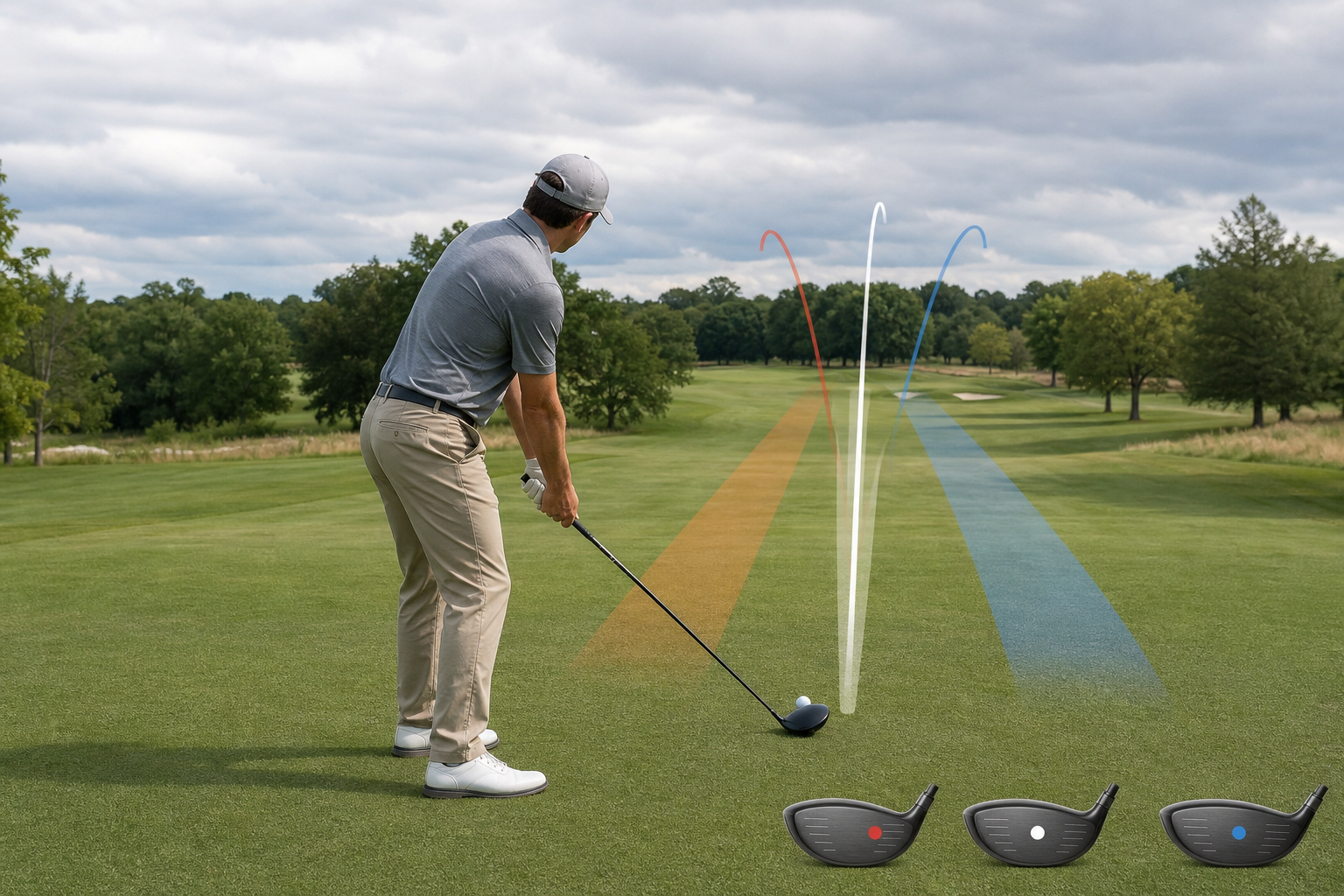
Built for: Golfers whose off-center strikes lose too much speed or curve unpredictably and who need to distinguish forgiveness from swing correction.
When a tee shot catches the heel or toe, a more stable driver may make the result less punishing. It cannot, however, choose your start line, square the face, or turn an inconsistent delivery into a predictable one.
The quick verdict
Choose a high-MOI driver when your usual miss is slightly off center and you want tighter consequences from that miss; do not expect it to repair a repeated face-control or strike-location pattern.
Best for Golfers who regularly find the fairway with decent swings but lose too much distance or direction when contact drifts toward the heel or toe.
Skip it if Skip a forgiveness-first purchase if your main problem is extreme curvature, frequent top or low-face contact, or an unpredictable setup and delivery that needs attention before a club change.
The tee-shot decision behind high MOI
You flush two drives, then catch the next one slightly toward the toe and watch it finish in trouble. That is the situation in which forgiveness deserves attention. A high-MOI driver is a stability-first choice for a golfer whose useful swing often produces a small contact error. The decision is not whether the club can make every miss good; it is whether it can make your normal imperfect strike less costly.
Guild recommendation: Start by naming your normal miss in observable terms, such as heel-side contact with a playable start line, rather than calling every poor drive a slice or a bad swing.
What forgiveness can help you manage
Forgiveness is most relevant when the same broadly competent swing produces contact that wanders a little from the center of the face. In that case, the practical goal is not a miracle shot. It is a smaller drop in the quality of a shot that was nearly good. A golfer who still sees a reasonable launch and start direction on a slight toe strike has a useful reason to explore a more stable head in a fitting.
Guild recommendation: Bring a record of your common impact pattern to a fitting and compare measured results across several strikes, not just your best one. The PGA of America describes club fitting as an individual evaluation using measured results.
What a forgiving head cannot correct
A driver does not select your aim, control the delivered face, or guarantee centered contact. If one drive starts well left, the next starts well right, and strike location also moves from high to low on the face, changing to a high-MOI model risks treating several variables as one equipment problem. Likewise, a severe curve that begins from a consistently poor start line calls for a clearer understanding of delivery before a forgiveness-first purchase.
Guild recommendation: Use the practice plan to separate a repeatable modest miss from a scattered pattern. Seek swing guidance when the pattern itself, rather than the penalty from a small miss, is the larger constraint.
Fit for your miss, not for the label
High-MOI is a useful category, not a fitting result. The right choice must still work with your individual strike pattern and measured outcomes. During a fitting, ask to see how your centered shots and your ordinary near-misses compare, because a driver that flatters one ideal swing may not be the one that best protects the shots you actually play. Driver design and conformance are governed by the equipment rules, so evaluate legal equipment through a proper fitting process rather than relying on a label alone.
Guild recommendation: Ask the fitter to compare a stability-focused option against another suitable head using your normal swing, then make the decision from the repeatability of the results rather than a single standout drive.
A sensible buying sequence
First, establish whether your contact is repeatedly a little heel-side or toe-side. Second, create a stable target-line reference and note whether the ball begins in a consistent neighborhood. Third, test candidate drivers with a fitter who can evaluate measured results for you. Only then is it useful to compare adjustability, appearance at address, and the feel that helps you make a committed swing.
Guild recommendation: Do not buy because a club is described as forgiving. Buy when the fitting comparison shows that its benefit addresses your documented, recurring miss.
Try this · 20 minutes.
Separate a Modest Miss From a Delivery Problem
Use a safe practice range, your current driver, alignment sticks or two clubs placed on the ground to define a target line, and 12 to 18 balls. Pick a target wide enough that you can note start direction without chasing perfect shots.
- Warm up with several easy swings, then set the alignment sticks so one represents your intended start line and the other helps you return to the same address position.
- Hit six shots at a controlled, repeatable effort. After each shot, note only two observations: whether contact felt centered, heel-side, or toe-side, and whether the ball started left, near, or right of your target line.
- Hit another six shots with the same target and effort. Keep your setup unchanged; do not try to manufacture a correction between every ball.
- Review the pattern. If modest heel or toe contact produces broadly similar starts and playable finishes, forgiveness is a sensible fitting question. If start direction varies sharply even when contact feels similar, record that pattern for a teaching professional or fitter rather than assuming a new head will solve it.
What progress looks like: The useful result is a clear written pattern: either your misses are mainly modest off-center strikes, or your start direction and contact are varying too widely for forgiveness alone to be the answer.
Put the guide to work
These searches are a starting point—not a substitute for the fit and comparison criteria above.
Compare high-MOI driver designs
Compare the available fitting settings and address appearance only after you have identified that modest off-center contact is your recurring issue.
Check strike-location feedback tools
Impact tape can help you observe whether a repeated heel or toe pattern is present before assigning the problem to ball flight alone.
Build a simple range-alignment kit
Alignment sticks provide a repeatable target-line reference for the practice plan and make your observations more useful.
If you buy through these links, Guild of Golf may earn a commission at no extra cost to you.
The practical takeaway
- A high-MOI driver is most useful when a golfer’s recurring error is modest off-center contact rather than a completely changing delivery.
- The target outcome is a less damaging ordinary miss, not a cure for start-line, face-control, or strike-pattern problems.
- A fitting should compare measured results from normal swings and normal misses because equipment is individual.
- Simple range observations of contact and start direction can tell you whether forgiveness is the right question to bring to a fitter.
Frequently asked questions
Will a high-MOI driver fix my slice?
Not by itself. If your main issue is a repeated curve or an inconsistent start line, identify that pattern first; a forgiving head may reduce the cost of a modest off-center strike, but it does not replace a repeatable delivery.
Who should consider a high-MOI driver?
Consider one if your better drives are useful but slight heel or toe contact makes too many otherwise solid swings finish poorly. That pattern gives a fitter a focused equipment question to evaluate with measured results.
Should I take swing lessons or get fitted first?
If your practice notes show widely changing start direction and strike location, swing guidance may be the more direct first step. If they show a stable pattern of modest off-center contact, a fitting is a sensible next move.
How should I compare drivers in a fitting?
Ask to compare your centered shots and your normal misses with the same target and normal effort. Choose the option that improves the outcome of the pattern you actually produce, while remaining suitable under the applicable equipment rules.
Sources used for this draft
- USGA Equipment Rules — Driver design and conformance are governed by the equipment rules.
- PGA of America: Club Fitting — A fitting evaluates equipment for the individual golfer using measured results.
Guild of Golf may earn a commission from qualifying purchases made through affiliate links, at no additional cost to the reader.