
evergreen guide
Used Golf Driver Online: A Listing Checklist Before You Buy
A practical, evidence-led checklist for judging a used driver listing when you cannot hold the club before paying.
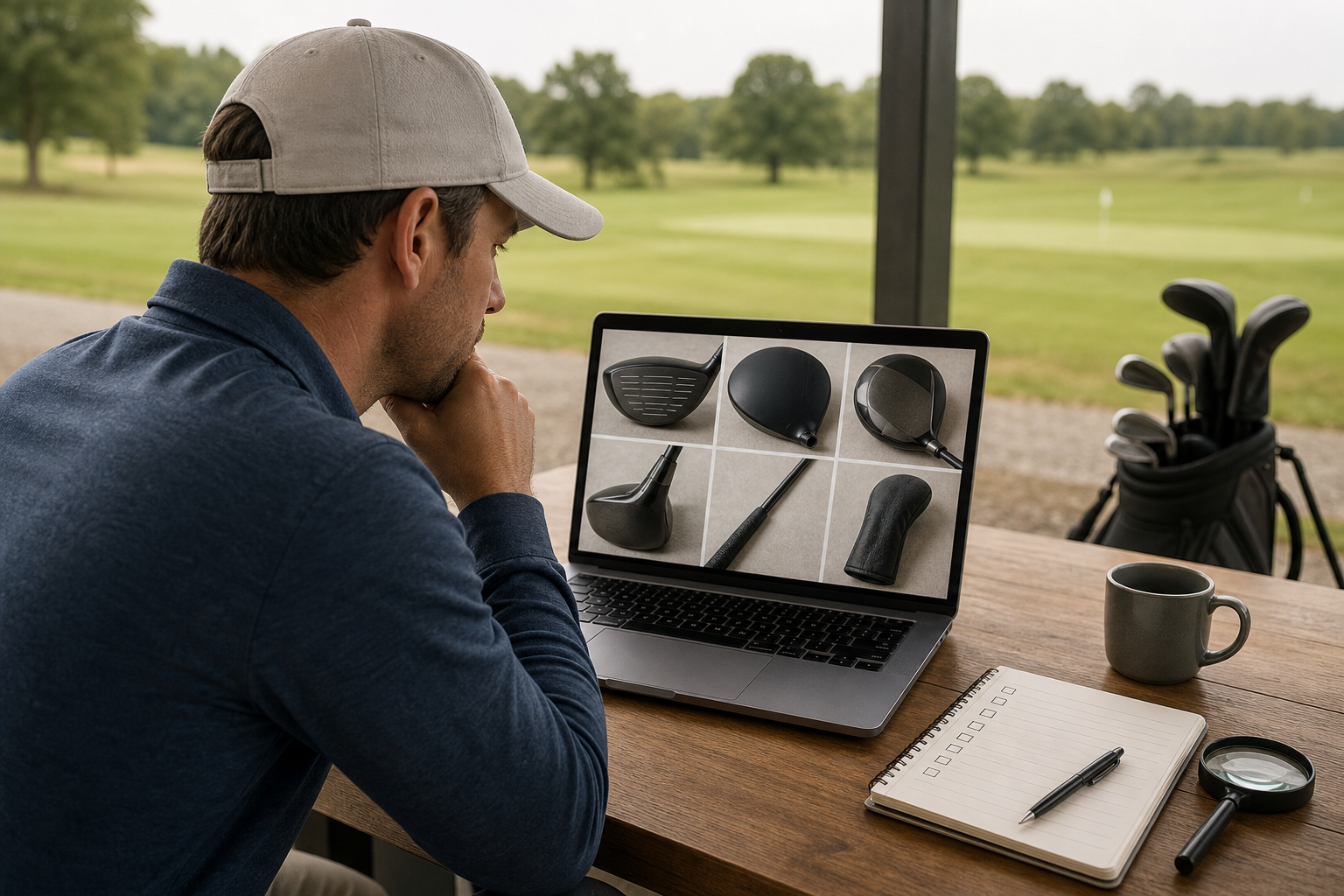
Built for: Value-conscious golfers evaluating a used driver listing without being able to inspect the club in person.
A low price can disappear quickly if the photos hide a damaged face, an uncertain shaft, or a head that does not match the listing. Use the listing as evidence: identify the exact club, inspect the areas that affect play and safety, ask for proof where the evidence is thin, and preserve a clear record of what was promised.
The quick verdict
Buy a used driver online only when the listing lets you identify the club, assess its condition through clear evidence, and understand the return terms before payment. A cheaper listing with unanswered questions is not automatically better value.
Best for Golfers who can compare several listings patiently, ask concise condition questions, and accept cosmetic wear when the head, shaft, grip, and transaction terms are clearly shown.
Skip it if Skip the listing if key photos are missing, the model or configuration cannot be identified, condition claims are unsupported, or the seller will not clarify material damage and return terms.
Start with identity, not the asking price
A used-driver listing should first answer a basic question: what, precisely, is being sold? Record the stated model, handedness, loft, shaft label, grip, and included items before comparing price. A photo of a club next to a generic description leaves too much room for a mismatch. If the listing uses broad language such as “regular shaft” or “standard loft” but does not show the relevant labels, treat those details as unconfirmed rather than filling in the blanks yourself.
Guild recommendation: Move on unless the listing identifies the club well enough for you to compare it fairly with another listing.
Read the photos like an inspection record
Photos do not need to make a used driver look new; they need to make its condition legible. Look for distinct, sufficiently close views of the face, crown, sole, hosel area, shaft, and grip. On the face, note whether wear, a dent, a crack, or a deep mark can be distinguished from ordinary surface scuffing. Around the crown and sole, look for chips, separation, or marks that are obscured by glare. On the shaft and hosel area, look for splits, lifting finish, or gaps that a single posed photo could conceal. A photo that is too dark, distant, cropped, or blurry is missing evidence, not proof that the area is fine.
Guild recommendation: Ask for one targeted close-up of each unclear area. If a material condition question remains unanswered, leave the listing.
Separate cosmetic wear from questions that change the decision
A worn grip or sole marks may be acceptable if the price and your plans account for them. The decision changes when the issue prevents you from knowing whether the club is structurally sound, correctly identified, or complete. Make a two-part note: “acceptable for my use” and “needs clarification.” For example, a visible paint chip can belong in the first column when you do not mind cosmetics. A face mark that cannot be interpreted from the photos belongs in the second. This keeps a shopper from rejecting every used club while also preventing a bargain price from excusing uncertainty.
Guild recommendation: Set your own limit before messaging the seller: cosmetic wear may be acceptable, but unclear damage to the head or shaft is a stop sign until clarified.
Ask questions that can produce useful evidence
Vague messages invite vague answers. Ask about one visible area at a time and request a photo when a written answer cannot resolve it. Useful questions include: “Is there a crack, dent, or separation at this mark?” “Can you add a close photo of the shaft near the hosel?” and “Are the pictured headcover and tool included in this sale?” Save the listing description, photos, and answers. The Federal Trade Commission states that advertising claims should be truthful, non-deceptive, and supported, which is a useful standard for weighing a listing’s condition statements against its visible evidence.
Guild recommendation: Prefer a seller response that directly addresses the specific question and adds evidence over a broad reassurance that the club is “in great shape.”
Check conformance when the exact club is known
If playing in events where equipment rules matter to you, use the exact driver identity from the listing to check conformance information in the USGA Informational Club Database. The database can be used to check driver conformance information. This step works best after you have the identifying details; it cannot resolve a listing that never establishes which driver head is actually pictured.
Guild recommendation: Do not use a database search as a substitute for identity and condition photos. First establish the club, then check the conformance information that matters to your play.
Treat return and delivery terms as part of club condition
A used driver is not fully evaluated until you know what happens if the delivered club differs from the listing. Read the stated return window, responsibility for return shipping, payment protections, and delivery terms before committing. Save screenshots of the listing and seller correspondence before payment so that the condition description and included components are not left to memory. This is especially important when a listing makes a specific claim about an area that is difficult to judge from one image.
Guild recommendation: Choose the transaction whose terms you understand and can accept, even if another listing appears slightly cheaper.
Compare the complete cost of the decision
The sensible comparison is not simply asking price against asking price. List the displayed price, shipping, applicable taxes or fees shown at checkout, and any likely follow-up cost you already expect, such as replacing a worn grip or obtaining a missing headcover. Do not assign a value to a defect you cannot identify. Instead, count that uncertainty as a reason to seek more evidence or select a clearer listing. A club with honest cosmetic wear and complete information can be easier to evaluate than a cleaner-looking club with sparse photos.
Guild recommendation: Buy only when the total shown cost and the remaining uncertainty fit your budget and tolerance for risk.
Try this · 15 minutes.
The Three-Listing Evidence Drill
Open three used-driver listings for clubs that fit the same general need. On paper, make four columns labeled identity, photos, answers, and terms.
- For each listing, write the stated model name, loft, handedness, shaft label, and any included components exactly as shown. Mark any missing item with a question mark.
- Inspect whether the listing shows separate, usable views of the clubface, crown, sole, hosel area, shaft, grip, and headcover or adjustment tool if either is claimed to be included. Record what is visible rather than guessing from a distant image.
- Write one short question for each unresolved issue, such as whether a mark catches a fingernail, whether the shaft has a crack or split, or whether the pictured headcover is included.
- Compare the return, payment, and shipping terms shown in each listing. Choose only the listing with the fewest unresolved questions, not merely the lowest displayed price.
What progress looks like: You can explain in one sentence why your chosen listing has enough visible evidence and why you rejected the next-best price.
Put the guide to work
These searches are a starting point—not a substitute for the fit and comparison criteria above.
Replacement headcovers
Compare fit, closure, and condition only after confirming whether the used listing includes a headcover.
Grip replacement supplies
Consider this only when the listing makes the grip condition visible and you have decided the rest of the club is a sound purchase.
Driver adjustment tools
Compare tool compatibility with the specific driver only after the listing clearly identifies the model and states whether a tool is included.
If you buy through these links, Guild of Golf may earn a commission at no extra cost to you.
The practical takeaway
- Identify the exact driver and included components before using price as a comparison point.
- Require clear visual evidence of the face, crown, sole, hosel area, shaft, and grip.
- Treat unsupported condition claims as unresolved questions, not as reassurance.
- Check USGA conformance information when event eligibility matters and the driver can be identified precisely.
- Read return, shipping, and payment terms before purchase, then save the listing record.
Frequently asked questions
Should I avoid a used driver with cosmetic scratches?
Not necessarily. Cosmetic wear can be acceptable when it is clearly shown and does not conceal a condition question you need answered. Decide whether the visible wear fits your budget and preferences, but do not assume an unclear mark is cosmetic.
What photos should I request from a seller?
Request close, well-lit views of the specific unclear area. Commonly useful views include the clubface, crown, sole, hosel area, shaft near the hosel, grip, and any component the seller says is included.
How can I verify whether a used driver is conforming?
Once the listing identifies the driver clearly enough, use the USGA Informational Club Database to check driver conformance information. This is most useful for golfers who need to consider equipment rules for the events they play.
Is the lowest-priced used driver the best value?
Only if its identity, condition evidence, transaction terms, and complete displayed cost are also acceptable. A lower price does not resolve missing photos, unclear damage, or uncertain included components.
Sources used for this draft
- USGA Informational Club Database — The recommendation to use the database to check driver conformance information after identifying the club.
- FTC Advertising and Marketing Basics — The principle that advertising claims should be truthful, non-deceptive, and supported.
Guild of Golf may earn a commission from qualifying purchases made through links associated with its shopping recommendations, at no extra cost to you.