
comparison
Two-Piece vs. Three-Piece Golf Balls: Choose by Your Scoring Priority
A practical way to compare two-piece and three-piece golf balls without assuming that construction alone predicts feel, durability, flight, or short-game control.
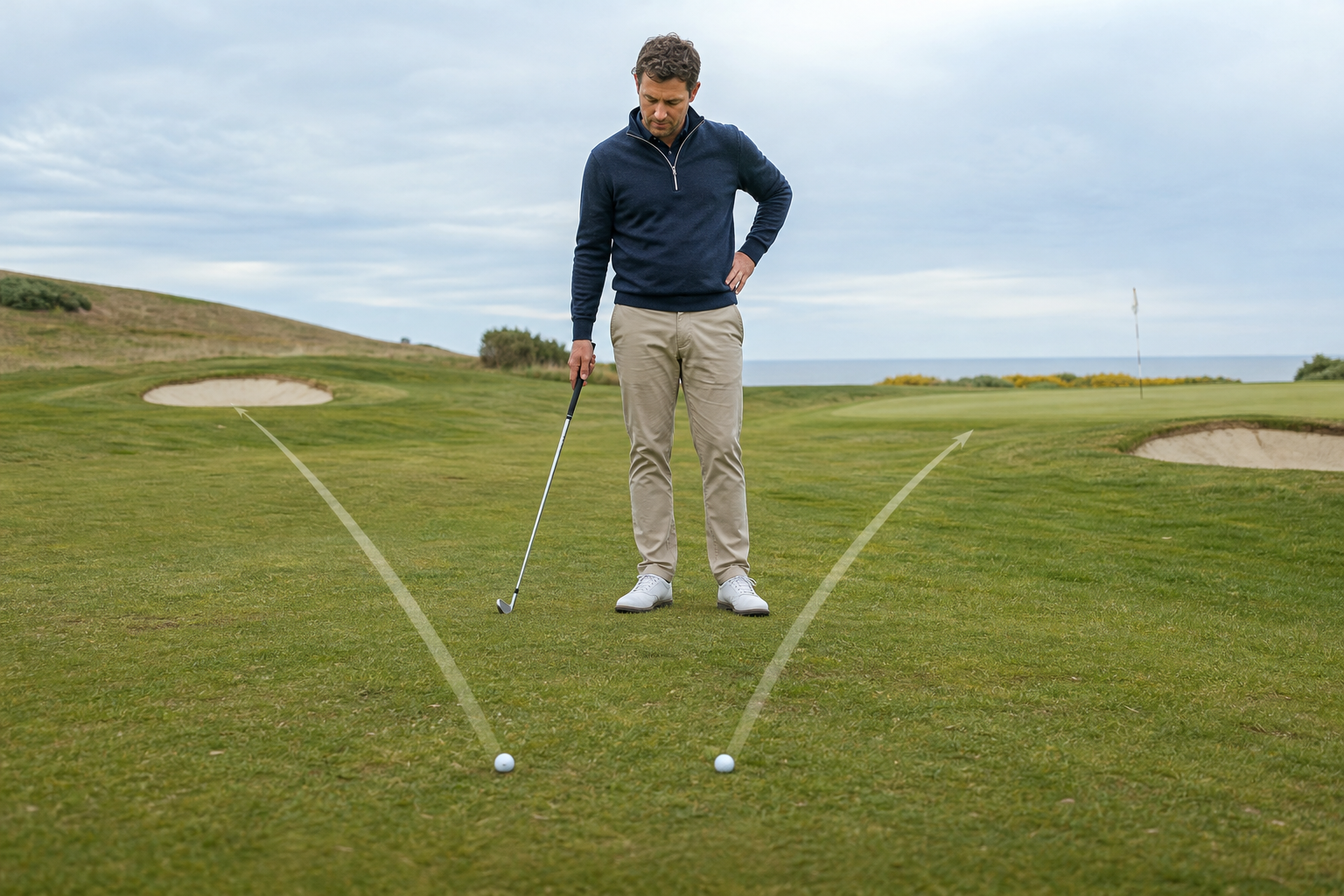
Built for: Golfers comparing golf-ball construction while balancing feel, durability, flight, and short-game control.
When one ball feels pleasant off the driver but leaves you uncertain around the green, it is tempting to blame the number on the box. Start instead with the shot you want to make more predictable, then compare candidates on the course under the same conditions.
The quick verdict
Neither a two-piece nor a three-piece label is a universal performance verdict; choose the ball that produces the most repeatable result on the shots that matter most to your score.
Best for Use a two-piece-versus-three-piece comparison when you have a clear priority, such as keeping a dependable ball in play, preferring a particular impact sensation, or seeking more confidence on short shots.
Skip it if Skip construction-count shopping if you have not yet identified an observable difference in your own launch, approach, or greenside results, because the label alone cannot establish how a ball will perform for you.
The construction count is a starting point, not your answer
A golfer can lose time chasing a simple rule: two-piece for one kind of player, three-piece for another. That rule cannot tell you which ball will produce your preferred flight, feel, durability, or short-game result. The supplied rules evidence establishes that balls used under the Rules of Golf must meet the applicable equipment requirements, while the USGA list identifies balls submitted and evaluated for conformance. It does not establish that either construction count is automatically better for any particular golfer.
Guild recommendation: Treat two-piece and three-piece as categories to investigate, then make your decision from repeatable shot outcomes and, where relevant, confirmed conformance.
Choose the priority before comparing the ball
The useful question changes with the golfer. A player who repeatedly finishes holes with a ball that is visibly worn may place durability high on the list. A golfer who dislikes the sensation at impact should prioritize feel. Someone facing delicate chips, pitches, and putts may care most about whether one candidate gives a more predictable finish around the green. A player trying to keep a familiar window from the tee should evaluate flight over several comparable shots, not one strike on a windy day.
Guild recommendation: Write down one primary priority and one secondary priority before shopping, because trying to judge every trait at once usually produces a vague conclusion.
Use an observable comparison, not a label-based expectation
If short-game control is your priority, hit both candidates to the same landing spot and compare the finish pattern. If durability matters, inspect both balls after similar normal use rather than declaring a winner from a single cart-path mark or one bunker shot. If feel is the deciding factor, use identical short shots and ask which ball lets you commit to the stroke with less hesitation. For flight, compare on-course or practice shots with the same club and intended starting line, while recognizing that strike quality and conditions can change any individual result.
Guild recommendation: Keep the test narrow: one club, one target, and one question per session produce a decision you can actually use.
When a two-piece choice may make sense
A two-piece candidate is worth serious consideration when it earns the better result in the priority you have chosen. For example, if you value an uncomplicated ball that remains in acceptable condition through your typical round, inspect and compare candidate balls after similar use. If you want confidence from a particular impact sensation, use a controlled short-shot comparison and select the option that helps you make the same motion without second-guessing it. The construction label should not override what you observe.
Guild recommendation: Choose a two-piece ball when it is the candidate that best meets your own defined priority and is appropriate for the rounds you play.
When a three-piece choice may make sense
A three-piece candidate deserves the same evidence-based trial. A golfer focused on greenside predictability can compare finishing patterns from identical landing spots. A golfer who wants a particular response on approach shots can monitor repeated outcomes with one club and one target. If the three-piece candidate gives you a clearer, repeatable advantage in the shot category that drives your scores, that is a better reason to choose it than the construction number alone.
Guild recommendation: Choose a three-piece ball when its repeatable result addresses your highest-priority shot without creating an unacceptable compromise in the rest of your game.
Do not forget the conforming check
Construction, feel, and practice results are only part of the decision for golfers playing under the Rules of Golf. The USGA states that golf balls used under the rules must meet applicable equipment requirements. Its Conforming Golf Ball List identifies balls submitted and evaluated for conformance. Before using a ball in a competition or other round where conformance matters, check the current list rather than relying on packaging language or a previous model’s status.
Guild recommendation: Verify the exact ball on the USGA Conforming Golf Ball List whenever rules eligibility is part of your purchase decision.
Try this · 25 minutes.
One-Ball, One-Target Comparison
Choose a safe practice green or short-game area, one landing spot, one hole or stopping zone, and two candidate balls. Use the same club and alternate balls so that changing conditions do not favor one ball.
- Hit five short shots with the first ball toward the same landing spot and note whether each finishes inside a chosen putter-length zone around the target.
- Hit five short shots with the second ball using the same intended landing spot and note the same result.
- Repeat the sequence once, alternating balls after every shot rather than hitting all shots with one ball at a time.
- If neither ball separates clearly, repeat on a second day before treating the result as meaningful.
- Use the ball that gives you the tighter, more repeatable finishing pattern for this shot, unless another priority matters more in your regular rounds.
What progress looks like: A useful result is a clearly tighter group of finishing positions from one candidate across both alternating rounds, rather than one unusually good shot.
Put the guide to work
These searches are a starting point—not a substitute for the fit and comparison criteria above.
Compare two-piece options
After defining your scoring priority, compare the listed construction label with the factors you can observe in practice: your preferred impact sensation, visible cover wear after normal play, and the consistency of your results.
Compare three-piece options
Use the same comparison process for three-piece options, and do not assume that an additional construction label settles the questions of flight, durability, feel, or greenside control.
Check rules-eligible candidates
For rounds played under the Rules of Golf, verify that a candidate appears on the USGA Conforming Golf Ball List before making it your regular ball.
If you buy through these links, Guild of Golf may earn a commission at no extra cost to you.
The practical takeaway
- A two-piece or three-piece label does not, by itself, prove a ball’s feel, durability, flight, or short-game control.
- Start with one scoring priority, then compare candidates with the same club, target, and intended shot.
- For rules-governed play, confirm the exact ball on the USGA Conforming Golf Ball List.
- A repeatable finishing pattern in a simple practice comparison is more useful than a conclusion drawn from one memorable shot.
Frequently asked questions
Is a three-piece golf ball automatically better around the greens?
No supplied evidence supports an automatic greenside advantage from construction count alone. Compare candidates with identical short shots and choose the one that produces the more repeatable outcome for you.
Should I use a two-piece ball if durability is my main concern?
Construction count alone cannot establish durability from the supplied evidence. Compare candidate balls after similar normal use and select the one that meets your acceptable wear standard.
How can I check whether a ball is allowed under the Rules of Golf?
The USGA states that golf balls used under the Rules of Golf must meet applicable equipment requirements. Check the exact ball on the USGA Conforming Golf Ball List, which identifies balls submitted and evaluated for conformance.
Sources used for this draft
- USGA Equipment Rules — The requirement that golf balls used under the Rules of Golf meet applicable equipment requirements.
- USGA Conforming Ball List — The description of the list as identifying balls submitted and evaluated for conformance.
Guild of Golf may earn a commission from qualifying purchases made through shopping links, at no extra cost to you.