
evergreen guide
High-MOI Drivers: Where Forgiveness Ends and Swing Work Begins
A practical guide to separating a driver’s forgiveness from the impact patterns and face delivery that still determine your ball flight.
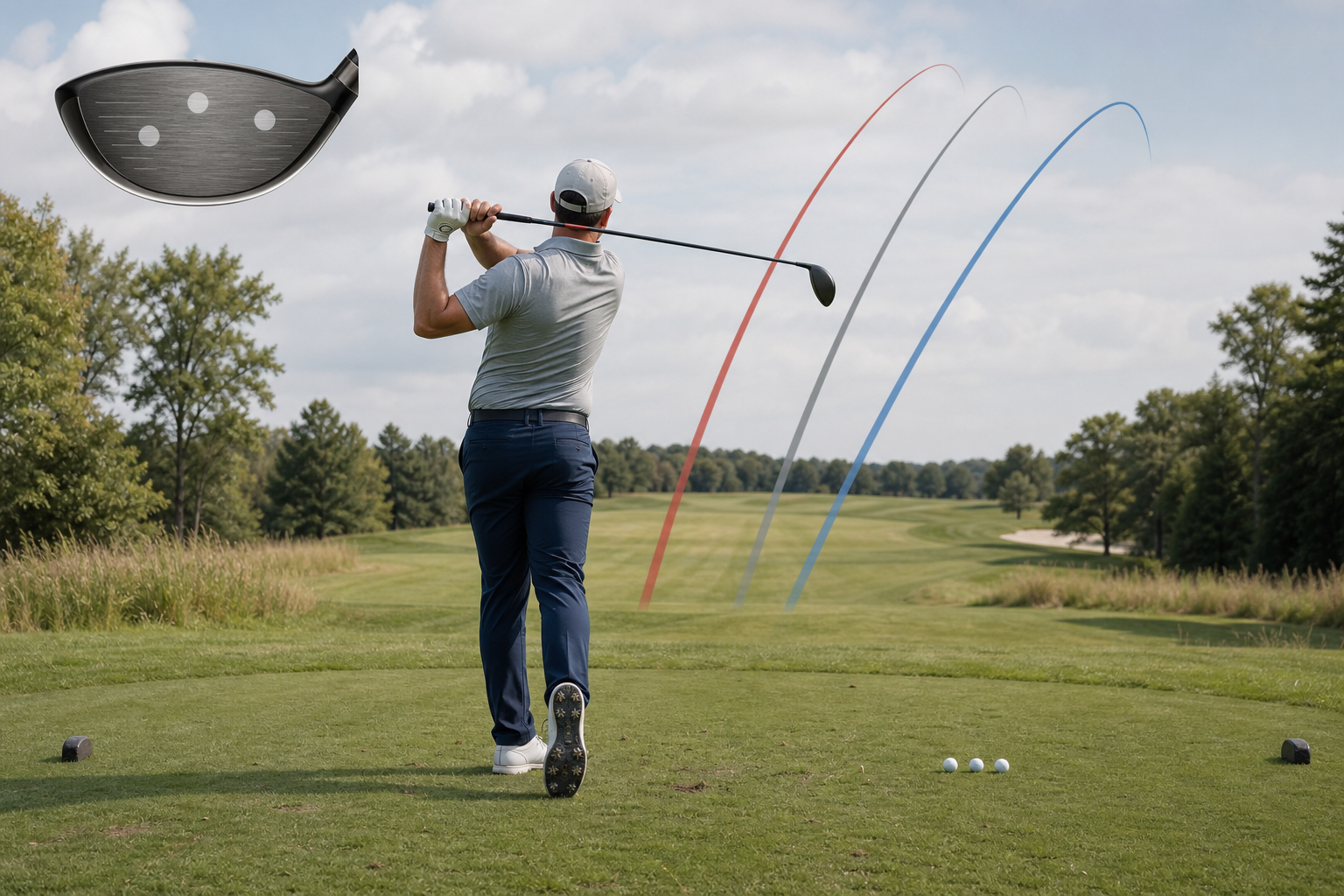
Built for: Golfers whose off-center strikes lose too much speed or curve unpredictably and who need to distinguish forgiveness from swing correction.
A forgiving driver can be a sensible response to scattered impact, but it is not a promise of straight drives. Use measured fitting results and a simple impact-pattern practice session to decide whether equipment, practice, or both deserve your attention.
The quick verdict
Consider a high-MOI driver when your useful swing produces a broad spread of face contact and you want a fitting to assess whether a more stable head improves the results you can repeat. Do not expect any driver to correct a swing path, face presentation, or strike pattern that changes substantially from shot to shot.
Best for Golfers who can identify a recurring miss, want to compare measured results in a fitting, and need a driver choice that accommodates their normal—not ideal—contact.
Skip it if Skip the purchase-first approach if you have not identified your usual strike pattern or if your main goal is to make a persistent slice, hook, or inconsistent start line disappear without changing anything else.
The tee-shot decision is rarely as simple as “more forgiveness.”
You catch one drive toward the toe, watch it leak into trouble, and immediately wonder whether a more forgiving head would have saved it. Then the next swing starts left and bends farther left, even though the contact feels centered. Those are not necessarily the same equipment problem. A high-MOI driver is worth considering as part of an evidence-based choice, not as a blanket answer to every poor drive.
Guild recommendation: Start by naming the outcome you want to reduce: loss of distance on imperfect contact, an unpredictable start line, excessive curvature, or a mixture of all three. One clear problem gives a fitter something useful to measure.
Forgiveness is a margin, not a swing correction.
The helpful way to think about forgiveness is as a margin for the strike you actually produce. That margin may matter when contact repeats in a recognizable area away from the center of the face. It cannot make every strike identical, and it cannot substitute for a delivery that produces dramatically different starts and curves from swing to swing. If a golfer alternates between a high toe-side miss, a low heel-side miss, and centered contact, the first task is to establish the pattern rather than assume the head alone is responsible.
Guild recommendation: Use the practice plan before shopping. A clustered pattern gives you a concrete fitting question; a scattered pattern tells you to keep the fitting conversation focused on measured outcomes rather than promises.
Separate contact evidence from ball-flight evidence.
A drive that finishes right can come from more than one observable sequence. It may start right, start near the target and curve right, or launch on a different trajectory than the shot before it. Contact marks add one piece of evidence, while the starting direction and overall curve add another. This does not diagnose a swing, but it prevents an unhelpful shortcut: treating every right-side result as proof that the same equipment change is needed.
Guild recommendation: For nine normal drives, record only three things: approximate face-contact area, starting direction, and overall curve. Keep the notes short enough that you will actually complete them.
A fitting should test the driver against your normal strike.
The PGA of America describes club fitting as an evaluation of equipment for the individual golfer using measured results. That is the right standard here. Ask a fitter to compare your current driver and potential alternatives with your ordinary tee-shot intent, not a deliberately cautious swing and not a single attempt to hit your best shot. The decision is stronger when the comparison addresses the miss you documented and shows whether the measured results become more useful for you.
Guild recommendation: Bring your current driver and your contact notes. Ask the fitter to explain which measured result changed, whether the change holds across multiple strikes, and what tradeoff you would accept to gain that result.
Rules and reality both belong in the decision.
Driver design and conformance are governed by the USGA Equipment Rules. That matters because an equipment choice should begin with a conforming club when you play under rules that require it. Conformance, however, does not tell you whether a particular driver suits your impact pattern. That is why rules compliance and individual fitting answer different questions: one concerns eligibility, and the other concerns fit.
Guild recommendation: Confirm that any driver you intend to use in rule-governed play is appropriate under the applicable equipment rules, then make the performance choice through a measured fitting.
Shop only after you know what to compare.
Once you have a contact map and a fitting question, shopping becomes less vague. Compare options based on the outcome you are trying to improve and the evidence a fitting can collect, rather than on a broad forgiveness label. Face-contact tape can help you continue the same observation at the range, consistent tees can make practice sessions easier to compare, and a qualified fitting can turn those observations into an individual equipment decision.
Guild recommendation: Use the focused searches below only after completing the baseline session. They support observation and comparison; they do not replace either one.
Try this · 20 minutes.
Map Your Normal Driver Contact Before Changing Clubs
Use your current driver, a flat practice area, a consistent tee height, and removable face-impact tape or a light face-marking product. Choose one target and use the same normal tee-shot routine for every ball.
- Hit three warm-up shots without judging the result.
- Apply the face marker and hit nine shots in three groups of three, keeping your target and intended shot the same.
- After each group, note where the marks cluster on the face and whether the shots tend to start in a similar direction or scatter in several directions.
- Do not try to repair a mark during the session. Instead, finish the nine shots and compare the overall contact pattern with the overall ball-flight pattern.
- Bring the notes or a photo of the marked face to a fitting, then ask the fitter to compare options using measured results for your individual swing.
What progress looks like: You have a usable baseline when you can describe your most common contact area and your most common ball-flight outcome without relying on one unusually good or poor shot.
Put the guide to work
These searches are a starting point—not a substitute for the fit and comparison criteria above.
Face-contact feedback.
Use a face marker first if you need evidence of where contact is occurring before you assign the problem to the driver.
Repeatable practice tees.
Choose tees that help you keep setup consistent during the contact-mapping session, so changing tee height does not become another variable.
A fitting appointment search.
Look for a fitting that compares options with measured results for your individual swing rather than choosing from appearance or a single memorable shot.
If you buy through these links, Guild of Golf may earn a commission at no extra cost to you.
The practical takeaway
- A high-MOI driver is best treated as an equipment option for a documented pattern of imperfect contact, not as a universal cure for erratic driving.
- Contact location, starting direction, and curve are separate observations that make your next equipment conversation more useful.
- A club fitting evaluates equipment for the individual golfer using measured results, so bring evidence from your normal tee shots.
- Driver conformance and driver fit are different questions; check both when they apply to your golf.
Frequently asked questions
Can a more forgiving driver fix my slice or hook?
It should not be treated as a swing correction. First document whether your shots consistently start or curve the same way, then use a fitting to compare measured results with your normal swing.
What should I bring to a driver fitting?
Bring your current driver, a brief record of your common contact location and ball flight, and a clear description of the miss you want to reduce. This gives the fitting a practical question to evaluate with measured results.
Why not choose a driver from one good range session?
One good session may not represent your normal strike. A short contact-mapping session and a fitting based on measured results provide a more useful basis for an individual equipment choice.
Do I need to check whether a driver conforms?
Driver design and conformance are governed by the USGA Equipment Rules. If you play under rules that require conforming equipment, confirm suitability under the applicable rules before relying on the club in competition.
Sources used for this draft
- USGA Equipment Rules — The statement that driver design and conformance are governed by equipment rules.
- PGA of America: Club Fitting — The statement that club fitting evaluates equipment for the individual golfer using measured results.
Guild of Golf may earn a commission from qualifying purchases made through affiliated shopping links, at no additional cost to you.