
comparison
Alignment Sticks or a Tempo Trainer? Choose the Feedback You Need
A practical comparison for golfers deciding whether their next low-cost practice aid should clarify setup and movement lines or help organize rhythm and speed awareness.
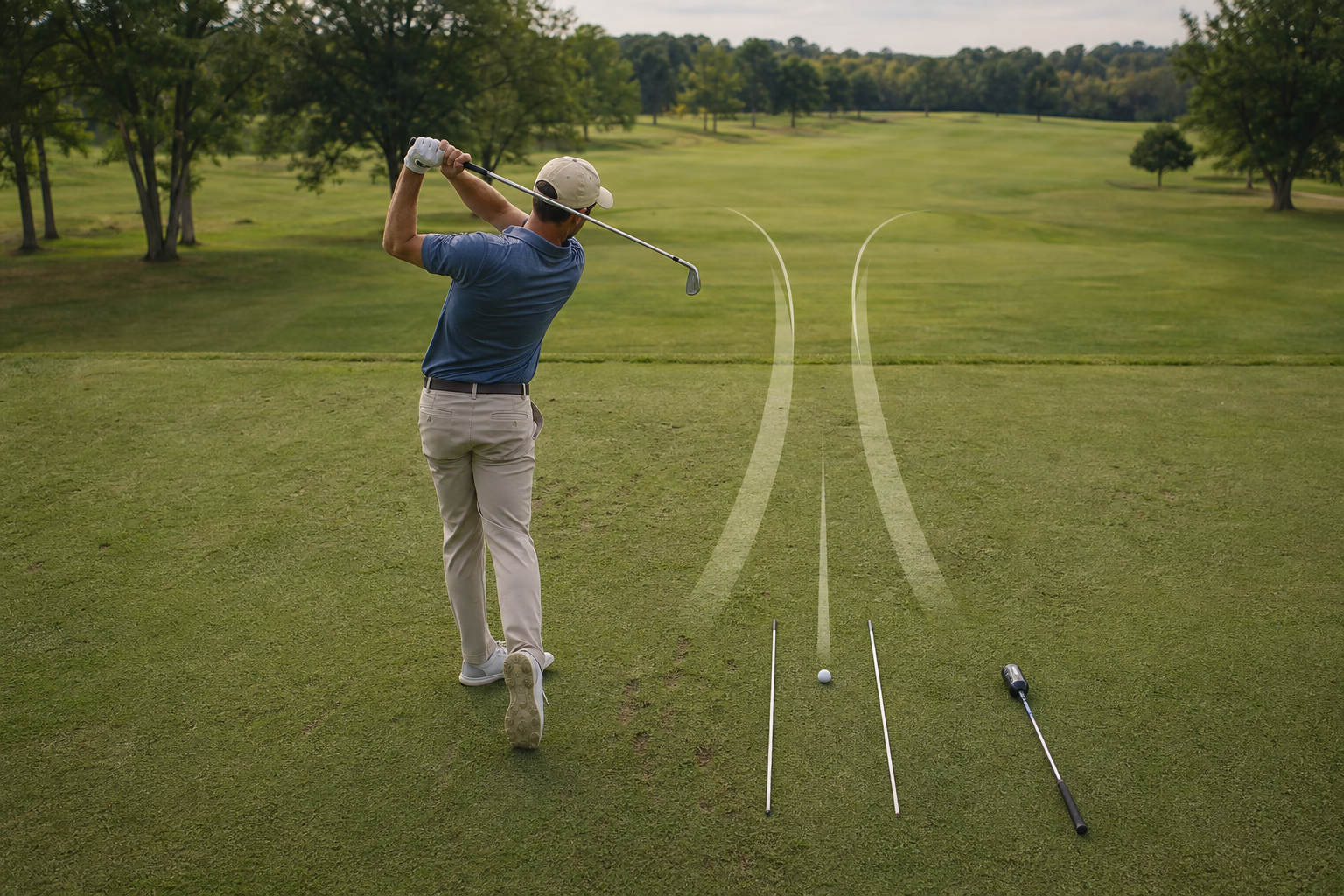
Built for: Golfers choosing between inexpensive practice aids for alignment, movement, rhythm, or speed awareness.
When the ball starts nowhere near where you aimed, a reference on the ground can be more useful than another swing thought. When contact changes from rushed to smooth only after several rehearsals, a tempo trainer may offer the more relevant feedback. The useful choice is not the more interesting gadget; it is the aid that makes one observable practice goal easier to repeat.
The quick verdict
Choose alignment sticks when you need a visible reference for where you are aimed or how you intend the club and body to travel. Choose a swing tempo trainer when your practice goal is to notice and reproduce the pace and motion of your swing. Neither replaces a defined goal, because purposeful practice works best when the activity connects to a specific outcome.
Best for Alignment sticks suit golfers who want simple visual feedback during setup, ball-position, and movement-line rehearsals. A tempo trainer suits golfers whose chief practice question is whether they can make a controlled motion at a repeatable pace.
Skip it if Skip both for now if you cannot name the single outcome you want to observe, such as starting a ball on your intended line or making five unhurried rehearsals. Also avoid assuming either aid is permitted during play; applicable equipment and use rules govern a stipulated round.
Begin with the miss you can actually observe.
A golfer who arrives at the range with “work on my swing” often leaves with more sensations and no clearer answer. Start narrower. If you regularly look up after a shot and wonder whether you were aimed where you thought you were, the immediate need is external, visible reference. If your setup looks settled but your practice swings alternate between snatched and deliberate, the immediate need is feedback about pace and motion. This distinction matters because purposeful practice links an activity to a specific goal, rather than collecting drills without a target. Source: https://www.pga.com/story/practice-with-purpose-to-improve-your-game.
Guild recommendation: Name one result before buying: clearer target-line setup points toward sticks, while more recognizable rhythm and speed awareness points toward a tempo trainer.
Alignment sticks answer a location question.
Alignment sticks are the straightforward choice when your question is, “Where am I relative to the target?” Place them on the ground to establish a target corridor, then use that corridor to rehearse a consistent setup. For example, a player who tends to aim at the left edge of a green but discovers that their feet are pointed well away from that intended line gains a concrete checkpoint before the club moves. The benefit is not a promised swing fix. It is an obvious reference that lets the golfer compare intended setup with actual setup on each repetition.
Guild recommendation: Choose sticks if you want to make setup and directional intentions visible, especially when you practice on your own and need a repeatable reference on the ground.
A tempo trainer answers a movement question.
A swing tempo trainer is more relevant when the issue is not where you stand but how the motion feels from start to finish. Think of the golfer who stripes several calm rehearsal swings, then rushes the first ball because the transition feels abrupt. A trainer can give that golfer a consistent object for rehearsing an unhurried, balanced motion and noticing whether the pace changes. Its value is felt feedback, not an exact prescription for how every golfer should swing. If you cannot tell whether a rehearsal was rushed, controlled, or balanced, this category may give you a cleaner question to practice.
Guild recommendation: Choose a tempo trainer when your useful measure is the quality of a controlled rehearsal, such as finishing in balance five times in a row.
Do not make one aid do the other aid’s job.
The temptation is to buy both and build an elaborate station. That can turn a modest practice session into a checklist of positions, sensations, and gadgets. Sticks can show a line, but they do not by themselves tell you whether your motion has a repeatable pace. A tempo trainer can make pace easier to notice, but it does not establish where you are aimed. Use one primary feedback source per block, then judge it by an outcome you can see or feel immediately. That approach keeps the aid subordinate to the goal, which is the practical point of purposeful practice. Source: https://www.pga.com/story/practice-with-purpose-to-improve-your-game.
Guild recommendation: Buy both only if you can separate their roles across different practice blocks; otherwise, buy the one that answers your most frequent on-course question.
Keep practice aids in their proper place during play.
A productive practice setup is not automatically a competition setup. The USGA states that equipment and its use during a stipulated round are governed by applicable rules. If you play competitions or any round where rules compliance matters, check the current applicable rules and the event conditions before using a training aid during the round. Source: https://www.usga.org/equipment-standards/equipment-rules-2019/equipment-rules.html.
Guild recommendation: Treat sticks and tempo trainers as practice tools unless you have confirmed that their use is allowed for your specific round.
Try this · 20 minutes.
The One-Feedback Practice Station
At a safe practice area, choose one target and place two plain alignment sticks on the ground to create a target corridor without placing them where a club can strike them. Keep a tempo trainer nearby if you have one, and use only the aid that matches the goal for that block.
- Write one observable goal before starting, such as, “I will set my feet parallel to the target corridor,” or, “I will make five balanced rehearsals without feeling hurried.”
- For the first 10 minutes, use alignment sticks only. Make five setup rehearsals, step away, then repeat. If hitting balls is safe and permitted, hit small groups while judging only whether your setup matches the corridor rather than trying to fix several swing pieces.
- For the next 10 minutes, remove the sticks from your attention and use the tempo trainer only. Make five controlled rehearsals, pausing after each to notice whether the finish is balanced and the motion felt rushed or unhurried.
- Finish with three ordinary-club rehearsals or shots. Keep the aid that made your chosen goal easier to recognize, and do not add a second technical goal during the session.
What progress looks like: You can state, without guessing, whether you met the single goal in at least four of five rehearsals or repetitions.
Put the guide to work
These searches are a starting point—not a substitute for the fit and comparison criteria above.
Basic directional reference.
Compare sturdy, plainly visible rods that can be laid on the ground to create a simple target corridor.
Movement and rhythm feedback.
Compare trainers by whether their feel helps you notice a controlled, repeatable rehearsal rather than by promises of a universal swing change.
Practice-station convenience.
Consider a holder only if it helps you create the same safe setup repeatedly and does not distract from one observable goal.
If you buy through these links, Guild of Golf may earn a commission at no extra cost to you.
The practical takeaway
- Alignment sticks are the better first purchase when you need visible feedback about intended direction and setup.
- A tempo trainer is the better first purchase when you need to recognize a more controlled, repeatable pace and movement.
- The strongest buying filter is one observable goal, not the number of drills an aid appears to support.
- Use one feedback source per practice block so you can tell what changed.
- Check applicable rules before using any training aid during a stipulated round.
Frequently asked questions
Should a beginner buy alignment sticks or a tempo trainer first?
Start with the aid that answers the clearest current question. Choose alignment sticks if the beginner needs a visible target-line and setup reference. Choose a tempo trainer if the main challenge is making controlled, balanced rehearsals at a recognizable pace.
Can alignment sticks improve tempo?
They can structure a practice station and clarify a directional intention, but their primary feedback is visual and positional. If the desired feedback is about pace or speed awareness, a tempo trainer is the more direct choice.
Can a tempo trainer fix my alignment?
A tempo trainer can help organize a movement rehearsal, but it does not create a visible target corridor. Use a ground reference when the practice goal is to compare your intended target line with your actual setup.
May I use these aids during a round?
Do not assume so. Equipment and use during a stipulated round are governed by applicable rules, so consult the current rules and any event conditions for your situation. Source: https://www.usga.org/equipment-standards/equipment-rules-2019/equipment-rules.html.
Sources used for this draft
- PGA of America: Practice With Purpose — The principle that purposeful practice connects an activity to a specific goal.
- USGA Equipment Rules — The reminder that equipment and its use during a stipulated round are governed by applicable rules.
Guild of Golf may earn a commission from qualifying purchases made through shopping links, at no additional cost to you.