
evergreen guide
Choose a Game-Improvement Driver by Your Playable Miss
A practical guide to choosing a more playable driver from face-strike location, dispersion, launch observations, and the shot you can keep in play.
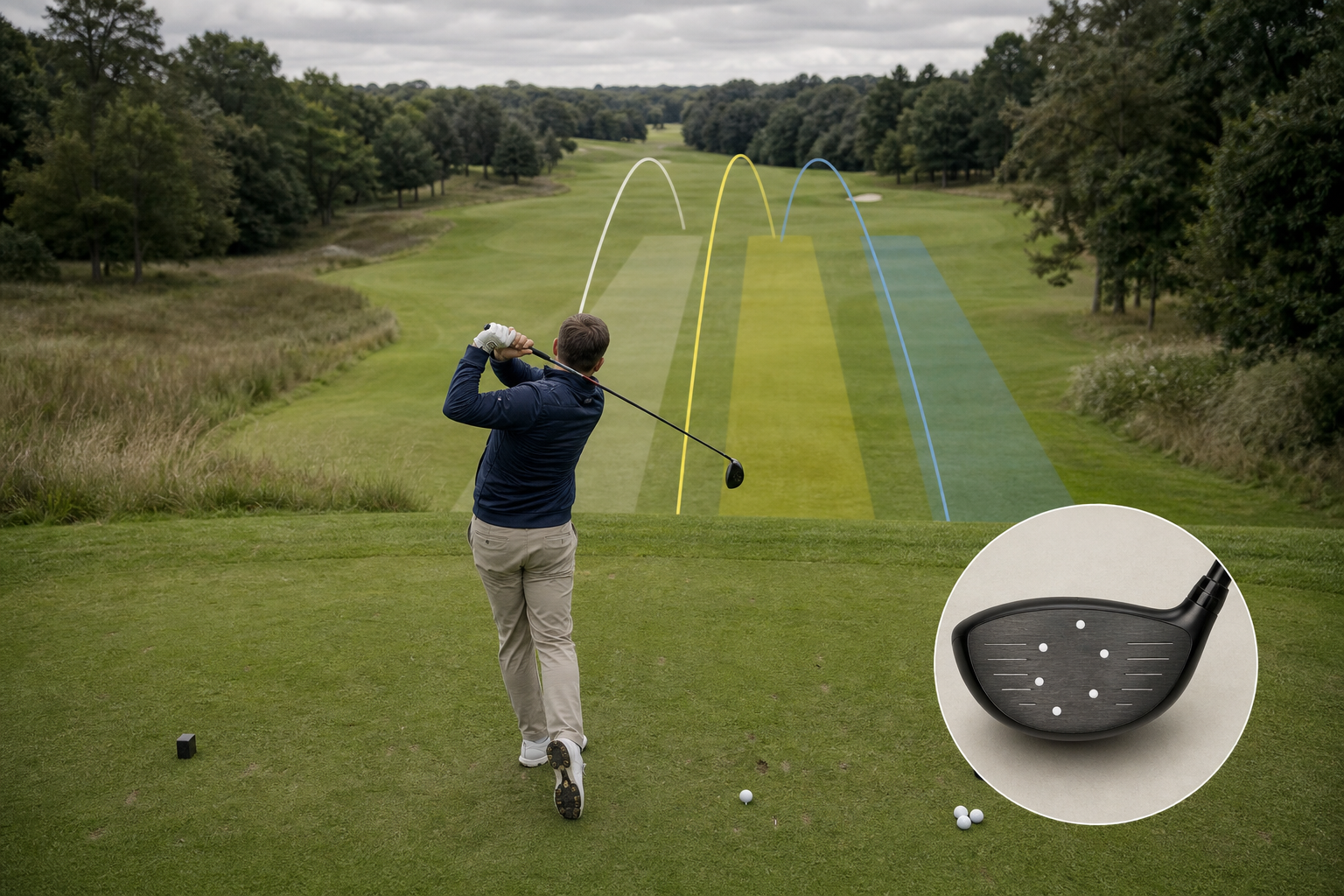
Built for: Golfers who want a more playable driver and prefer to judge it by repeatable strike patterns, usable misses, measured outcomes, and confidence rather than a broad game-improvement/
The driver that looks most forgiving on a rack is not automatically the one that protects your score. Start with where you strike the face, identify the miss that still leaves a next shot, then compare candidates under the same conditions.
The quick verdict
Choose the driver that makes your common miss more playable while preserving a launch window and address look you can repeat with confidence.
Best for This process suits golfers who can hit enough comparable shots to record strike location, finishing direction, launch observations, and the quality of their next-shot position.
Skip it if Skip a retail-floor verdict if you cannot compare clubs under consistent conditions, because a fitting session with measured results is the more useful next step.
Define “playable” before you compare drivers.
The familiar problem arrives on the 15th tee: one driver promises distance, another looks easier to aim, and neither label tells you which one keeps your score alive after an ordinary swing. A playable miss is the result you can accept on a hole you actually play. For one golfer, that may be a ball finishing in the right rough with a clear approach. For another, it may be a modest left-side miss that avoids water running down the right. It is not necessarily the longest shot, the straightest single shot, or the shot that feels best when struck perfectly. Write down the trouble that costs you most often: penalty areas, trees that block the next shot, bunkers, or a severe side of the fairway. That constraint gives your comparison a purpose.
Guild recommendation: Choose the side of the hole that gives you the better next shot before deciding whether a particular left or right miss is acceptable.
Read the strike pattern, not one memorable ball.
A centered strike is useful information, but the repeated pattern matters more. Mark the face for a short series of normal drives and look for clusters rather than isolated marks. If most contact gathers toward one side, a driver comparison should ask whether the candidate still produces a usable result from that recurring location. If impact is scattered high, low, heel-side, and toe-side, do not assume that a new head alone has solved the decision; use the spread as a reason to compare several options carefully and consider a fitting. Keep tee height, target, ball type, and effort level as steady as you can. Changing all four while changing drivers turns the exercise into guesswork.
Guild recommendation: Reject any conclusion drawn from a single flushed drive or a single poor swing; compare groups of normal shots with visible impact feedback.
Separate starting direction, finish, and trouble.
A shot can start left and return toward the target, or start near the target and finish far right. Those are different observations, and a useful comparison records both without trying to diagnose why they happened. For each candidate, note where the ball begins relative to your intended line, where it finishes, and whether that finish would leave an unobstructed next shot on your home course. Then count the balls that enter the costly side of the hole. This turns “forgiving” into an outcome you can observe: fewer shots in the place that forces a recovery, reload, penalty, or defensive lay-up. A driver that produces a slightly wider visual pattern but avoids your worst hazard can be the more playable choice.
Guild recommendation: Favor the candidate with fewer finishes on your costly side of the hole, provided its normal launch and strike pattern remain repeatable.
Use launch as a comparison note, not a promise.
Watch launch alongside strike location and dispersion. Record whether each candidate produces a flight that you can see consistently enough to trust, particularly on the holes where a low ceiling, wind, runout, or carry requirement affects your choice from the tee. If a launch monitor is available, measured results can make this comparison clearer; the PGA of America advises that fit and measured results matter when comparing club options. Do not chase a number in isolation. A launch reading is useful when it belongs to a repeatable group of shots whose starting direction, finish, and impact location you also understand.
Guild recommendation: Use launch data to confirm a repeatable on-course pattern, not to override the driver that keeps your ordinary miss in a better place.
Let confidence earn its place in the decision.
Confidence is not a vague bonus when it changes whether you can make a normal commitment over the ball. Compare candidates at address from the same tee position, then hit them toward the same target. Notice whether one setup makes you aim at the fairway naturally or whether you repeatedly need to manipulate your alignment to feel comfortable. Give that observation boundaries: it counts only after you have checked the strike and finish record. A head that inspires confidence but repeatedly sends balls toward your worst trouble has not passed the test. Conversely, a driver with solid dispersion data that you cannot comfortably aim may be difficult to use when the first tee is crowded and the fairway is narrow.
Guild recommendation: Break close results by choosing the driver you can aim and swing normally while maintaining the more playable recorded miss.
Keep fitting and conformance in the final check.
Marketing categories are not equipment rules. The USGA states that conforming club requirements apply regardless of a club’s marketing category, so a game-improvement label does not answer a rules question. If you play competitions requiring conforming equipment, verify the club’s status through the relevant official process and keep any changes within applicable rules. For the purchase decision itself, a qualified fitting can organize the same evidence more efficiently: comparable shots, measured results, and a discussion of the course constraints that shape your playable miss. Bring your scorecard notes instead of asking only for the longest result.
Guild recommendation: Finish with a measured comparison and a conformance check when competition play matters, especially if you are considering adjustable or altered equipment.
Try this · 25 minutes.
Build a Playable-Miss Scorecard
Use one driver, a normal tee height, and a practice area where you can see a defined target line and the general finish of each shot; use face-impact tape or a light, removable strike-marking aid if available.
- Pick a target that has room on both sides and hit five relaxed warm-up shots without recording them.
- Hit 12 normal drives in three groups of four, keeping the same target and tee position for every ball.
- After each shot, mark the strike as heel-side, center, toe-side, high, or low; then note whether the ball finished left, near the target corridor, or right.
- Circle the finish direction that would most often leave you a sensible next shot on your usual course, even if it is not perfect.
- For the final four balls, commit to the same target and normal swing, then compare whether your strike pattern and preferred finish remain recognizable.
What progress looks like: You have a simple record that identifies your most frequent strike area and the side of the hole where your usual miss is least costly, rather than a conclusion based on one exceptional drive.
Put the guide to work
These searches are a starting point—not a substitute for the fit and comparison criteria above.
Face-impact feedback supplies.
Use a removable impact marker to compare where different drivers contact the face before drawing conclusions from ball flight alone.
Driver fitting appointment tools.
Look for a way to record comparable shots, because measured results are more useful than memory when comparing club options.
Adjustable driver weights.
Only consider compatible replacement weights after confirming the club’s specifications and rules status with the manufacturer or a qualified fitter.
If you buy through these links, Guild of Golf may earn a commission at no extra cost to you.
The practical takeaway
- A game-improvement label is less useful than a repeatable record of face strike, start direction, finish, and next-shot position.
- Your playable miss is the side and severity of error that avoids the trouble most likely to damage a hole.
- Compare drivers under steady conditions and judge groups of normal swings rather than highlight shots.
- Measured fitting results can clarify close decisions, while confidence matters when it supports a repeatable recorded pattern.
- Conforming equipment requirements apply regardless of how a club is marketed.
Frequently asked questions
What is a playable miss with a driver?
A playable miss is a shot that misses your intended line but still leaves a realistic next shot and avoids the trouble that is most damaging on the hole.
Should I choose the driver with the longest single drive?
No; use the longest shot as a data point, but choose from a group of normal shots by weighing strike consistency, finishing dispersion, launch observations, and the cost of the resulting misses.
Can I determine my strike pattern without a launch monitor?
Yes; a removable face-impact marker and a consistent target let you record impact location and broad finishing direction, while a launch monitor can add measured information to the comparison.
Does a game-improvement driver label mean a club is conforming?
No; conforming club requirements apply regardless of marketing category, so check rules status separately when it matters for your play.
Sources used for this draft
- USGA Equipment Rules — Conforming club requirements apply regardless of a club’s marketing category.
- PGA of America: Club Fitting — Fit and measured results matter when comparing club options.
Guild of Golf may earn a commission from qualifying purchases made through shopping links, at no additional cost to you.