
evergreen guide
Choose Driver Loft by Reading Launch, Strike, and Ball Flight
A repeatable, on-range process for comparing driver lofts without relying on a universal number.
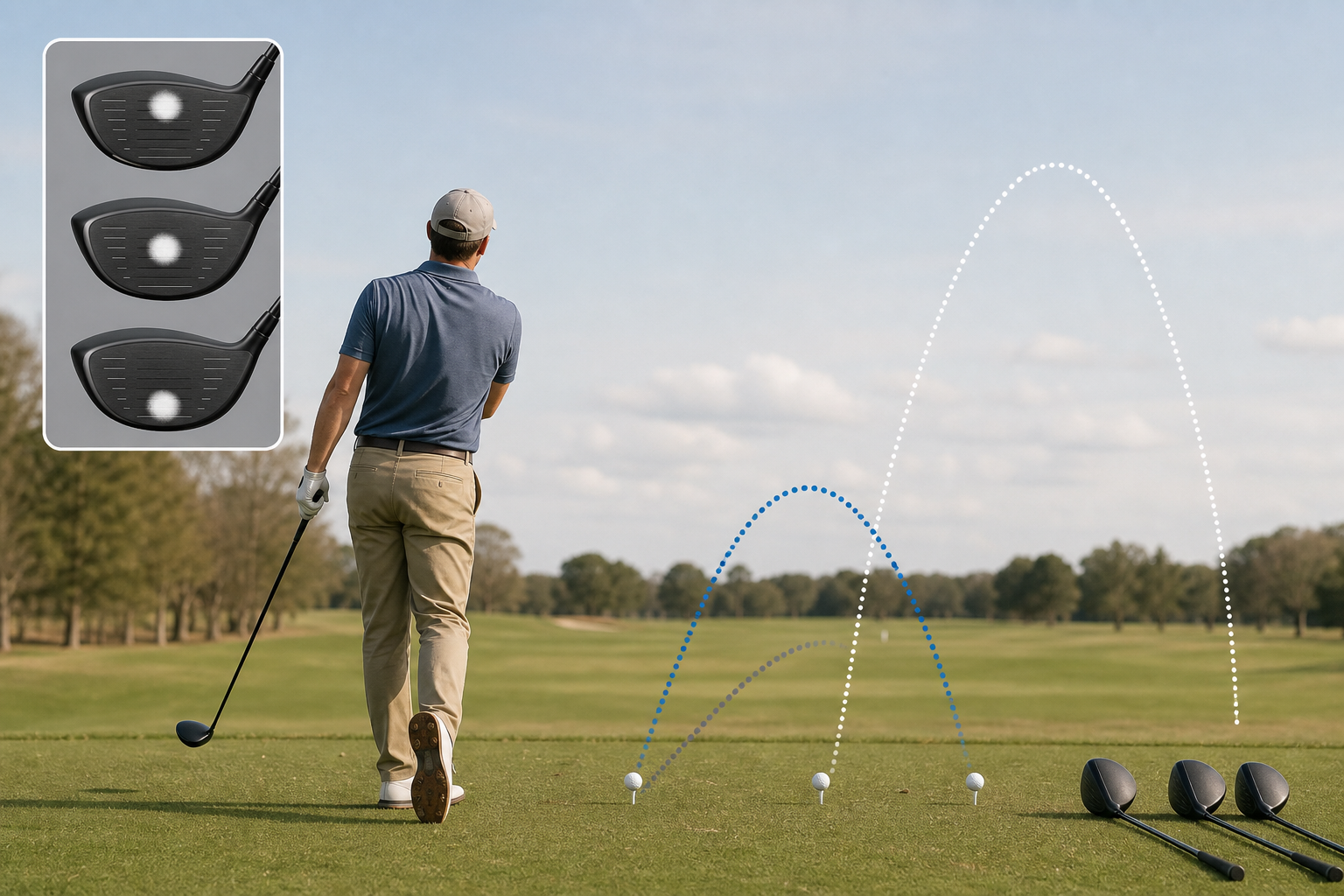
Built for: Golfers comparing driver lofts who want a repeatable decision process instead of a universal loft recommendation.
The wrong driver-loft decision often starts with one attractive tee shot and ends with a club that only works on your best swing. Compare lofts through a consistent strike pattern, your normal launch window, and the ball flight you can repeat under pressure.
The quick verdict
Choose the driver loft that produces the most playable, repeatable flight from your typical strike, then confirm the choice in an individual fitting rather than chasing a universal loft recommendation.
Best for Golfers who can hit a small set of comparable tee shots and are willing to judge the pattern rather than their single longest drive.
Skip it if Skip self-selection when contact varies wildly from shot to shot or when two lofts produce unclear patterns; a fitting is the more useful next step for an individual equipment decision.
Start with the tee shot you actually face
On a wide practice tee, a low bullet that runs forever can look persuasive. On the 17th hole, with trouble short of the fairway or a bunker at your preferred landing area, the better question is whether you can predict its start, height, and finish. Driver loft is therefore not a number to borrow from a tour player or a playing partner. It is a choice made around your normal delivery, strike pattern, and the flight that leaves you a playable next shot.
Guild recommendation: Define success before comparing lofts: select a target corridor and decide what finish would leave you comfortable playing your next shot.
Read launch as a window, not as a verdict
Begin by observing the first part of the flight. Does the ball leave too low to carry the feature you normally need to clear, climb into a height you do not trust, or launch on a usable window and continue toward your intended area? One shot cannot answer that question. A loft comparison becomes meaningful when similar swings create a visible pattern over several balls. If one option gives you a more usable launch window across ordinary swings, it has earned more attention than an occasional spectacular result.
Guild recommendation: Use a fixed target and the same tee height for both options so that launch changes are less likely to be caused by a changed setup.
Treat strike as part of the loft decision
A driver face does not receive every strike in the same place, and a changing contact pattern can disguise what you are learning about loft. If one group of shots comes from noticeably different areas of the face than the other, avoid declaring a winner. First repeat the comparison with a similar tee and intention. Marking impact location, or simply noting obvious high, center, or low contact, gives your ball-flight observations context without pretending that a range session diagnoses your swing.
Guild recommendation: Compare like with like: judge the lofts mainly from shots that resemble your ordinary contact rather than from isolated high-face or low-face misses.
Let the full flight settle the argument
Launch is only the opening act. Watch whether each shot holds its line, carries the part of the hole you normally need to cover, and finishes in a usable area. A golfer whose lower-loft option repeatedly finishes in a playable corridor may prefer that pattern, while another golfer may need the higher-loft option because it supplies a more useful launch on their normal strike. Neither outcome makes a particular loft universally right. The observable result is what matters: the flight should give you a clearer, more repeatable tee-shot plan.
Guild recommendation: Record six comparable shots per option and choose the loft with the better acceptable-shot pattern, not the best single carry or rollout.
Use fitting to confirm the final choice
A range comparison can narrow the decision, but equipment choices are best evaluated for the individual golfer through fitting, according to the PGA of America. Bring your observations to that conversation: the lofts compared, your typical strike, the launch window you preferred, and the flight that felt most playable. If you compete, also ensure that the club you put in the bag conforms to the applicable equipment rules; the USGA states that equipment used in competition must conform to those rules.
Guild recommendation: Use your on-range notes to ask a fitter focused questions, then confirm that any competition club conforms to the applicable rules.
Try this · 25 to 35 minutes.
Three-Flight Driver Loft Comparison
Use the same golf balls, tee height, target line, and normal swing intention for each comparison. If available, use two driver lofts with otherwise comparable shafts and settings, and choose a range where you can clearly see the first part of each flight and its finish.
- Hit three warm-up balls without judging the result.
- With the first loft, hit six shots aimed at the same target and note only three observations for each: strike location as best you can tell, initial launch appearance, and the general finish of the flight.
- Set aside obvious mishits that do not represent your normal contact, but keep ordinary imperfect strikes because they show how the club behaves on the course.
- Repeat the same six-shot sequence with the second loft, maintaining the same tee height and target.
- Compare the two groups as patterns. Ask which loft gives you more shots that start on a usable window and finish in a part of the fairway or range you would accept on a tight hole, while preserving a flight you can predict.
What progress looks like: The useful loft is the one that creates the larger cluster of acceptable, repeatable flights from ordinary contact, not necessarily the shot that travels farthest.
Put the guide to work
These searches are a starting point—not a substitute for the fit and comparison criteria above.
Adjustable driver loft sleeves
Look for a model that lets you compare loft settings while holding the rest of the club as constant as possible.
Driver impact-location spray
A face-marking aid can help you separate a loft question from a changing strike pattern.
Golf launch monitor
A monitor can add launch observations to your visual ball-flight notes, but it should support rather than replace a repeatable comparison.
If you buy through these links, Guild of Golf may earn a commission at no extra cost to you.
The practical takeaway
- There is no universal best driver loft; the useful choice is tied to your own repeatable launch, strike, and ball-flight pattern.
- Keep tee height, ball type, target, and swing intention consistent when comparing lofts.
- Judge groups of ordinary shots, because a single exceptional drive is weak evidence.
- When the pattern remains unclear, individual fitting is a better decision tool than further guesswork.
- For competition, use equipment that conforms to the applicable club rules.
Frequently asked questions
Should I choose driver loft from my swing speed alone?
This process does not rely on a universal loft recommendation from a single trait. Compare the launch, strike, and playable flight you produce, then use an individual fitting to evaluate the equipment choice for you.
What if one loft produces my longest drive but more poor finishes?
Give more weight to the repeatable group of playable shots. A memorable long drive is less useful than a flight you can predict when the hole demands a target and a safe finish.
Can I compare lofts on the range without a launch monitor?
Yes. Use a fixed target, consistent tee height, and repeated shots, then observe initial launch, approximate strike location, and where the flight finishes. A launch monitor can add information, but it does not remove the need for comparable swings.
When should I stop testing and get fitted?
Move to an individual fitting when ordinary strikes vary enough that you cannot see a clear pattern, or when two lofts remain similarly playable after a consistent comparison. The PGA of America identifies fitting as a way to evaluate equipment choices for the individual golfer.
Sources used for this draft
- USGA Equipment Rules — The reminder that equipment used in competition must conform to the applicable club rules.
- PGA of America: Club Fitting — The recommendation to evaluate a final equipment choice through fitting for the individual golfer.
Guild of Golf may earn a commission from qualifying purchases made through affiliated shopping links, at no additional cost to the buyer.