
evergreen guide
Choose a Game-Improvement Driver by Your Strike Pattern, Not the Label
A practical framework for choosing a more playable driver by measuring where you strike the face, mapping your playable miss, and comparing dispersion, launch, and confidence.
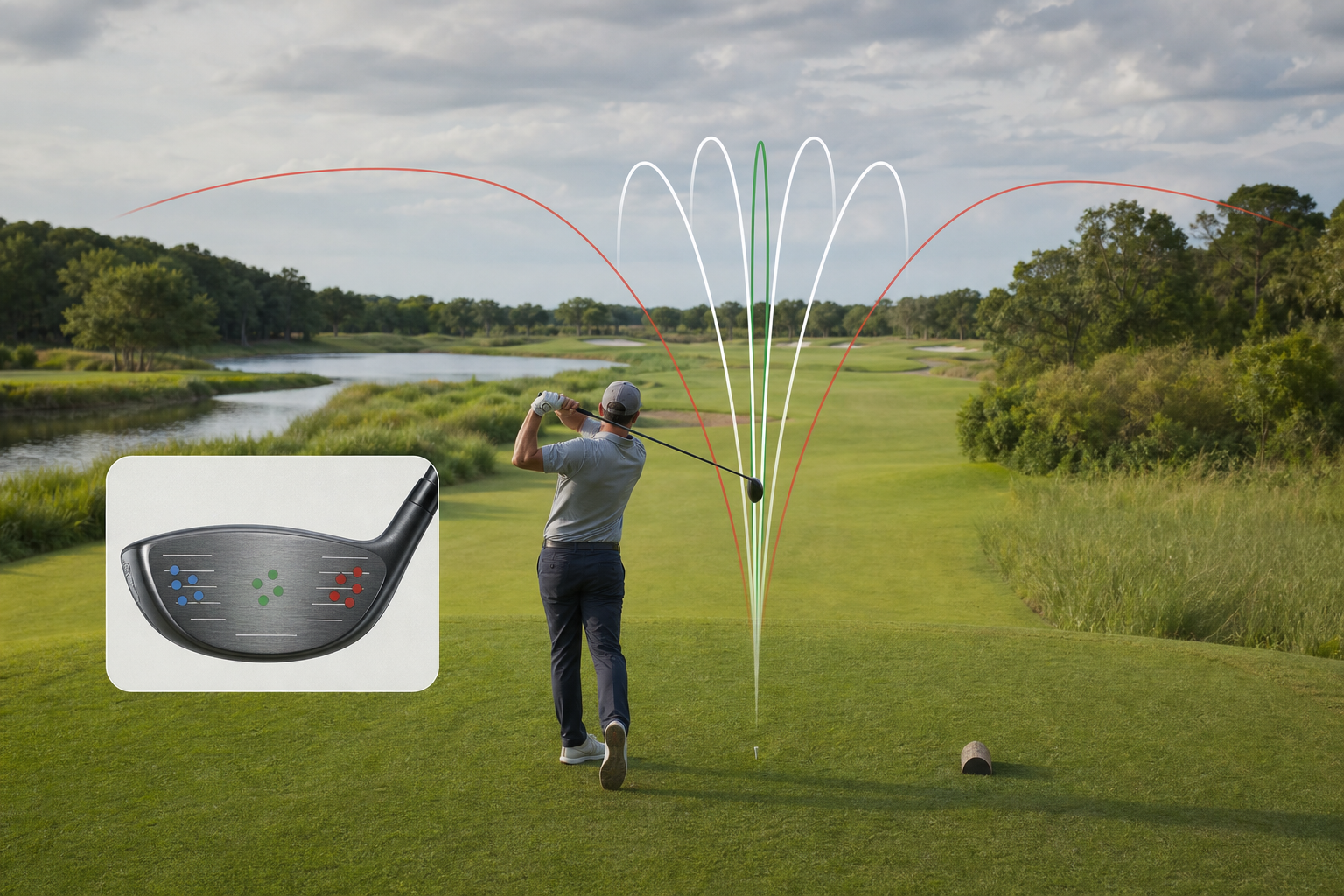
Built for: Golfers seeking a more playable driver who want to evaluate strike consistency, dispersion, launch, and confidence without relying on a vague game-improvement label.
The driver that looks most forgiving on a rack is not automatically the one that keeps your ball in play. Start with the shots you actually hit, then compare candidates by their most repeatable launch window, left-to-right spread, and whether you can make a committed swing on a demanding tee shot.
The quick verdict
Choose the driver that makes your common miss less costly while preserving a launch and start line you can reproduce, rather than choosing by a game-improvement badge alone.
Best for This approach is best for golfers whose driver shots vary enough that a single perfect strike says little about what will happen on the next tight par 4.
Skip it if Skip a driver change for now if your evaluation consists only of a few center-face swings; collect a larger, honest sample or work with a fitter before treating any result as meaningful.
The tee-shot problem is rarely a lack of one good swing
A golfer can hit one towering drive on the range, then stand on a narrow par 4 and wonder which version of that shot will appear. That tension is the real buying problem. A playable driver is not simply one that can produce a long center strike; it is one whose ordinary outcomes give you a sensible next shot often enough to use it with conviction.
Start by defining “playable” for your home courses. A gentle shot that finishes in the right rough may be entirely acceptable if the left side brings trees, water, or out of bounds into play. Conversely, a high launch that looks impressive can be the wrong result if it repeatedly finishes in a penalty area. The useful question is not whether a miss is technically good or bad. It is whether that miss leaves an outcome you can accept from the tee box.
Guild recommendation: Write down the side of the hole that creates the bigger penalty and judge every driver by how often its typical miss stays away from that side.
Read strike pattern before you read a product category
Impact location gives the comparison a starting point. A mostly centered cluster, even if it is not perfectly centered, suggests that consistency may be more important than chasing a broad “forgiving” description. A repeated heel-side or toe-side cluster identifies a recurring delivery pattern worth accounting for during a comparison. A pattern scattered across the face tells you that isolated launch-monitor highlights deserve less weight than the overall spread.
Do not turn one mark into a diagnosis. A heel-side strike on one swing and a toe-side strike on the next can reflect a variable session, not a permanent trait. Instead, look for a cluster across a useful sample. The goal is not to assign blame to your swing; it is to understand whether a prospective driver gives your normal strike pattern a better chance of producing a useful shot.
Guild recommendation: Use visible face-impact feedback for at least nine comparable shots, and favor the option that makes your recurring strike pattern easier to identify and evaluate rather than hiding it behind a few exceptional balls.
Map the playable miss, not just the average shot
Dispersion is most useful when you relate it to a real hole. Imagine a 400-yard par 4 with trees down the left, generous rough on the right, and a fairway that narrows beyond a bunker. A driver that produces a compact right-of-center pattern may be a better fit than one that occasionally flies farther but sends several balls toward the trees. On another course, the same pattern may be unacceptable because the right side is water. Context changes the decision.
Separate start line from finish. A ball that begins consistently left of your target calls for a different comparison than a ball that begins near the target and drifts away later. During a fitting or a self-comparison, note both. This keeps a memorable final position from obscuring the first direction the ball took and makes your observations more useful when discussing options with a qualified fitter.
Guild recommendation: Pick a target line that represents the center of a fairway, record starts and finishes, and select the driver whose wider misses occupy the side of the hole you can realistically play from.
Use launch as an observable result, not a visual scorecard
Launch matters because it shapes the tee shot you must play next, but “high” is not automatically better and “low” is not automatically controlled. Watch whether the flight is repeatable enough to clear the features that matter on your course and whether it lands in the part of the hole your playable-miss plan allows. A launch that varies wildly from shot to shot complicates club selection and confidence, even when its best version looks excellent.
Compare like with like. Use the same ball type where possible, tee the ball at the same height, aim at the same target, and avoid changing your swing intention from one candidate to another. If one driver encourages a free, normal motion while another makes you steer the face toward the fairway, that is relevant evidence. Confidence here is not a vague feeling; it is the observable ability to make your ordinary committed swing repeatedly.
Guild recommendation: Keep tee height and target constant, then prefer the option whose launch window and start line you can repeat without a protective, guided swing.
A fitting should test the story your shots are telling
A fitting is most valuable when it is built around measured outcomes and a clear on-course problem. PGA of America guidance emphasizes that fit and measured results matter when comparing club options. Bring the notes from your strike-and-start-line check: your common impact area, your worse side, the type of hole that creates anxiety, and the finish you consider playable. Those details give the comparison a purpose beyond trying to maximize a single number.
Ask to see a sequence of normal swings, not merely a best shot. Compare the shape and width of the group, the consistency of launch, and the relationship between your repeated miss and the available landing area. A fitter can help organize that evidence, but the decision still belongs to the golfer who knows whether a particular miss is rough, trees, sand, water, or a lost ball at home.
Guild recommendation: Take your current driver and written on-course constraints to a measured fitting, then ask to compare repeatable shot groups rather than selecting from a marketing category.
Conforming still matters after you find a good fit
A driver’s marketing category does not determine whether it is permitted for play under the Rules. USGA Equipment Rules set conforming club requirements regardless of how a product is described. If you compete in events that require conforming equipment, verify the club’s status through the appropriate event or equipment resources before putting it into play.
That check should come after, not instead of, the performance comparison. A conforming driver can still be a poor match for your strike pattern, while a promising range result does not remove the need to confirm equipment requirements for the competitions you enter.
Guild recommendation: Confirm conformity separately from fit, especially before tournament play, and do not use a game-improvement label as evidence of either.
Try this · 20 minutes.
The Nine-Ball Strike-and-Start-Line Check
Use a driving range with a clearly visible target line and enough width to judge a left-to-right pattern. Bring your current driver, impact-location spray or removable face tape if available, nine balls, and a notebook or phone note. Select a target that represents the center of a fairway rather than the nearest flag.
- Warm up normally, then make three unhurried driver swings without recording them.
- For nine balls, use the same target and your normal on-course tee height. After each shot, note three items: where the ball struck the face if visible, whether it started left, near, or right of the target, and whether it finished in a playable area or would have created trouble on your usual course.
- Do not discard a poor shot or immediately make a mechanical correction. The purpose is to see the pattern you bring to the tee, not to manufacture a better one for the next swing.
- Group the nine strikes as mostly center, heel-side, toe-side, high, low, or scattered. Then count the shots that began near your intended line and the shots whose finish you would willingly play from.
- Repeat the same nine-ball check with any driver you are considering, keeping the tee height, target, and evaluation notes consistent.
What progress looks like: You have a clear comparison when one option produces a tighter strike cluster or a more manageable finishing pattern across the nine shots, without requiring you to guide the clubhead or aim away from the target.
Put the guide to work
These searches are a starting point—not a substitute for the fit and comparison criteria above.
Face-impact feedback tools
Use a temporary face marker to make strike location visible before deciding whether a different head, shaft, or setup is solving the problem you actually have.
Adjustable driver comparison
Compare adjustable options only after you know whether your repeated issue is start line, launch, strike location, or broad dispersion.
Driver fitting appointment tools
A measured fitting can help you compare candidates under the same conditions rather than relying on a label or one memorable shot.
If you buy through these links, Guild of Golf may earn a commission at no extra cost to you.
The practical takeaway
- A game-improvement label is less useful than a repeatable record of strike location, start line, finish pattern, and launch.
- Your best driver choice is often the one that places your normal miss in the least damaging part of the hole, not the one that produces the most dramatic single shot.
- Compare drivers under consistent tee height, target, and swing intention so that the results describe the club rather than changing conditions.
- Measured fitting results are more useful when you arrive with an honest description of your home-course penalties and your common tee-shot pattern.
- Check conforming status independently when the rounds you play require conforming equipment.
Frequently asked questions
What is a playable miss with a driver?
A playable miss is a shot that misses your ideal target but leaves a reasonable next shot within the hazards and boundaries of the hole you are playing. It is specific to the course and to the penalty on each side of the fairway.
Should I choose a driver based on my best launch-monitor shot?
No. A best shot can show what is possible, but a useful decision should emphasize the cluster of normal swings, including strike location, start line, finishing spread, and launch consistency.
How many shots should I hit when comparing drivers?
Use enough normal swings to reveal a pattern rather than relying on a handful of flushed strikes. Nine recorded shots per option is a practical starting check, and a measured fitting can extend that comparison with more structured data.
Can I use an adjustable driver if my miss changes from day to day?
You can compare adjustable options, but first establish whether there is a recurring pattern across several normal swings. If the pattern is highly scattered, prioritize a measured comparison and avoid making a permanent decision from one session.
Does game-improvement mean a driver is conforming?
No. Marketing descriptions do not determine conformity. Conforming club requirements apply independently under the USGA Equipment Rules.
Sources used for this draft
- USGA Equipment Rules — Conforming club requirements apply regardless of a driver’s marketing category.
- PGA of America: Club Fitting — Fit and measured results matter when comparing club options.
Guild of Golf may earn a commission if you purchase through qualifying links, at no additional cost to you.