
evergreen guide
Choose Driver Loft by Reading Launch, Strike, and Ball Flight
A repeatable driver-loft decision process built around what your ball actually does, rather than a universal loft number.
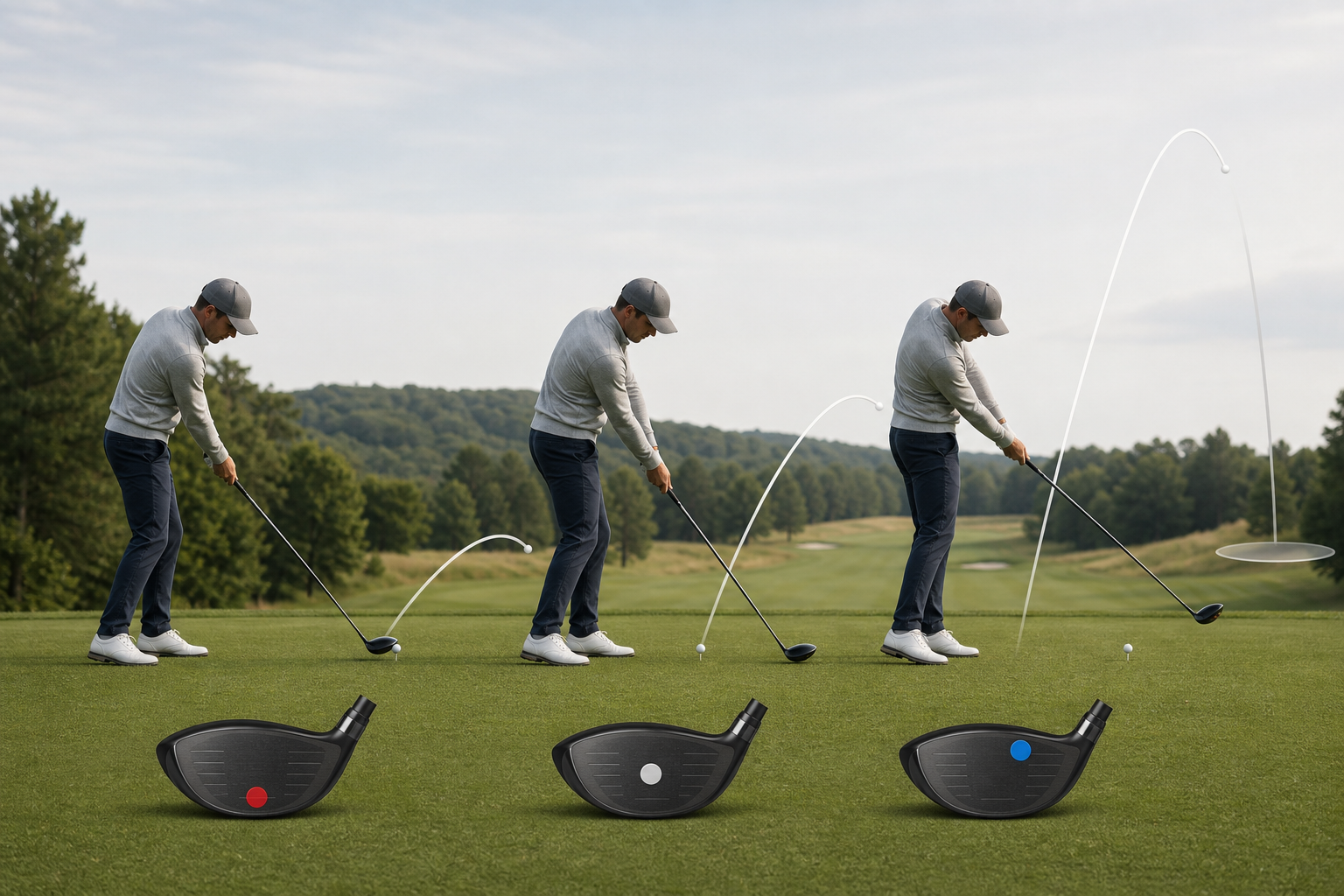
Built for: Golfers comparing driver lofts who want a repeatable decision process instead of a universal loft recommendation.
When one tee shot falls out of the sky and the next starts too low, it is tempting to blame a single loft number. A better choice comes from observing launch, strike location, and the shape and height of a useful sample of shots under consistent conditions.
The quick verdict
Choose driver loft only after comparing a small set of repeatable shots with the same ball, tee height, target, and swing intention. Keep the loft that gives you the most usable launch and predictable ball flight from your typical strike, not the occasional perfect strike.
Best for Golfers who can hit several shots under similar conditions and are willing to prioritize a playable on-course pattern over a label such as 9, 10.5, or 12 degrees.
Skip it if Skip a self-directed loft decision when your strike and starting direction vary so widely that no clear pattern appears, or when you need a competition-ready answer without confirming that the club conforms to the applicable rules.
Start with the tee-shot problem, not the number on the sole
Picture the par 4 where a low tee shot runs into trouble on dry ground, while a high one rides the wind and finishes short of the same landing area. Neither result automatically proves that your driver has too little or too much loft. It tells you to separate three observations: how the ball leaves the club, where you tend to strike the face, and what the complete flight does relative to the hole you are trying to play. A loft choice is useful only when those observations form a pattern.
Guild recommendation: Write down your normal tee-shot miss before comparing settings. Use an on-course description such as “starts right and stays right” or “launches low and finishes in the front bunker,” rather than “I need more loft.”
Create a baseline that deserves comparison
A driver-loft trial becomes misleading when every shot uses a different tee height, target, ball, or swing thought. Begin with your current driver configuration and hit a modest group of shots at one target. Judge the group, not its best member. A ball that launches in a useful window, begins near the intended line, and finishes in an acceptable part of the hole is more informative than one spectacular carry that you cannot reproduce.
Guild recommendation: Keep the ball model, tee height, target, and intended shot shape fixed for each comparison group. Record five shots per setting before moving on.
Read strike before assigning all responsibility to loft
A face strike that moves around from shot to shot can produce a confusing collection of launches and finishes. That does not mean loft is irrelevant; it means the comparison needs humility. If one setting appears better only because it received your one centered strike, it has not earned a place in the bag. Conversely, a setting that gives you a usable flight from several ordinary strikes may be the more practical choice for a Saturday round.
Guild recommendation: Use face-impact tape or another simple strike marker during the session. Compare where the majority of impacts occur, then ask which loft setting delivers the most playable result from that normal contact pattern.
Use ball flight as the final filter
Launch is only the beginning of the shot. Watch the entire flight and imagine its result on a familiar hole: Does it carry the hazard you normally face, enter the wind in a controllable way, or finish in an area from which you can play the next shot? A setting that looks dramatic on the range may be a poor match if its common flight creates a difficult next shot. The most helpful loft is the one whose typical flight matches the problems you actually encounter.
Guild recommendation: Choose one familiar hole as your reference. For every comparison shot, decide whether that flight would have left a playable next shot there, then favor the setting with the most acceptable answers.
Know when a fitter should make the call
A self-comparison can narrow the question, but it cannot replace an individualized evaluation when the outcome remains unclear. The PGA of America advises that equipment choices should be evaluated for the individual golfer through fitting. Bring your notes on strike, launch window, and typical ball flight to that conversation. They give the fitting process a useful starting point and prevent the discussion from becoming a search for a universal loft recommendation.
Guild recommendation: Seek a fitting when neighboring loft settings produce mixed results, when you cannot keep the comparison conditions consistent, or when you want to evaluate more than loft alone.
Keep rules and settings in view
If you compete, the final club must conform to the applicable club rules. The USGA Equipment Rules provide the governing reference for equipment used in competition. This is a separate question from whether a setting suits your game, but it belongs in the final check before a tournament round.
Guild recommendation: Confirm that the driver and its intended configuration are appropriate for the competition you plan to enter, and consult the applicable rules when you are uncertain.
Try this · 30 to 40 minutes.
The Three-Window Loft Comparison
Bring one ball model, your normal tee, and any driver-loft settings or comparison heads available to you. Choose a range target or fairway-width landing area, use the same tee height for every shot, and avoid changing your intended shot shape during the exercise.
- Warm up, then hit five driver shots with your current loft at a single target. After each shot, note only three observations: where contact appeared on the face, whether the ball launched low, medium, or high for you, and whether the finished flight was a useful on-course shape.
- Change to one neighboring loft option or setting while keeping the ball, tee height, target, and swing intention unchanged. Hit another five shots and record the same three observations.
- If a second neighboring option is available, repeat the same five-shot set. Do not chase one unusually long shot or discard a shot merely because it is not attractive.
- Review each group as a whole. Identify the setting that produced the largest number of shots with a launch window you can use, a repeatable contact area, and a flight that would keep a normal hole in play.
- If no setting produces a recognizable pattern, stop the comparison and take your notes to a qualified fitter rather than forcing a conclusion.
What progress looks like: You have one clearly documented loft setting that produces the most repeatable playable flights across a five-shot group, or you have clear evidence that a fitting is the sensible next step.
Put the guide to work
These searches are a starting point—not a substitute for the fit and comparison criteria above.
Compare adjustable driver loft tools.
Use this search only after confirming the exact adjustment system for your current driver, because a wrench must match the club you own.
Compare impact-location feedback tools.
Impact feedback can help you record strike patterns during a controlled loft comparison instead of relying on memory after each shot.
Compare consistent practice balls.
A single ball model removes one avoidable variable while you compare ball flights across loft settings.
If you buy through these links, Guild of Golf may earn a commission at no extra cost to you.
The practical takeaway
- There is no universal driver-loft answer because a useful choice depends on your repeatable launch, strike pattern, and complete ball flight.
- Control tee height, ball model, target, and swing intention before judging one loft setting against another.
- Favor the loft that creates the most playable five-shot pattern, not the loft that produces one exceptional shot.
- If the results remain unclear, use your written observations as a starting point for an individualized fitting.
- Confirm that equipment used in competition conforms to the applicable club rules.
Frequently asked questions
Should I choose driver loft from my handicap?
No. Handicap does not describe your typical launch, face strike, or ball flight well enough to make a reliable loft choice. Use a controlled comparison of your own shots instead.
How many shots should I hit before comparing driver loft settings?
Five shots per setting is a practical minimum for spotting a basic pattern when conditions are controlled. If the group is scattered or interrupted, gather another comparable group rather than drawing a conclusion from one shot.
What should I record during a loft comparison?
Record strike location, whether the launch appears low, medium, or high for you, and whether the finished flight would be playable on a familiar hole. Those observations keep the decision connected to the result you need.
Can I change tee height while comparing lofts?
Do not change tee height during the comparison if your goal is to isolate the loft choice. You can explore tee height later as a separate variable after selecting a promising loft setting.
When is a professional fitting more useful than a range test?
A fitting is especially useful when your comparison produces no consistent pattern or when you want equipment choices evaluated for your individual game. The PGA of America identifies fitting as the way to evaluate equipment choices for the individual golfer.
Sources used for this draft
- PGA of America: Club Fitting — The recommendation to evaluate equipment choices for the individual golfer through fitting.
- USGA Equipment Rules — The reminder that equipment used in competition must conform to the applicable club rules.
Guild of Golf may earn a commission from qualifying purchases made through affiliate links, at no additional cost to you.