
evergreen guide
Who Draw-Bias Drivers Actually Help—and When They Will Not
A practical guide for right-handed golfers who miss right with driver and need to separate a persistent delivery pattern from a one-off setup, strike, face, or path issue before choosing draw bias.
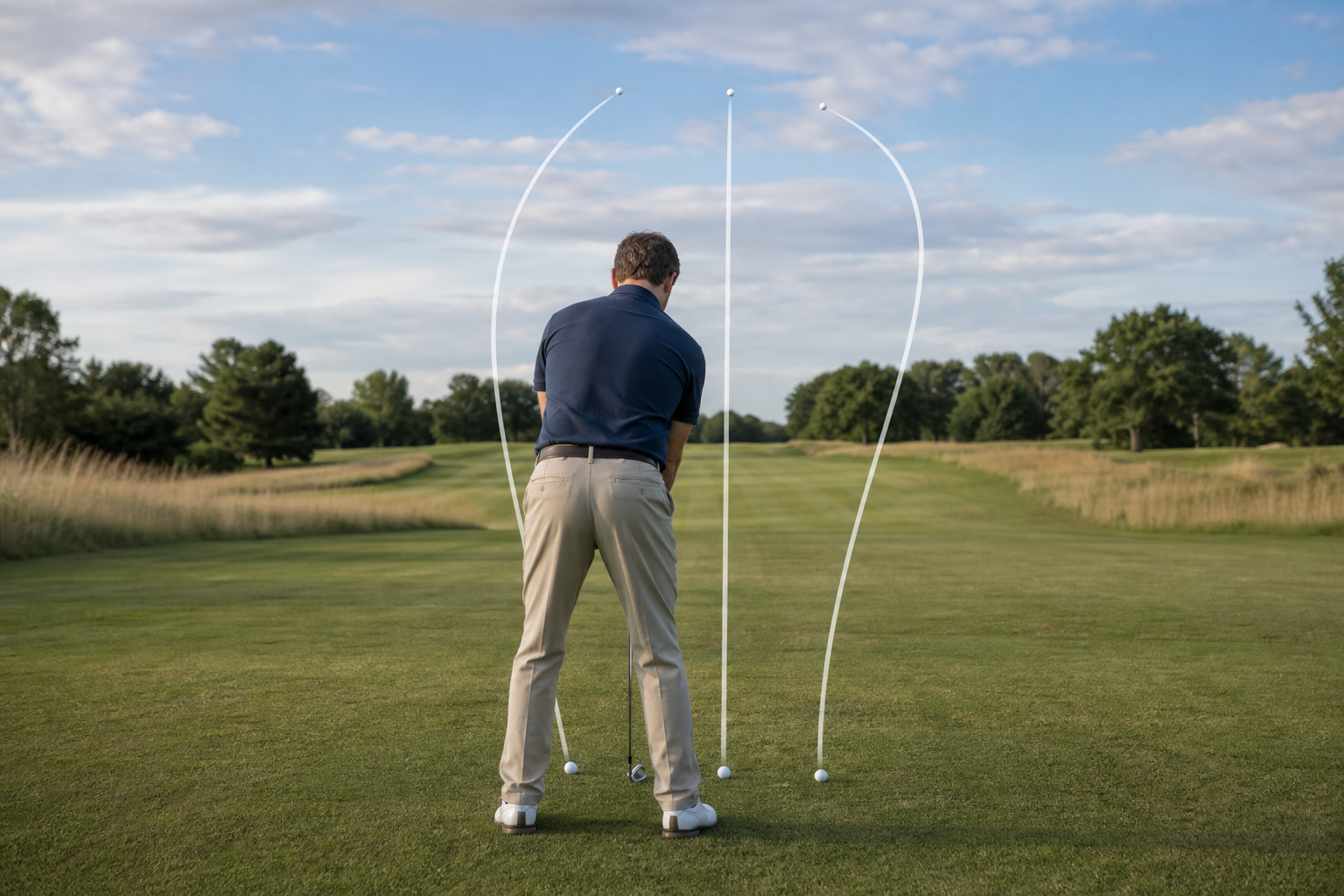
Built for: Right-handed golfers considering draw bias for a recurring right miss who need to separate face, path, strike, and setup effects.
A drive that starts down the right side can make a draw-bias driver look like an obvious answer. Before changing clubs, identify whether the recurring miss is a repeatable rightward ball flight, a poor-contact pattern, or an address routine that changes from swing to swing.
The quick verdict
A draw-bias driver is most sensible for the right-handed golfer whose measured, repeated driver pattern finishes too far right and remains consistent across solid strikes and a stable setup. It is a poor shortcut for the golfer whose right miss appears mainly after heel or toe contact, changing alignment, or an inconsistent starting direction.
Best for Golfers with a recurring right miss who can document a similar ball-flight pattern over a useful sample of driver shots and are willing to compare options through a fitting based on measured ball flight.
Skip it if Skip the purchase decision for now if your misses alternate wildly, contact is scattered across the face, or a simple setup check changes the result from shot to shot.
A right miss is a description, not yet a fitting answer
On the 17th tee, a ball that peels toward the trees on the right can create a familiar impulse: buy the driver designed to turn it over. Pause there. “Right miss” can describe balls that begin right, balls that begin near the target and bend right, and balls that start or curve differently when contact changes. Those are different observations, even when they all leave you playing from the same rough. Start by writing down the ball’s initial direction, its curve, its final position, and the apparent strike location. A driver decision becomes more useful once the pattern survives more than one swing.
Guild recommendation: Do not select draw bias from the final location alone. Build a short record of repeated shots first.
Separate face, path, strike, and setup in your notes
You do not need to diagnose your swing to make a better equipment decision. Treat face, path, strike, and setup as separate categories for observation. Face is represented in your notes by where the ball initially starts. Path is represented by the direction the shot appears to travel through its early flight relative to that start. Strike is the contact location you observe or estimate on the face. Setup includes repeatable items such as target choice, alignment routine, tee height, and ball position. The value of this separation is practical: if one category changes constantly, a club change may be answering the wrong question.
Guild recommendation: Use plain descriptions such as “started right and stayed right” or “started near target, then curved right.” Avoid declaring a cause from a single shot.
The golfer a draw-bias option may suit
A draw-bias driver deserves a fitting comparison when a right-handed golfer repeatedly sees driver shots finish right under a stable routine, especially when the same general result appears on solid strikes. The operative word is repeatedly. A useful candidate is not merely frustrated by a right miss; that golfer can show a fitter a recognizable pattern across several shots. PGA of America guidance describes club fitting as an individual process that should account for measured ball flight. That makes measured comparison more valuable than choosing solely from a design label or a playing partner’s recommendation.
Guild recommendation: Bring your recent ball-flight notes to a fitting and ask to compare candidates against your current driver using measured ball flight.
When draw bias is likely to mask the real decision
A draw-bias option is less compelling when the right miss is unpredictable. If one drive starts left, the next starts right, and the contact points scatter, first make your practice environment and address routine more consistent. Likewise, if the ball flight changes noticeably after you alter where you aim or how you set the club behind the ball, that setup variable deserves attention before a purchase. The goal is not to prove that equipment cannot help. It is to avoid fitting a permanent club choice to a temporary pattern.
Guild recommendation: Delay the club decision when your notes show that changes in setup or strike correspond more clearly with the miss than a stable overall flight pattern does.
Use fitting to compare outcomes, not promises
Once your audit identifies a recurring pattern, compare a draw-bias candidate with your present driver in a fitting. Ask for the same target, a similar set of shots with each club, and measured ball flight that you can review afterward. Focus on the observable outcome: Does the recurring right finish become more manageable without replacing it with a new, repeated left miss? The USGA states that adjustable and non-adjustable driver designs must conform to applicable equipment rules, so legality is a baseline consideration; whether a particular design suits you remains individual.
Guild recommendation: Choose the option that produces the more playable repeated pattern for your swing and course constraints, not the option with the strongest draw-oriented label.
Set a course-based threshold before you buy
Think about the hole that creates the most pressure. If your home course repeatedly punishes a right finish with out-of-bounds, trees, or a forced recovery, a fitting result that narrows that pattern may have clear value. If both sides of the fairway are trouble and your misses move in both directions, prioritize predictability before shaping bias. A driver should support the shot you can reproduce when the tee shot matters, not invite a different emergency miss on the other side.
Guild recommendation: Define success in terms of a playable dispersion pattern on your common holes, then use fitting results to judge whether draw bias serves that outcome.
Try this · 20 minutes.
The Nine-Ball Right-Miss Audit
Use your usual driver, a level practice tee, nine balls, and a way to mark each result in a notebook or phone. Aim at one visible target and use the same tee height and target line for all nine shots. After each shot, note the initial direction, the overall curve, the finishing direction, and where you believe the strike occurred on the face.
- Hit three balls with your normal routine, recording only what you observe rather than trying to change the swing.
- Before the next three balls, repeat your target selection and alignment routine deliberately, then record the same four observations after every shot.
- For the final three balls, keep the same setup and make no intentional shape change; simply record whether the strike and resulting flight resemble the earlier shots.
- Review the notes. Look for a repeated finish to the right on shots with similar contact and a similar initial direction, rather than treating one dramatic miss as the pattern.
What progress looks like: The exercise is successful when you can describe your miss with evidence, such as “most solid strikes finished right,” or “the right finish appeared mainly when contact moved around,” instead of relying on a single label such as slice.
Put the guide to work
These searches are a starting point—not a substitute for the fit and comparison criteria above.
Compare adjustable draw-bias driver options
Compare adjustment systems only after you have identified a repeatable rightward pattern, then bring candidates to a fitter who can evaluate measured ball flight.
Compare fixed draw-bias driver options
A fixed-design option may be worth comparing when you want a simpler choice, but the deciding evidence should still be how your measured ball flight responds.
Prepare for strike-pattern observation
Impact tape can help you observe whether the right miss travels with a repeatable contact location or whether strike location changes from shot to shot.
If you buy through these links, Guild of Golf may earn a commission at no extra cost to you.
The practical takeaway
- A draw-bias driver is a fitting candidate for a repeated rightward driver pattern, not an automatic cure for every ball that ends right.
- Record initial direction, curve, final position, apparent strike location, and setup consistency before changing equipment.
- A changing strike pattern or changing setup calls for more observation before a club purchase.
- Club fitting should reflect the individual golfer and measured ball flight.
- Compare the recurring outcome of a draw-bias option with your current driver, then choose the pattern that is more playable on your course.
Frequently asked questions
Should every right-handed golfer who slices buy a draw-bias driver?
No. First establish what “slice” describes in your own shots. If the rightward finish is not repeatable, or it appears mainly alongside changing strike or setup observations, a draw-bias purchase may not address the decision you actually need to make.
Can a draw-bias driver replace a fitting?
It should not replace one. PGA of America guidance says fitting should account for the individual golfer and measured ball flight. Use a fitting to compare your current club and possible alternatives against the same observable standard.
What should I bring to a driver fitting?
Bring your current driver and a brief record of your common flight: starting direction, curve, final position, apparent strike location, and any setup condition that seemed to change the result. This gives the fitter a clearer starting point than the phrase “I miss right.”
Are adjustable drivers legal?
The USGA states that adjustable and non-adjustable driver designs must conform to applicable equipment rules. Confirm that any club you consider is conforming for the competitions in which you intend to use it.
Sources used for this draft
- USGA Equipment Rules — The statement that adjustable and non-adjustable driver designs must conform to applicable equipment rules.
- PGA of America: Club Fitting — The recommendation that fitting account for the individual golfer and measured ball flight.
Guild of Golf may earn a commission from qualifying purchases made through affiliated shopping links, at no additional cost to you.