
comparison
Forged vs. Hollow-Body Irons: Let Fitting Settle the Debate
A fitting-first guide to comparing forged and hollow-body iron labels without mistaking a construction term for an on-course answer.
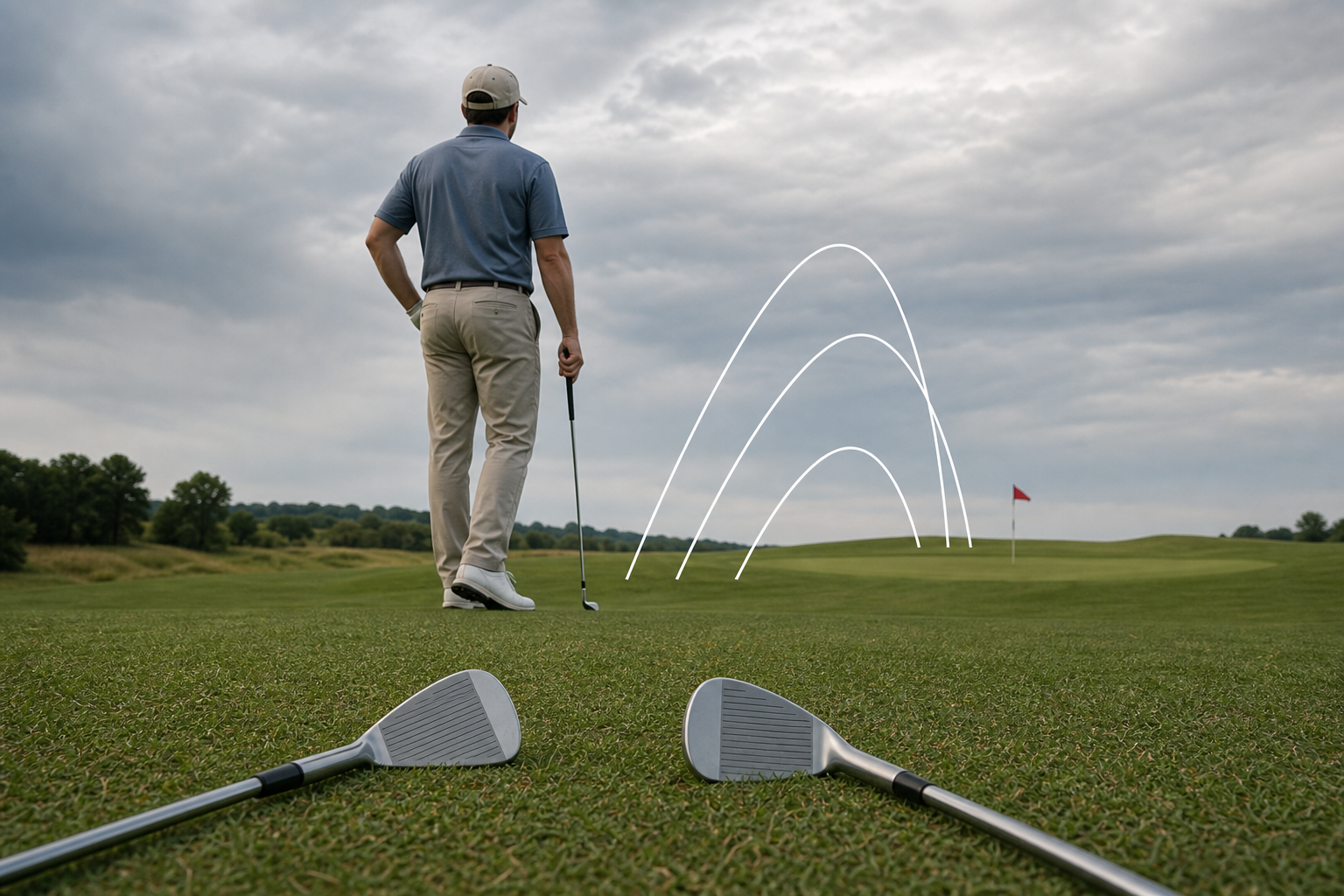
Built for: Golfers comparing iron constructions who want to separate manufacturing terms from on-course fit and performance.
The problem starts when one iron feels appealing in a few practice swings but leaves you unsure whether it will produce the distance gaps, launch window, and contact pattern you need on the course. Forged and hollow-body are construction labels, not a verdict on which iron belongs in your bag.
The quick verdict
Do not choose between forged and hollow-body irons on the label alone; compare the specific heads with measured results and the shots you actually face.
Best for Golfers willing to use a club fitting or a structured side-by-side comparison to prioritize usable distance gapping, predictable ball flight, and confidence at address.
Skip it if Skip a construction-led purchase if you have not established the lofts, shafts, lengths, and measurable shot results you need from the irons.
A construction label cannot make the decision for you
A golfer standing over a 155-yard approach does not need a manufacturing story; that golfer needs an iron that produces a useful, repeatable result for that shot. The USGA’s equipment rules apply conforming-club requirements regardless of marketing category or construction method, so neither label is a shortcut to a rules advantage. More importantly, the PGA of America advises that fitting and measured results matter when club options are compared. Treat “forged” and “hollow-body” as starting points for questions, not conclusions about feel, forgiveness, distance, or suitability.
Guild recommendation: Write down the role you need an iron to fill before comparing labels, such as holding a green from a given carry distance or creating a reliable gap below your hybrid.
Make feel an observation, then test the consequence
Feel matters because it affects what you notice at impact and how confidently you make a normal swing. It is still a personal observation, not a standardized promise embedded in a category name. During a fitting or a controlled range comparison, note whether one head helps you recognize centered versus off-center contact, then check whether that impression is accompanied by a repeatable ball-flight pattern. A pleasant strike sensation without predictable distance spacing may not solve the on-course problem that prompted the purchase.
Guild recommendation: Use a simple note after each group of shots: centered, uncertain, or off-center. Then compare that note with where the ball finished, rather than judging the club solely from the best-feeling strike.
Compare like jobs, not unlike specifications
It is easy to compare two 7-irons that carry different printed lofts, shafts, lengths, or set roles and then credit the construction label for the result. That is not a clean comparison. Ask the fitter to establish the intended role of each candidate and use measured outcomes to judge it, as the PGA of America recommends. If you are replacing a full set, assess the gaps through the scoring irons as well as the longer irons; a single impressive mid-iron shot does not show whether the set will fit together.
Guild recommendation: When possible, compare candidates configured for the same target role and record carry, direction, landing area, and gap to the neighboring club you plan to keep.
Choose for the shots that create your scoring decisions
The best choice depends on the constraint you are trying to solve. A golfer whose current irons leave uncertain approach distances should prioritize a repeatable distance pattern. A golfer who dislikes the visual or impact feedback of a candidate should determine whether that discomfort persists over a normal sequence of shots. A golfer rebuilding a mixed set should prioritize coherent spacing from the shortest iron through the longest iron they expect to carry. These are fitting questions, and neither construction label answers them by itself.
Guild recommendation: Bring your current 7-iron and one wedge or long club adjacent to the proposed set into the comparison so the fitter can see whether the candidate creates a usable transition.
Keep conformity separate from preference
A club’s construction category does not exempt it from the applicable conforming-club requirements. If competition conformity matters for your play, verify the particular club rather than assuming that a familiar label resolves the question. Preference is separate: the club still has to produce a result you can use under your normal playing conditions.
Guild recommendation: For competitive play, confirm the exact club’s conformity status through the relevant governing-body resources and make your final selection through measured fitting results.
Try this · 25 minutes.
The Alternating-Iron Comparison
Use two candidate 7-irons, or two irons intended to fill the same place in your set, with the same ball type. Choose a practice target with a clear landing area and bring a notebook or use a launch monitor if one is available.
- Warm up with several easy shots using any club, then make five normal swings with the first candidate iron.
- Hit five normal shots with the second candidate, aiming at the same target and keeping the same intended shot shape.
- Alternate one shot with each iron for another 10 shots rather than hitting all of one model at once.
- Record the starting direction, approximate landing area, strike location if visible, and whether either club creates an unwanted distance overlap or gap with the iron you already trust.
- If measured data are available, compare repeated carry distance and dispersion rather than selecting the single longest strike.
What progress looks like: You can identify which candidate gives the more repeatable usable landing area and distance role over a series of normal swings.
Put the guide to work
These searches are a starting point—not a substitute for the fit and comparison criteria above.
Compare candidate iron models
Use this search only after deciding the loft range, shaft options, and distance role you need to compare in a fitting.
Track shot patterns at practice
Impact tape can help you record strike location during a controlled comparison without turning one especially good shot into the decision.
Measure a landing-area pattern
A rangefinder can help estimate target distance when you are comparing whether two candidates produce a repeatable landing area.
If you buy through these links, Guild of Golf may earn a commission at no extra cost to you.
The practical takeaway
- Forged and hollow-body are labels that should begin a comparison, not end it.
- Measured results and fitting are more useful than category assumptions when choosing irons.
- Judge feel alongside carry pattern, direction, strike pattern, and set gapping.
- Compare candidates that are intended to perform the same job in your bag.
- Conforming-club requirements apply regardless of marketing category or construction method.
Frequently asked questions
Is forged automatically better feeling than hollow-body?
No category label alone can settle a personal feel judgment. Compare the specific candidates, record what you notice at impact, and check whether that preference is supported by repeatable shot results.
Should I choose the iron that produces the longest shot?
Not automatically. A longer single shot may be less useful than an iron that creates a repeatable carry pattern and proper gaps to the clubs beside it.
What should I ask for in an iron fitting?
Ask to compare candidate heads for the same intended bag role and to review measured carry, directional pattern, landing area, and gapping with your existing clubs or proposed set.
Do construction categories determine whether an iron conforms?
No. The USGA states that conforming-club requirements apply regardless of marketing category or construction method.
Sources used for this draft
- USGA Equipment Rules — The point that conforming-club requirements apply regardless of marketing category or construction method.
- PGA of America: Club Fitting — The recommendation to use fitting and measured results when comparing club options.
Guild of Golf may earn a commission from qualifying purchases made through shopping links, at no additional cost to the buyer.