
comparison
Alignment Sticks vs. Tempo Trainers: Choose the Feedback You Need
Alignment sticks and swing tempo trainers solve different practice problems, so the better buy depends on the error you can observe and the change you want to rehearse.
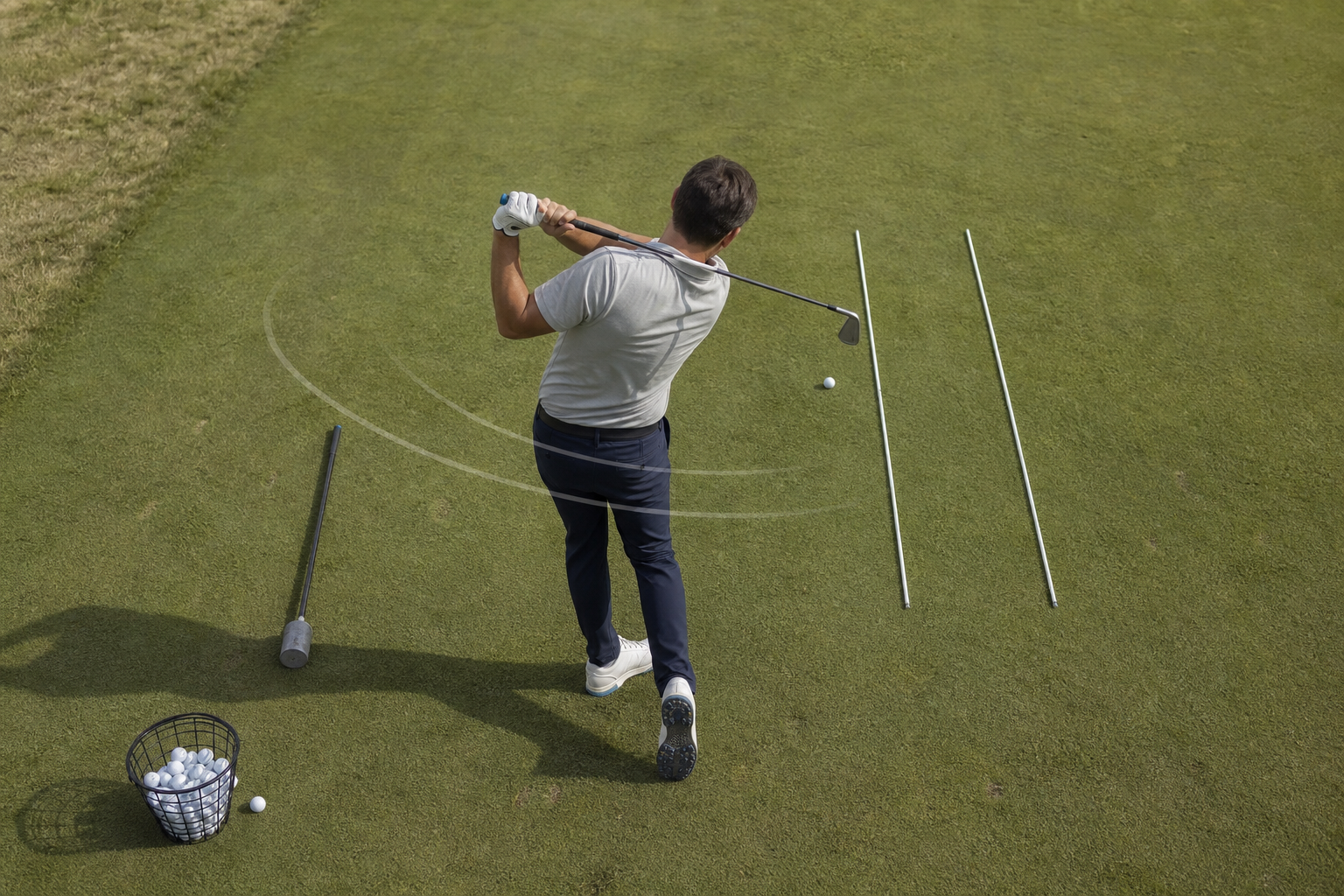
Built for: Golfers choosing between inexpensive practice aids for alignment, movement, rhythm, or speed awareness.
When a promising range session falls apart on the course, the temptation is to buy a gadget that promises a cleaner swing. Start instead with the feedback you lack: a visible reference for setup and intended path, or a repeatable cue for the pace of your motion.
The quick verdict
Choose alignment sticks when you need a visible, adjustable reference for where you aim, stand, or intend the club to travel. Choose a tempo trainer when your useful focus is making a calmer, more repeatable-paced rehearsal rather than checking geometry.
Best for Alignment sticks suit golfers who can name a setup or direction checkpoint to monitor. A tempo trainer suits golfers who want a simple movement cue and are willing to judge success by whether their motion stays consistently paced.
Skip it if Skip either purchase if you cannot state the practice goal first; purposeful practice works best when the activity is connected to a specific goal.
Start with the miss you can see.
Picture the golfer who aims at a flag, makes a decent swing, then discovers that his feet were aimed well right of the target. That golfer does not primarily need a rhythm reminder; he needs an external reference he can see before the club moves. Alignment sticks are useful because they let a golfer create lines and boundaries around a specific setup intention. A rod along the target line can make an intended aim picture easier to repeat, while a second rod can establish a ball-position or stance-width reference. The value is not the rod itself. It is the ability to compare each setup with the same visible standard.
Guild recommendation: Choose alignment sticks if your practice question begins with “Where am I aimed?” or “Am I setting up the same way?”.
Choose tempo feedback when positions are not the point.
Now consider the player who looks reasonably organized over the ball but rushes the transition after a poor shot, then tries to rescue the next swing with even more effort. A tempo trainer can give that player a single physical cue: make a continuous rehearsal at a deliberately even pace. It is not a substitute for knowing where the club should be, and it does not prove that a particular movement is correct. Its appeal is narrower and useful: it can keep practice centered on the feel of a repeatable rhythm instead of a crowded list of positions.
Guild recommendation: Choose a tempo trainer if you can already create a usable practice setup and want a simple cue for the pace of your rehearsal.
Do not ask one aid to deliver the other kind of feedback.
This is the decision tension. Alignment sticks can expose a difference between your intended setup and the setup you actually create, but they cannot tell you whether your motion has a steady cadence. A tempo trainer can encourage a less hurried rehearsal, but it cannot establish whether you are aligned to your intended target. Trying to turn either tool into a complete swing system usually produces unfocused practice. The more economical choice is the aid that removes the largest uncertainty in your current routine.
Guild recommendation: Before shopping, write one sentence beginning with “I want to be able to see” or “I want to be able to feel.” The first answer points toward sticks; the second points toward a tempo cue.
Build a practice task, not a pile of accessories.
Purposeful practice connects the activity to a specific goal, which is a useful filter when choosing any practice aid. A golfer preparing for a tee shot might use rods to rehearse a consistent alignment picture, then hit a small set of shots with that one intention. A golfer whose pre-shot rehearsal becomes quick and tense might instead make a few even-paced practice swings before each ball. In both cases, the aid should make the goal easier to observe. If you cannot tell whether the intended behavior happened, simplify the task before adding another tool.
Guild recommendation: Use one aid for one goal during a short block, and judge it by an observable signal such as consistently matching the setup reference or completing an even-paced rehearsal.
Keep range use separate from on-course assumptions.
Practice aids belong in a practice context unless you have confirmed that their use is permitted for the format you are playing. Equipment and its use during a stipulated round are governed by applicable rules, so do not assume that a helpful range aid is automatically appropriate during play. The practical move is simple: use the aid to establish a repeatable pre-shot intention in practice, then take only that learned routine to the course when the rules require it.
Guild recommendation: Check the applicable rules and conditions before using any training aid during a stipulated round.
Try this · 10 minutes.
The Two-Feedback Decision Session
Use a level practice area, a ball, two plain alignment rods, and a club you normally practice with. Lay one rod on the ground parallel to your intended target line and place the second rod outside the ball position so it creates a safe visual corridor without interfering with your swing.
- Choose one narrow goal for the session, such as setting the clubface and feet consistently to the target line or making each rehearsal begin and finish at an even pace.
- Make five address rehearsals without hitting a ball, stepping in and checking whether your clubface, feet, and ball position relate to the ground rods in the same intended way each time.
- Remove your attention from the rods and make five slow, continuous rehearsal swings, using a quiet count such as “one-two-three” from takeaway to finish. Do not try to force a position.
- Hit five balls, alternating one shot in which you prioritize the visual setup reference and one shot in which you prioritize the even-paced rehearsal. Keep the swing intention modest and the rods safely clear of the clubhead.
- Record which focus produced the more repeatable starting picture and the more repeatable sense of pace, rather than trying to diagnose why any individual shot occurred.
What progress looks like: You can state which feedback produced five similarly prepared shots or rehearsals in a row, giving you a concrete reason to buy the aid that supports that goal.
Put the guide to work
These searches are a starting point—not a substitute for the fit and comparison criteria above.
Compare plain alignment-stick sets.
Compare length, visibility, and whether the rods can be positioned safely on the ground for the setup references you intend to use.
Compare swing tempo training aids.
Compare the type of movement cue offered and whether it supports a smooth rehearsal without distracting you from your chosen pace.
If you buy through these links, Guild of Golf may earn a commission at no extra cost to you.
The practical takeaway
- Alignment sticks provide visible, adjustable feedback for a specific setup or directional reference.
- Tempo trainers provide a movement cue for rehearsing a more consistent pace, not a map of your alignment.
- The better purchase is the one tied to an observable practice goal rather than a vague hope of fixing your swing.
- Use practice aids in accordance with the applicable equipment rules and conditions of play.
Frequently asked questions
Are alignment sticks better than a swing tempo trainer?
Neither is broadly better. Alignment sticks are the stronger choice when a visible setup or target-line reference is the missing feedback, while a tempo trainer is the stronger choice when you need a simple cue for an even-paced rehearsal.
Can I use alignment sticks and a tempo trainer in the same session?
Yes, but give each one a separate job. Use the sticks to establish a setup reference, then use the tempo cue for a few continuous rehearsals so you can tell which behavior you are monitoring.
What should I compare before buying alignment sticks?
Compare whether the rods provide a clear visual reference, can be positioned safely for your intended drill, and suit the limited setup tasks you plan to practice.
Can I use a practice aid during a round?
Do not assume so. Equipment and use during a stipulated round are governed by applicable rules, so check the relevant rules and competition conditions before using a training aid in play.
Sources used for this draft
- PGA of America: Practice With Purpose — The principle that purposeful practice connects an activity to a specific goal.
- USGA Equipment Rules — The reminder that equipment and its use during a stipulated round are governed by applicable rules.
Guild of Golf may earn a commission from qualifying purchases made through shopping links, at no extra cost to the reader.