
comparison
Two-Piece vs. Three-Piece Golf Balls: Choose by the Shot You Need
A practical way to compare two-piece and three-piece golf balls without assuming that layer count alone settles feel, durability, flight, or short-game control.
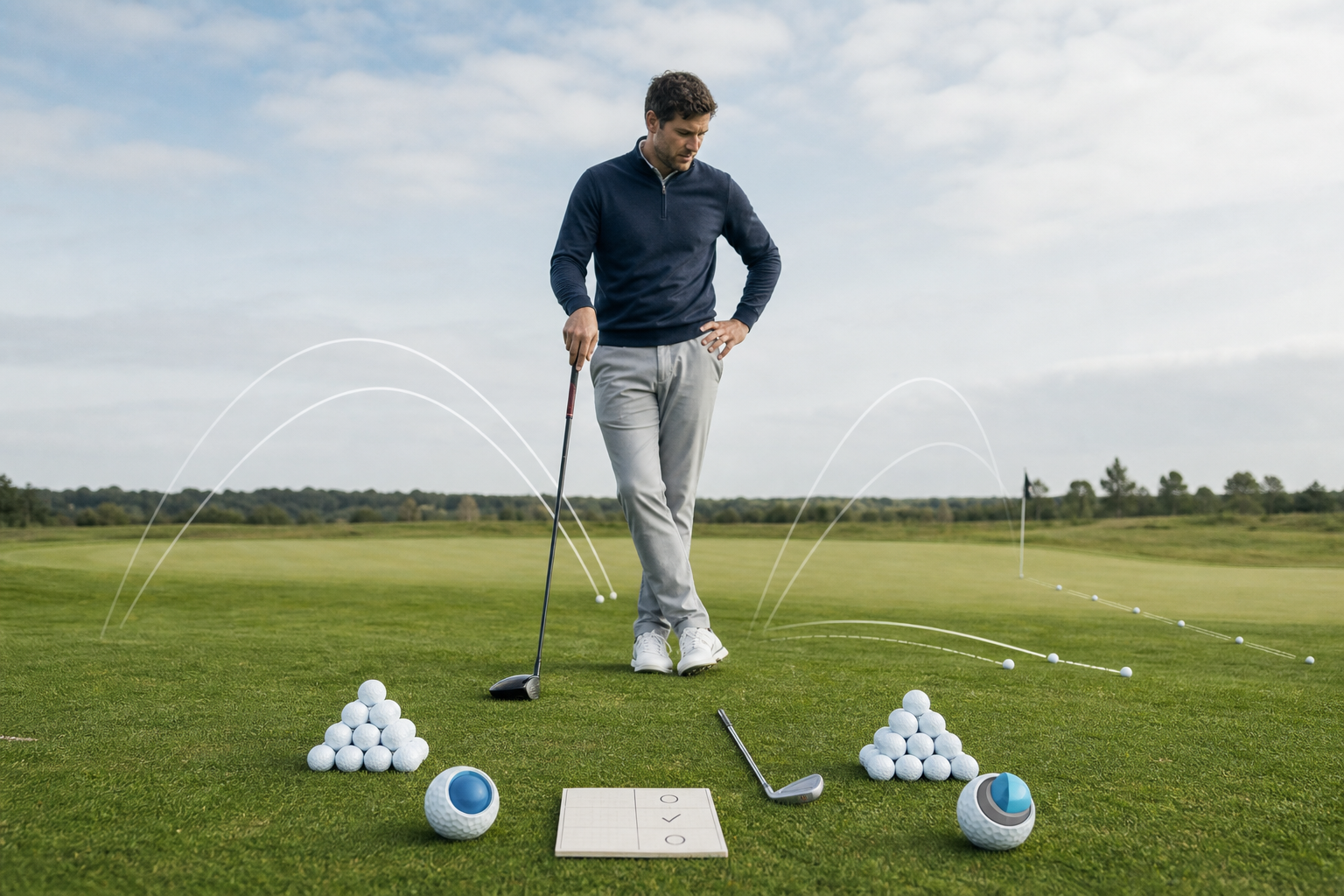
Built for: Golfers comparing golf-ball construction while balancing feel, durability, flight, and short-game control.
When one ball survives a cart-path encounter and another seems easier to judge on a half-wedge, the tempting answer is to blame—or credit—the number of pieces. A better answer comes from identifying the shot where you need the most dependable result, then comparing specific conforming candidates on that task.
The quick verdict
Use two-piece versus three-piece construction as a sorting tool, not a promise of a particular result. Choose the ball that gives you the most repeatable outcome on your priority shot, while still meeting your standards for wear, flight, and greenside confidence.
Best for Golfers who can name one main need, such as a ball that stays presentable through a round, a preferred full-shot window, or more confidence judging a chip or pitch.
Skip it if Skip a construction-led decision if you have not yet compared balls on the same shots and in the same conditions; the label cannot replace that comparison.
Layer count starts the conversation; your miss finishes it.
Picture a player standing on the 14th tee with a ball that has looked fine all day, then facing a guarded green that demands a precise approach. Another player may be looking at a ball after a scrape and deciding whether its appearance and condition still inspire trust. Those are different decisions, and neither is solved simply by choosing the larger construction number. A two-piece or three-piece label can help organize the shelf, but it does not tell you which individual ball will give you the result you can recognize and repeat.
Guild recommendation: Write down one priority before shopping: acceptable wear, expected full-shot flight, preferred impact feedback, or confidence on a scoring shot.
For durability, judge the ball you can keep trusting.
Durability is a practical constraint because a ball that no longer looks or feels acceptable can distract a golfer before the next important shot. If that is your priority, do not infer durability from two-piece or three-piece construction alone. Compare specific candidates after identical use, noting scuffs, cuts, surface marks, and whether you would willingly keep playing that ball. This approach prevents a common mistake: accepting a poorer on-course result because the construction category seemed like the sensible choice.
Guild recommendation: Favor the candidate that remains acceptable after your normal round conditions without losing the predictable shot result you need.
For flight, compare a window rather than chase a label.
Flight matters when your home course presents a recurring demand: carrying a bunker, holding a line in wind, or arriving at a familiar green with a useful descent and rollout. A player who values a consistent tee-shot window may make a different choice from a player whose score depends on approach distance control. Hit candidates to the same target, with the same club, and record where they finish. If one group repeatedly produces the window you expect, that observation is more useful than a broad promise attached to its construction.
Guild recommendation: Choose the specific ball whose repeated flights fit the carry, landing area, and rollout demands you see most often.
For feel and short-game control, make the comparison close to the hole.
Feel is only useful when you connect it to a decision. On a short-sided chip, for example, a golfer needs to judge strike, launch, landing point, and rollout well enough to leave the next putt manageable. Some players prefer one impact sensation; others care more about whether the ball finishes where their picture said it would. Both are legitimate, but they are not identical priorities. Test two-piece and three-piece candidates with the chip, pitch, or partial wedge that exposes your uncertainty, then score the finish rather than relying on one especially satisfying strike.
Guild recommendation: If your scores are being shaped around the green, select the candidate that most often finishes in your intended leave zone and gives you a clear expectation on the next attempt.
Keep the rules check separate from the performance choice.
For play under the Rules, a golf ball must meet applicable equipment requirements. The USGA Conforming Golf Ball List identifies balls that have been submitted and evaluated for conformance. That check answers an eligibility question; your on-course comparison answers a fit question. Do both when conformance matters, especially before a competition or a round governed by a condition requiring a ball on the list.
Guild recommendation: Confirm the exact ball on the current conforming list when required, then make your final selection through a repeatable, same-condition comparison.
Try this · 25 minutes.
The One-Task Ball Comparison
Bring two sleeves of candidate balls, one identified as two-piece and one as three-piece, plus a wedge and the club used for your most common approach shot. Choose a quiet practice area with a clear landing target and use the same target, club, and starting position for every ball.
- Choose one on-course task that regularly costs you a stroke or creates doubt, such as a 40-yard pitch, a greenside chip, or an approach to a defined target.
- Hit six balls from the first candidate group and six from the second, alternating groups every shot so changing attention or conditions do not favor one group.
- After each shot, record only three observable items: whether it finished in your intended area, whether its flight or rollout matched what you expected, and whether the ball shows wear that concerns you.
- Repeat the same comparison with the second club if time allows, but do not change targets or try to fix your swing during the drill.
- Choose the candidate that produces the higher number of intended-area finishes and the clearer expectation of what the next shot will do; use the wear notes as a tie-breaker if performance is close.
What progress looks like: You finish with a simple count showing one ball produced more predictable results on the task you actually face, rather than a decision based only on construction language.
Put the guide to work
These searches are a starting point—not a substitute for the fit and comparison criteria above.
Compare two-piece candidates.
Use this search after deciding that your priority is to compare specific two-piece options on your chosen practice task and inspect their condition afterward.
Compare three-piece candidates.
Use this search after deciding that your priority is to compare specific three-piece options under the same target, club, and conditions.
Check whether a ball is listed as conforming.
Use the official list before play conducted under Rules requirements, rather than assuming a ball is eligible from its packaging or construction label.
If you buy through these links, Guild of Golf may earn a commission at no extra cost to you.
The practical takeaway
- A two-piece or three-piece designation is a useful starting filter, but it is not a complete performance verdict.
- Make one priority observable by testing a specific shot, target, and finishing area.
- Use surface-condition notes when durability matters, but do not let appearance override a clearly better scoring result.
- Compare flight by repeated target outcomes, not by one memorable shot.
- When Rules conformance matters, verify the exact ball through the USGA resources.
Frequently asked questions
Should I choose a two-piece or three-piece ball if durability is my first concern?
Start by comparing individual candidates from both groups after the same kind of use. Keep the ball that remains acceptable to you and still produces the target result you need, because the construction label alone does not settle the durability decision.
Can a three-piece ball automatically give me more short-game control?
Do not treat construction count as an automatic answer. Test candidate balls on the chip, pitch, or partial-wedge shot that matters to your scoring, and choose the one that most reliably finishes where you intended.
Do I need a conforming ball?
Golf balls used under the Rules must meet applicable equipment requirements. When a round or competition requires a ball on the Conforming Golf Ball List, verify the exact ball through the USGA list before play.
What is the quickest fair comparison between candidates?
Alternate six shots per candidate to the same target with the same club, then count intended-area finishes and note whether the flight, rollout, and wear matched your expectation.
Sources used for this draft
- USGA Equipment Rules — The requirement that balls used under the Rules meet applicable equipment requirements.
- USGA Conforming Ball List — The explanation that the list identifies balls submitted and evaluated for conformance.
Guild of Golf may earn a commission from qualifying purchases made through shopping links, at no additional cost to the reader.