
evergreen guide
When a Draw-Bias Driver Fits Your Right Miss—and When It Does Not
A practical guide for right-handed golfers who miss right and need to distinguish a repeatable ball-flight pattern from inconsistent face, path, strike, or setup variables before considering a draw-bias driver.
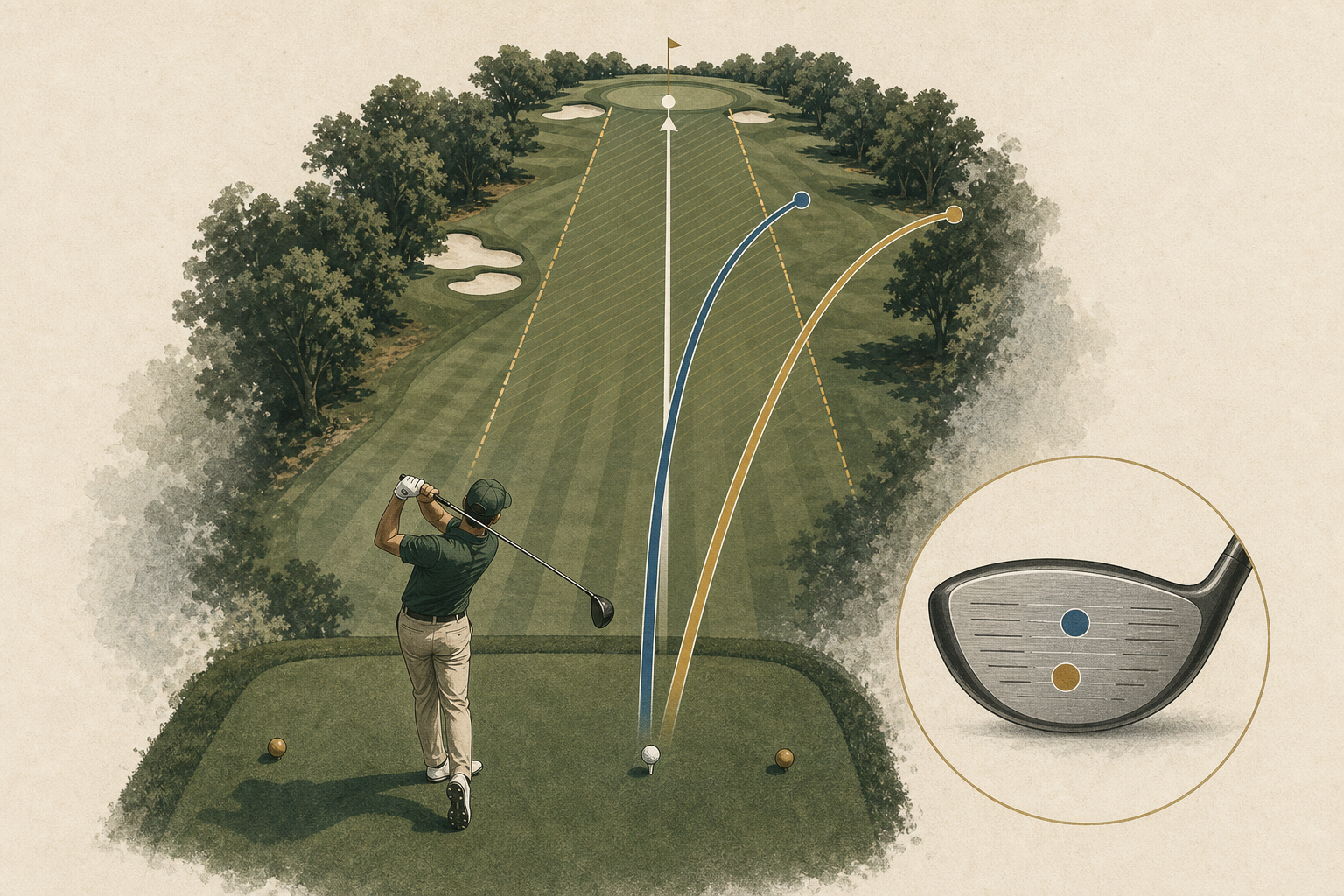
Built for: Right-handed golfers considering draw bias for a recurring right miss who need to separate face, path, strike, and setup effects.
A ball that peels into the right rough can make a draw-bias driver sound like the obvious answer. It is only a useful answer when the right miss is repeatable enough to describe, rather than a different mistake on every tee.
The quick verdict
A draw-bias driver is most worth considering for a right-handed golfer whose well-struck, similarly aimed drives repeatedly finish right in a recognizable pattern. It is a poor shortcut for shots that alternate between blocks, slices, heel strikes, toe strikes, and poor alignment.
Best for Golfers who can show a fitter a consistent rightward result with ordinary swings and want measured ball flight to guide the decision.
Skip it if Golfers whose right miss changes shape or starting direction from swing to swing, or whose contact and setup are too variable to establish a dependable pattern.
The tee-shot problem is rarely just “I slice it.”
You stand on a tight par 4 with trouble down the right, make a reasonable swing, and watch another drive finish there. The temptation is to treat every right finish as the same problem. Before considering a driver labeled draw-bias, make the miss more specific: where did the ball begin, how did it travel, where was contact, and did your setup look like your intended setup. Those observations give a fitter something more useful than the word “slice.”
Guild recommendation: Describe your usual drive in a full sentence before shopping, including starting direction, curve, and typical contact location.
Separate a right start from a right curve.
A drive that starts well right and stays there is a different on-course picture from one that begins near the target and bends steadily right. A shot that starts left before peeling into the right trees is different again. Do not ask a club choice to solve all three pictures at once. Use your practice notes to identify the version that appears most often when you make an ordinary, balanced swing.
Guild recommendation: Consider a draw-bias comparison only when your rightward outcome is repeatable enough that several normal drives tell the same story.
Strike quality can make the pattern look less clear.
A golfer who catches one drive near the center, the next toward the heel, and the next toward the toe has not yet produced a clean club-selection question. The immediate task is not to chase a preferred label; it is to establish whether the right miss survives reasonably similar contact. Impact tape is useful here because it turns a vague feeling into a visible record without requiring a swing diagnosis.
Guild recommendation: If strike marks are scattered, use the 12-ball screen over more than one session before treating a draw-bias driver as the main answer.
Setup deserves its own check.
On a busy tee, a golfer may aim farther right than intended, allow the shoulders to drift, or move the ball position without noticing. That does not mean the swing or current driver is automatically wrong. It means the ball-flight evidence is mixed. Resetting alignment and ball position for a small second set of shots can show whether a recurring right miss remains when the address picture is more deliberate.
Guild recommendation: Keep the target, tee height, and intended shot the same while you compare your normal setup with a carefully reset setup.
A draw-bias driver is a fitting decision, not a diagnosis.
The PGA of America advises that club fitting should account for the individual golfer and measured ball flight. That matters because a draw-bias designation cannot replace an account of your own repeated shot pattern. Bring your notes, explain the miss you are trying to reduce, and compare candidates under the same conditions. A useful fitting conversation is about the result you can observe, not a promise that any single design will cure a swing.
Guild recommendation: Ask a fitter to compare options against your present driver using measured ball flight and the same target intention.
Keep conformance in the decision.
If you play under the Rules of Golf, the driver design also needs to conform to the applicable equipment rules. The USGA Equipment Rules cover both adjustable and non-adjustable driver designs. That is a straightforward final check, especially when comparing unfamiliar equipment or altered settings.
Guild recommendation: Confirm that the exact driver configuration you intend to play is conforming when competition eligibility matters.
Try this · 20 minutes.
The 12-Ball Right-Miss Screen
Use a level range target or a wide practice fairway. Pick a target line, place one alignment stick or club on the ground parallel to that line, and use face-impact spray or impact tape if available. Hit with your usual driver setup and avoid making swing changes during the first eight balls.
- Hit eight drives toward the same target with your normal tee height and normal intent.
- After each shot, record only four observations: whether it started left, near, or right of the target corridor; whether it curved left, stayed fairly straight, or curved right; where it finished; and, if visible, whether contact was centered, toward the heel, or toward the toe.
- Review the eight results before changing anything. Look for one repeated picture, such as a mostly similar start and curve with mostly centered contact, rather than judging the worst shot.
- For four more balls, reset your feet, shoulders, ball position, and aim deliberately before each swing. Keep the same target and record the same four observations.
- Take the notes to a PGA professional or fitter if the pattern remains recognizable, and ask for a comparison based on measured ball flight rather than a label alone.
What progress looks like: The useful outcome is a clear description of your typical miss, such as “mostly centered contact, starting near target and finishing right,” rather than simply a count of good drives.
Put the guide to work
These searches are a starting point—not a substitute for the fit and comparison criteria above.
Compare draw-bias driver options
Compare the available adjustment and fitting options only after you can describe a repeatable right-miss pattern.
Check strike location before changing clubs
Impact tape can help separate a repeatable ball-flight question from inconsistent contact.
Create a repeatable target line
A simple alignment reference makes it easier to record where shots begin and finish.
If you buy through these links, Guild of Golf may earn a commission at no extra cost to you.
The practical takeaway
- A right finish is an outcome, not a complete diagnosis.
- Record starting direction, curve, finish, contact, and setup before comparing drivers.
- A draw-bias driver is best considered when ordinary swings produce a consistent rightward pattern.
- Measured ball flight and an individual fitting are more useful than choosing solely from a club category.
- If contact and setup vary widely, build a clearer pattern before assigning the problem to the driver.
Frequently asked questions
Should every right-handed golfer with a slice use a draw-bias driver?
No. A draw-bias driver is most sensible when your normal shots show a repeatable rightward pattern; mixed contact, changing start lines, and inconsistent setup call for more observation first.
What should I tell a fitter?
Tell the fitter where your drives usually start, how they curve, where they finish, how contact tends to look, and whether the pattern remained after you reset your setup. The PGA of America recommends fitting that considers the individual golfer and measured ball flight.
Can I decide from one range session?
One session can reveal a useful pattern, but do not draw a firm conclusion from a handful of unusual swings. Repeat the same simple record on another day if the first set is scattered.
Do adjustable draw settings automatically make a driver legal for competition?
No. If conformity matters for your play, verify the exact driver design and configuration against the applicable equipment rules. The USGA Equipment Rules apply to adjustable and non-adjustable driver designs.
Sources used for this draft
- USGA Equipment Rules — The need for adjustable and non-adjustable driver designs to conform to applicable equipment rules.
- PGA of America: Club Fitting — The recommendation to base fitting on the individual golfer and measured ball flight.
Guild of Golf may earn a commission from qualifying purchases made through some shopping links, at no additional cost to the reader.