
comparison
Forged vs. Hollow-Body Irons: Choose by Fit, Not the Label
A fitting-first guide to comparing forged and hollow-body iron labels without mistaking construction language for an on-course answer.
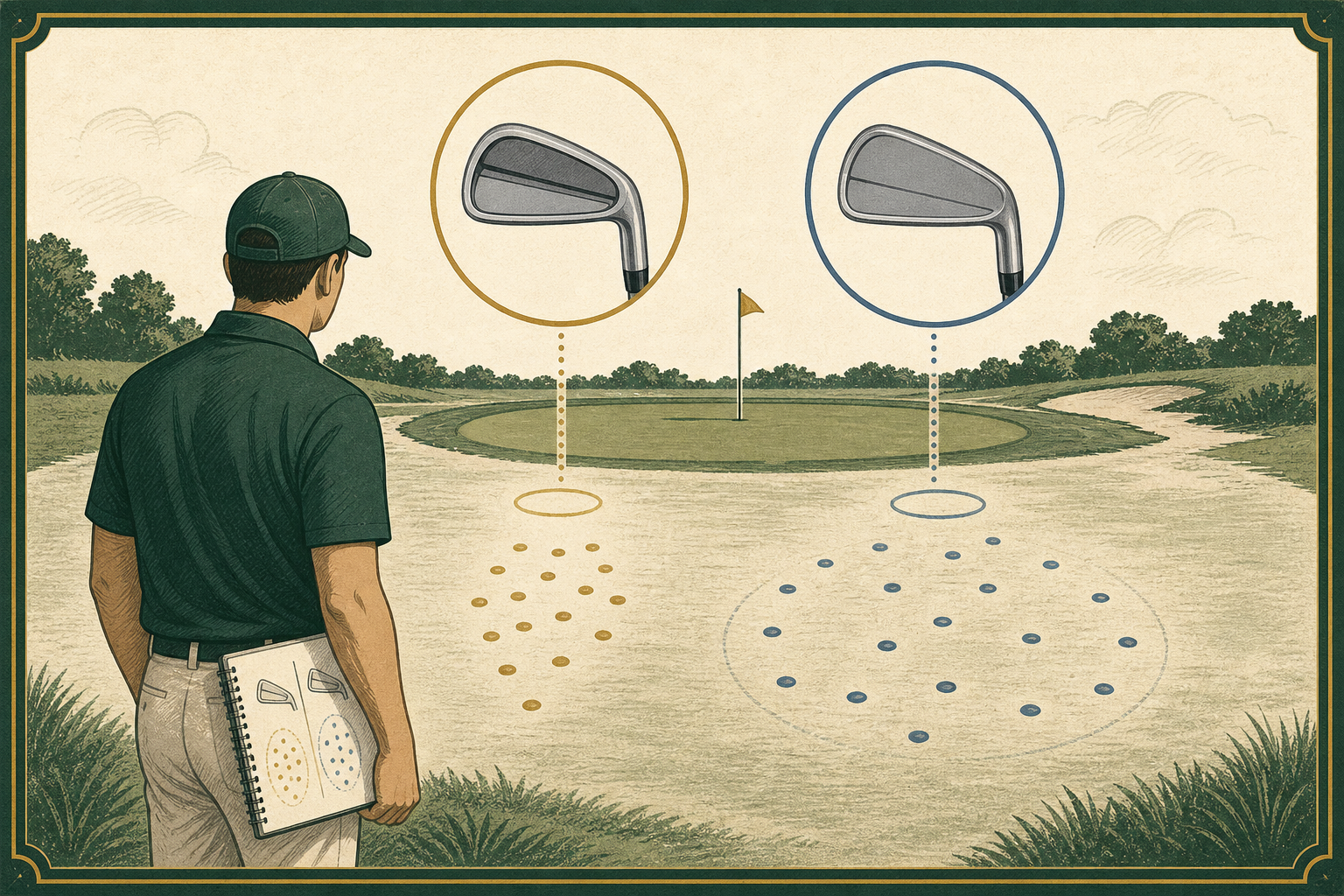
Built for: Golfers comparing iron constructions who want to separate manufacturing terms from on-course fit and performance.
The difficult decision arrives when one iron looks like the “feel” choice and another looks like the “help” choice. Those labels are only a starting point. Use repeatable shots, measured results, and the club’s conformity to make a decision you can defend on the course.
The quick verdict
Forged and hollow-body are construction labels, not universal performance promises. Choose the iron that produces the most usable, repeatable result in a fitting, then confirm that it conforms to the rules that apply to your play.
Best for Golfers who can compare candidates on the same shots and use measured fitting results to decide which tradeoff helps their common approach-shot pattern.
Skip it if Skip a label-led purchase if you have not established a repeatable test condition or cannot compare the clubs with measured results.
The first tee problem is not construction; it is the shot you must hit
Picture a 155-yard approach with trouble short and a narrow front edge. The relevant question is not whether an iron belongs to a particular manufacturing category. It is whether your normal strike with that club produces a distance and direction outcome you can use often enough. A different golfer may face the opposite constraint: a long par 3 where holding a broad target matters more than avoiding a short-side hazard. Start by naming the recurring course problem before comparing labels.
Guild recommendation: Write down one approach-shot situation that costs you strokes, including the target distance and the miss you most need to reduce.
What the labels can and cannot decide
“Forged” and “hollow-body” identify construction language, but neither label by itself tells you what result your shots will produce. Do not turn a manufacturing term into a prediction about feel, launch, distance, forgiveness, or suitability. Instead, use each label to organize a comparison list, then ask a fitter to help you compare clubs intended for the same role with measured results. The PGA of America emphasizes that fitting and measured results matter when club options are compared.
Guild recommendation: Ask to compare like-for-like club roles and record the results under the same conditions, rather than comparing a favorite label against an unrelated club.
Feel matters when it changes your decision
Feel is a legitimate part of an iron choice when it affects what you can observe. If one option gives you clearer feedback that helps you recognize a strike pattern during practice, note that benefit. If another makes you more willing to make a confident swing on a demanding approach, note that too. But avoid allowing a single pleasant strike to outweigh a sequence of ordinary shots. The more relevant test is whether the club’s response helps you make better club and target decisions over repeated swings.
Guild recommendation: During a comparison, separate a feel note from an outcome note. For example, record “preferred feedback” separately from “more shots finishing in my acceptable distance window.”
Build a fitting comparison around your real constraints
A useful fitting comparison controls as much as possible: the intended shot, target, ball, and evaluation standard. Measured results matter because golfers can remember an exceptional shot while overlooking a pattern of misses. Bring a clear priority to the fitting. A player whose common miss reaches a hazard may prioritize a tighter usable distance pattern. A player who repeatedly comes up short may prioritize a different outcome. The fitting process should reveal whether a candidate improves the priority you identified, not simply whether it looks right in the bag.
Guild recommendation: Before the fitting, rank one primary constraint and one secondary constraint, such as avoiding a long miss first and improving start-line control second.
Rules conformity is separate from the marketing category
Whether an iron is described as forged or hollow-body does not settle its status under the Rules. The USGA Equipment Rules state that conforming club requirements apply regardless of marketing category or construction method. If you play in an event with equipment requirements, verify the club’s conformity through the appropriate official resources rather than relying on its category name.
Guild recommendation: For competition play, treat conformity as a separate check from fitting performance and product description.
A disciplined way to make the final choice
After you have compared candidates, resist the temptation to declare one construction universally better. Choose the option that best meets your defined on-course constraint with the measured results available to you. If the results are too close to separate, keep the decision open and compare again under a clearer test condition. The better purchase is the one supported by a repeatable pattern, not a story attached to a manufacturing term.
Guild recommendation: Select the club only after you can state the observed reason in one sentence: “I chose this option because it gave me more acceptable outcomes for my most common approach-shot problem.”
Try this · 25 minutes.
The Two-Target Iron Comparison
Use a flat practice area with two visible targets at different, safe distances. Bring one current iron and, if available, one comparison iron of a similar intended role. Use the same type of ball throughout and allow enough space that no person can enter the hitting area.
- Hit five shots with your current iron to the nearer target, then five shots to the farther target. Note only whether each ball started near the intended line and finished short, near, or beyond the target.
- Repeat the same ten-shot sequence with the comparison iron. Keep the target order, ball type, and your normal pre-shot routine unchanged.
- For each club, count the shots that finished in the distance window you would accept on the course and the shots whose start line would have missed a normal green.
- Write one sentence describing the pattern for each club, such as “more acceptable distance outcomes at the farther target” or “fewer large directional misses at the nearer target.” Do not try to alter your swing during the exercise.
What progress looks like: The useful result is not a perfect group. It is a clear, repeatable difference in acceptable distance outcomes or large misses that you can take into a professional fitting conversation.
Put the guide to work
These searches are a starting point—not a substitute for the fit and comparison criteria above.
Compare forged iron candidates
Use this search after deciding which loft range, set makeup, and measured shot pattern you need to compare.
Compare hollow-body iron candidates
Use this search to identify candidates for the same fitting session, rather than treating the construction label as a verdict.
Find a fitting tool for note-taking
A simple record of target, finish distance, and large misses makes an equipment comparison more useful than memory alone.
If you buy through these links, Guild of Golf may earn a commission at no extra cost to you.
The practical takeaway
- Forged and hollow-body are labels that begin a comparison; they do not finish one.
- Fit and measured results are more useful than assumptions drawn from construction language.
- Define the on-course miss or distance problem you want the iron to address before a fitting.
- Keep feel notes separate from observable shot outcomes so one does not disguise the other.
- Conformity requirements apply regardless of a club’s marketing category or construction method.
Frequently asked questions
Is forged automatically the better choice for feel?
No universal conclusion follows from the label alone. Treat feel as useful when it affects your confidence, feedback, or decisions, then compare it alongside repeatable and measured shot outcomes.
Is hollow-body automatically the better choice for more help?
No. Construction language does not replace a fitting comparison. The relevant question is whether a candidate improves the specific distance or direction constraint you are trying to solve.
How should I compare irons if I cannot hit them on a course?
Use the same ball, intended target, and routine for each candidate, then record acceptable finishes and large misses. Take that record to a qualified fitting conversation, where measured results can guide the choice.
Do forged and hollow-body irons follow different conformity rules?
Conforming club requirements apply regardless of marketing category or construction method, according to the USGA Equipment Rules.
Sources used for this draft
- PGA of America: Club Fitting — The recommendation to use fitting and measured results when comparing club options.
- USGA Equipment Rules — The statement that conforming club requirements apply regardless of marketing category or construction method.
Guild of Golf may earn a commission from qualifying purchases made through retailer links, at no additional cost to you.