
evergreen guide
Choose Driver Loft by Reading Launch, Strike, and Ball Flight
A repeatable, range-based process for narrowing driver loft without relying on a universal number.
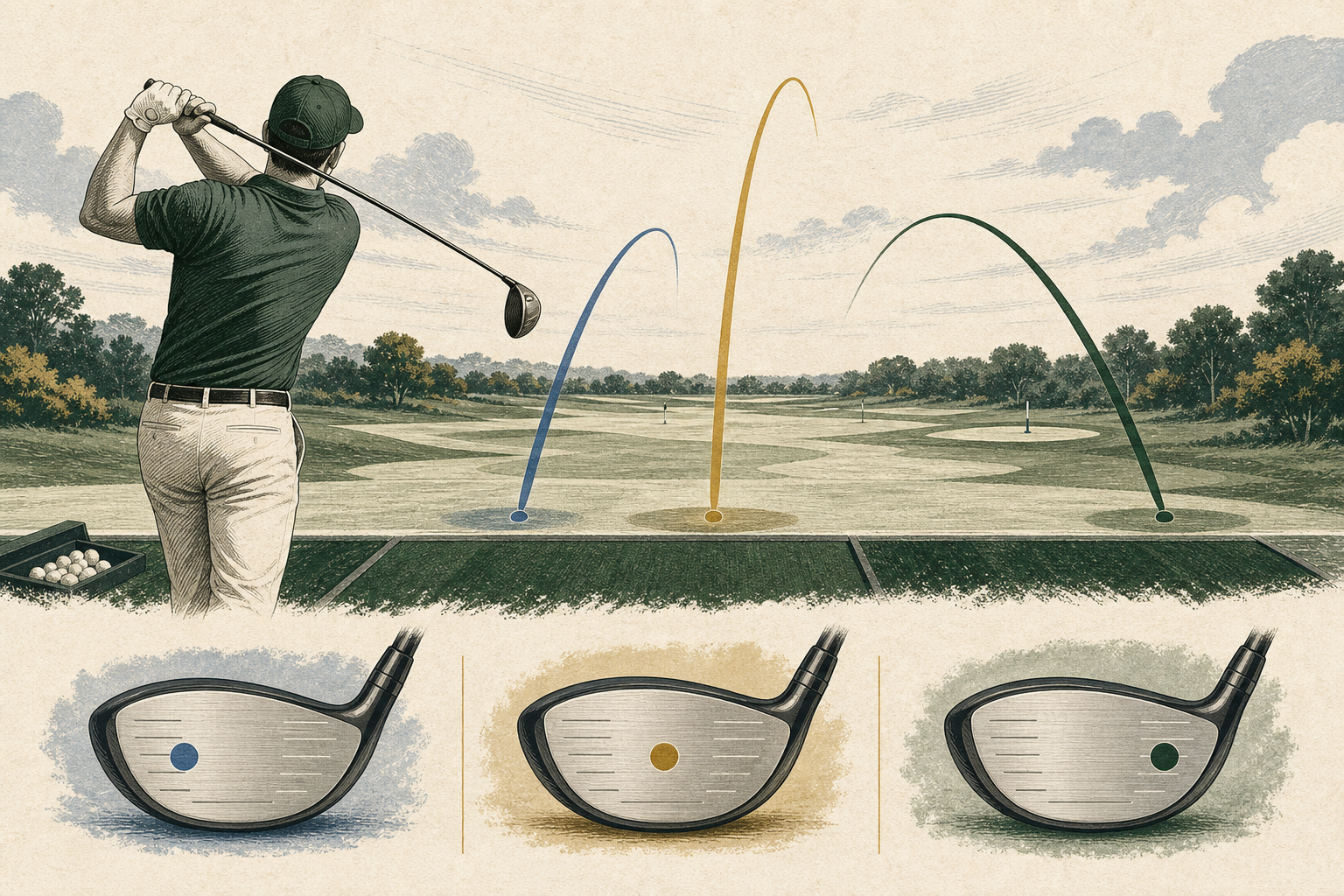
Built for: Golfers comparing driver lofts who want a repeatable decision process instead of a universal loft recommendation.
The tempting answer is to copy the loft in a playing partner’s bag. A better answer starts with the shots you actually hit: where you strike the face, how the ball launches, and whether your usual flight gives you a useful landing window on the holes you play.
The quick verdict
Choose driver loft from a controlled comparison of centered strikes and repeatable ball flights, not from swing-speed labels or another golfer’s setting. Keep the loft that produces the most playable pattern when your strike is representative.
Best for Golfers who can hit several balls with one stock tee height and want a practical way to narrow their options before a fitting.
Skip it if Skip self-selection if your contact and starting direction change dramatically from swing to swing, or if you need a competition-ready club confirmed for conformity. In those cases, use a qualified fitting and verify applicable equipment rules.
Start with the drive that causes trouble on the course
The decision usually arrives after a familiar hole: you catch one drive that climbs, one that comes out flat, and neither result feels predictable enough to aim with confidence. Before asking whether you need more or less loft, define the problem in course terms. Is the ball launching in a window you can use? Does it begin close enough to your intended line? Does its curve leave a playable next shot? Those observations are more useful than a universal loft recommendation because they describe the result you need to improve.
Guild recommendation: Write down one recurring driver problem in plain language, such as “my solid drives start too low for the carry I need” or “my good strikes launch in a flight I cannot predict.”
Separate strike from loft before drawing conclusions
A driver face does not receive every strike in the same place, even during a good range session. That matters because a low-face, high-face, heel, or toe strike can arrive with a visibly different flight from a centered one. If you change loft after one poor contact, you may be solving the wrong problem. Use face impact tape or another simple strike marker, then compare only the shots whose contact is close enough to represent your normal swing.
Guild recommendation: Treat centered or similarly placed strikes as your comparison set. If one loft group contains mostly low-face contact and another contains mostly middle-face contact, repeat the test instead of declaring a winner.
Read launch and shape as a pattern, not a verdict on one ball
Watch the first part of the flight, then the whole shot. A useful observation sounds specific: “the ball starts on my target side and stays there,” or “the ball leaves lower than I expect and runs into trouble.” Avoid interpreting a single towering shot or one long runner as proof. The better loft choice is the one that supports a recognizable pattern when you use your normal tee height and your normal on-course swing intent.
Guild recommendation: Make notes in three columns: strike location, initial launch, and overall flight. Your notes should describe what happened, not attempt to diagnose why it happened.
Change one variable, then compare the landing problem
A loft comparison becomes muddy quickly when you also switch balls, tee the ball differently, chase extra speed, or move to a different target. Keep the conditions stable and make a small, deliberate comparison between the available loft choices. Then return the question to the golf course. On a forced carry, does the flight clear the hazard with a sensible margin? On a firm, open hole, does the result leave the ball in a usable area? The right choice is tied to a repeatable job, not a badge of having more or less loft.
Guild recommendation: Choose the setting or club that produces the most usable misses as well as your better shots. A promising best shot is less valuable than a flight pattern you can plan around.
Use fitting to turn observations into an equipment decision
Your range notes are valuable because they give a fitter a starting point: your usual strike pattern, your preferred visual flight, and the shots you are trying to remove from play. The PGA of America says equipment choices should be evaluated for the individual golfer through fitting. Bring the same questions you used in practice and ask to compare like-for-like setups where possible. If you plan to play in competitions, equipment used in competition must conform to the applicable club rules under the USGA Equipment Rules.
Guild recommendation: Book a fitting when two loft choices appear close, when shaft or head changes are also involved, or when you want the decision evaluated for your individual game. Confirm conformity requirements for the competitions you enter.
Try this · 25 to 35 minutes.
The One-Variable Driver Loft Check
Use the same ball type, tee height, target, and starting line for the full session. If you are comparing settings on one driver, change only the loft setting between groups and allow time for the clubhead to be secured correctly. If you are comparing separate drivers, keep the shaft and setup differences in mind rather than treating loft as the only difference.
- Warm up with easy swings, then choose a fairway-width target rather than trying to hit the hardest possible drive.
- Hit six to eight drives at the first loft choice. After each shot, note the strike location in a simple way, such as high, middle, low, heel, or toe, and note the initial launch and overall curve.
- Set aside obvious mishits, but do not erase every imperfect swing. The goal is to judge the shot you are likely to produce on the course.
- Repeat the same six-to-eight-shot group with the second loft choice, using the same tee height and target.
- Compare only the groups with broadly similar contact. Look for the choice that gives you the clearest usable starting line, a flight you can predict, and a landing pattern that suits the hole rather than one isolated longest shot.
What progress looks like: You can name one loft choice that produces a more repeatable playable window across several representative strikes, and you can explain why using your own launch, strike, and ball-flight notes.
Put the guide to work
These searches are a starting point—not a substitute for the fit and comparison criteria above.
Compare adjustable driver options
After you have identified a preferred flight window, compare adjustment systems by whether they let you make a controlled loft comparison without changing your whole setup.
Track strike location
Impact tape gives a visible record of strike location, helping you avoid assigning every flight difference to loft.
Record launch patterns
A launch monitor can add consistent shot records, but use it to compare groups of similar strikes rather than to chase one standout number.
If you buy through these links, Guild of Golf may earn a commission at no extra cost to you.
The practical takeaway
- There is no universal driver loft recommendation that replaces observing your own launch, strike, and ball flight.
- Compare groups of representative shots, not isolated good drives or obvious mishits.
- Keep tee height, target, ball type, and swing intention consistent while you compare loft choices.
- Pick the option that creates the most predictable playable window for the holes you face.
- A fitting is the appropriate next step when your comparison is close or multiple equipment variables are changing.
Frequently asked questions
Should I choose driver loft from my swing speed?
Swing speed alone does not describe where you strike the face or the ball flight you need on the course. Use it, if available, as part of a fitting conversation, but make your own observed strike, launch, and flight pattern the starting point.
How many drives should I hit when comparing loft?
Use enough shots to see a pattern rather than a single result. Six to eight shots per option is a practical practice-session starting point when you keep the target, tee height, and ball type consistent.
What if one loft goes farther but feels less predictable?
Favor the option that gives you a repeatable playable window unless the longer flight also holds its line and leaves a useful landing result. Course golf rewards a drive you can aim, not merely the longest outlier.
Can I make this decision without a launch monitor?
Yes. You can observe strike location, initial launch, curve, and the landing area with impact tape and a consistent target. A launch monitor can add records, but it does not replace comparing similar strikes under stable conditions.
Sources used for this draft
- USGA Equipment Rules — The note that equipment used in competition must conform to applicable club rules.
- PGA of America: Club Fitting — The recommendation to evaluate equipment choices for the individual golfer through fitting.
Guild of Golf may earn a commission from qualifying purchases made through shopping links or searches associated with this guide, at no added cost to the reader.