
comparison
Two-Piece vs. Three-Piece Golf Balls: Choose by Your Scoring Priorities
A practical framework for golfers deciding whether a two-piece or three-piece ball better fits their priorities for feel, durability, flight, and short-game control.
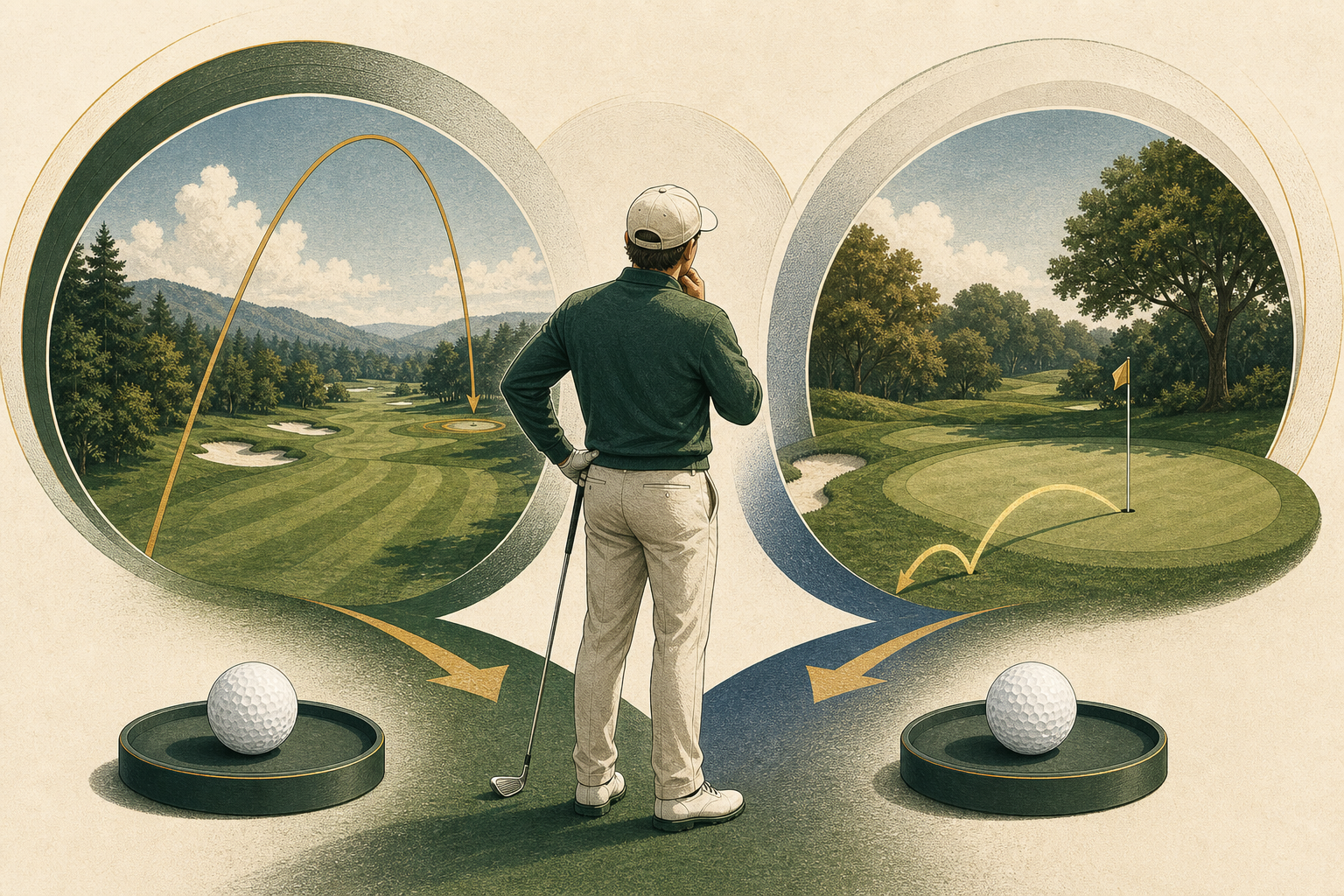
Built for: Golfers comparing golf-ball construction while balancing feel, durability, flight, and short-game control.
A ball that feels agreeable on the first tee can become the wrong choice if it leaves you uncertain around the green or reluctant to use it for a full round. Start with the shots that create your biggest decisions, then compare two-piece and three-piece options under the same conditions.
The quick verdict
Choose the construction label only after identifying the result you want to observe. A two-piece versus three-piece label does not, by itself, settle how a particular ball will feel, fly, wear, or perform around the green.
Best for Golfers willing to compare one two-piece and one three-piece conforming ball through the same tee-shot, approach, and greenside situations.
Skip it if Skip construction-led shopping if you cannot test consistently or if the ball is not eligible for the competition or event you plan to play.
The real choice happens after the good drive
You have a playable tee shot, an approach left into the green, and then a chip that must clear a collar before it can reach the hole. That sequence exposes the weakness of choosing a ball from a construction label alone. The label may help organize your shopping, but it is not a promise of a particular result. Feel, visible wear, flight confidence, and short-game control are the outcomes to compare, not assumptions to import into the comparison.
Guild recommendation: Write down the one shot type that most often turns a decent hole into a dropped shot. Make that shot the first part of your ball comparison.
Use priorities to set the comparison, not to predict it
A golfer who loses confidence when a ball feels harsh off the putter should make putting feedback part of the decision. A golfer who dislikes retiring a marked ball should include a post-practice inspection. Another player may care most about seeing a predictable start line and a usable landing area on full shots. None of those priorities automatically point to two-piece or three-piece construction; they tell you what to observe in the particular balls available to you.
Guild recommendation: Limit the trial to one two-piece ball and one three-piece ball at first. More candidates can make a useful comparison turn into a collection of impressions.
Keep the test fair enough to trust
Do not compare a fresh ball on easy practice shots with a scuffed ball during a difficult round. Use similar-condition balls, alternate them regularly, and repeat the same target. A ball that gives one spectacular chip is less informative than a ball whose outcomes you can reproduce across several ordinary shots. This approach also keeps you from mistaking changing wind, lie, or fatigue for a meaningful construction difference.
Guild recommendation: Record three simple observations for each ball: the shot result, your confidence in choosing the shot, and any visible marks after the session.
Conformance is a separate checkpoint
For play conducted under applicable equipment rules, golf balls must meet the relevant equipment requirements. The USGA Conforming Ball List identifies balls that have been submitted and evaluated for conformance. Construction is not a substitute for checking whether a specific ball is listed when your competition, club, or event requires a conforming ball.
Guild recommendation: Check the official list for the exact ball before relying on it for an event with equipment requirements.
When either construction can be the right answer
A two-piece ball is a sensible candidate when it earns the better score in your own repeatable comparison of feel, visible condition, full-shot confidence, and greenside outcomes. A three-piece ball is a sensible candidate when it does the same. The winning choice is the one that makes your common shots more predictable and your on-course decisions simpler, while meeting any rules that apply to your play.
Guild recommendation: Commit to one ball for several rounds after the practice comparison, then reassess only if its observable results stop matching your priorities.
Try this · 35 to 45 minutes.
The Same-Shot Ball Comparison
Bring one clearly identified two-piece ball and one clearly identified three-piece ball, provided each is appropriate for your intended play. Use a quiet practice area with a putting green, a safe short-game area, and a clearly defined target. Mark each ball with a different simple dot pattern so you can identify it without relying on memory.
- Hit five short putts with each ball from the same starting distance, alternating balls after every putt. Record only start line, distance control, and whether the sound or feel gives you confidence.
- From one consistent lie, play five chip or pitch shots with each ball to the same landing area. Observe the landing point, rollout pattern, and how easily you can repeat the shot you selected.
- If the range permits and you have a reliable target, hit an equal number of tee shots or approach shots with each ball. Judge the usable result: start direction, ability to find the target area, and whether you would choose that flight on the course.
- Inspect both balls afterward for visible marks or damage. Keep notes on what you observed rather than assigning a cause to your swing or to construction alone.
- Play the next available round with the ball that produced the fewest decision doubts in the shots that matter most to your game.
What progress looks like: You can name one ball you would choose for a specific scoring situation, such as a guarded chip, a long approach, or a tee shot into a narrow landing area, based on repeated observations rather than a single memorable shot.
Put the guide to work
These searches are a starting point—not a substitute for the fit and comparison criteria above.
Compare two-piece candidates
Use this search after deciding that you want a ball to evaluate against your tee-shot, approach, and durability priorities.
Compare three-piece candidates
Use this search after deciding that you want a ball to evaluate against your putting, greenside, and overall confidence priorities.
Verify event eligibility
Use the official conforming-ball resource before buying a ball for play that requires conformance.
If you buy through these links, Guild of Golf may earn a commission at no extra cost to you.
The practical takeaway
- Two-piece and three-piece are useful sorting labels, not stand-alone performance verdicts.
- Compare balls on the shots that most affect your scoring decisions, especially putting, greenside shots, and your most demanding full shot.
- Alternate balls under similar conditions and judge repeated outcomes rather than a single exceptional shot.
- Inspect the exact ball’s conformance status when an event or competition requires it.
- Choose the ball that gives you the clearest, most repeatable decision on the course.
Frequently asked questions
Is a three-piece golf ball automatically better for short-game control?
No. The construction label alone does not establish how a particular ball will perform in your short game. Compare specific balls with repeated chips, pitches, and putts to see which result you can reproduce.
Does two-piece construction guarantee better durability?
No. Construction alone does not guarantee visible wear characteristics for a particular ball. Inspect the balls after comparable practice and round conditions before making durability part of your decision.
How do I know whether a ball is allowed in my competition?
Golf balls used under the rules must meet applicable equipment requirements. Consult the USGA Conforming Ball List for balls submitted and evaluated for conformance, and confirm any additional conditions set by your event or club.
Should I change balls if I hit one poor shot?
One poor shot is not enough evidence to make a construction decision. Use a controlled, repeated comparison and focus on whether one ball helps you produce more usable outcomes over several similar shots.
Sources used for this draft
- USGA Equipment Rules — The requirement that balls used under the rules meet applicable equipment requirements.
- USGA Conforming Ball List — The explanation that the list identifies balls submitted and evaluated for conformance.
Guild of Golf may earn a commission from qualifying purchases made through affiliate links. This does not change the price you pay.