
evergreen guide
High-MOI Drivers: Forgiveness for Misses, Not a Swing Fix
A practical guide to deciding whether a high-MOI driver belongs in your bag, using your strike pattern and measured fitting results rather than a promise of straighter drives.
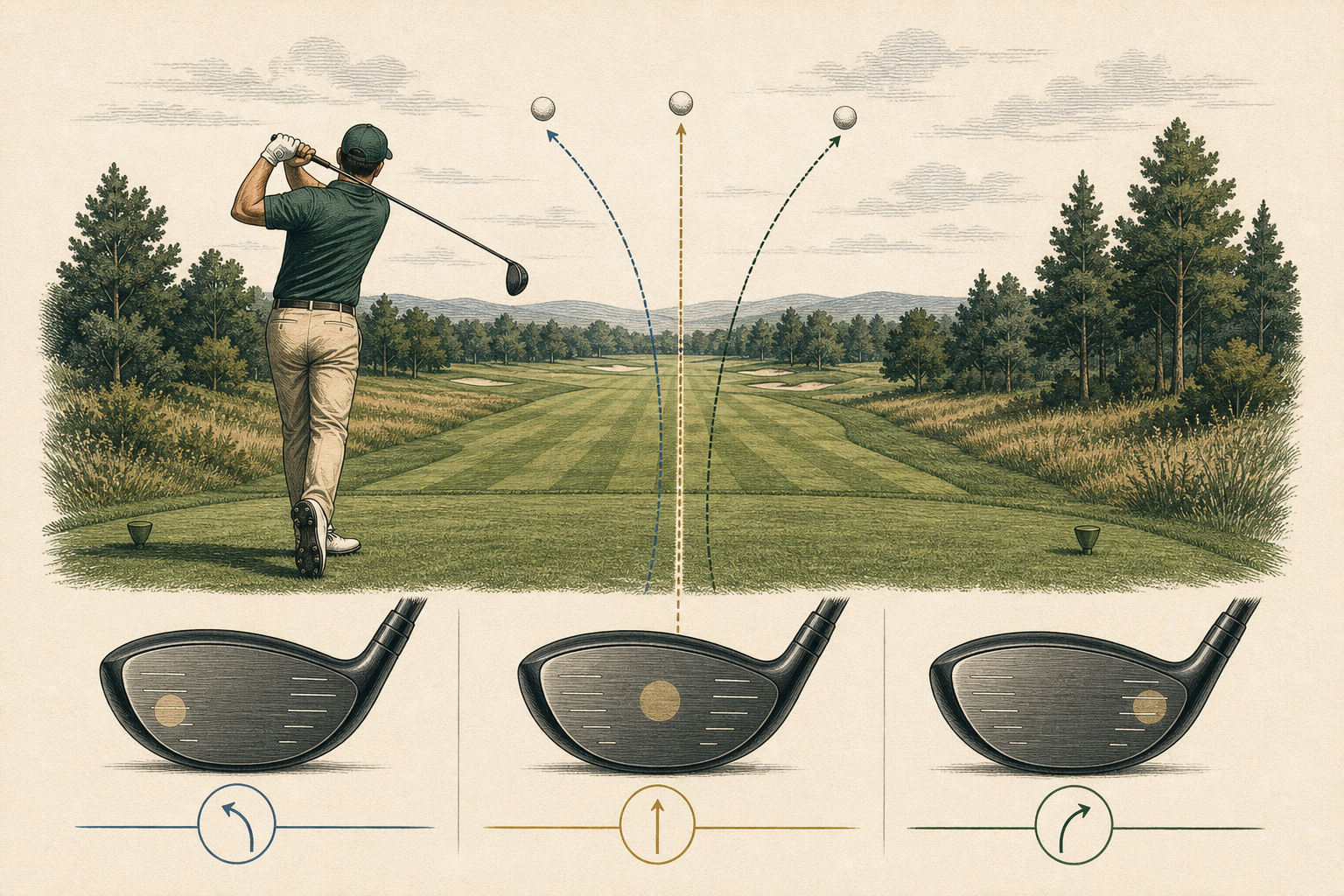
Built for: Golfers whose off-center strikes lose too much speed or curve unpredictably and who need to distinguish forgiveness from swing correction.
When a drive leaks into trouble, it is tempting to blame the head and chase a more forgiving model. A high-MOI driver may be worth comparing when mishits are the recurring problem, but it should be judged by repeatable results—not by the hope that one club will correct every start line or curve.
The quick verdict
Consider a high-MOI driver when your repeated misses occur away from the center of the face and you can compare candidates in a measured fitting. Treat it as an equipment choice for managing a recurring strike pattern, not as a substitute for learning why the ball starts or curves as it does.
Best for Golfers who see a recognizable pattern of heel, toe, high, or low contact and want a fitter to compare the resulting ball flights and consistency.
Skip it if Skip the purchase-first approach if your contact location and shot pattern change dramatically from swing to swing, or if you expect a driver head alone to correct every slice, hook, or poor start line.
The tee-shot tension: one bad drive or the same miss again?
A drive that catches the toe once on the 17th is not, by itself, a buying signal. The more useful question is whether the same contact location and same trouble side appear often enough to shape your choices off the tee. If you repeatedly find the right rough after toe-side contact, or repeatedly lose distance from a similar low-face strike, you have a pattern worth taking to a fitter. If one round contains heel cuts, toe hooks, high pop-ups, and centered draws, the immediate task is observation rather than assuming that a single head design is the answer.
Guild recommendation: Record ten ordinary drives before shopping. Bring the repeated pattern, not your single worst shot, into the decision.
What “forgiveness” should mean in this decision
Use forgiveness as a comparison question: across your ordinary misses, does one conforming driver produce a more usable and more consistent result than another? Do not use it as shorthand for guaranteed straight shots. The USGA governs driver design and conformance through its Equipment Rules, so any club considered for play should also meet the rules that apply to your competition. See the USGA Equipment Rules for the governing framework.
Guild recommendation: Define a usable outcome before a fitting: for example, more shots finishing within the width of a fairway you commonly face, rather than one longest carry.
A high-MOI head cannot supply a swing explanation
A driver choice cannot tell you why a ball began left, began right, or curved on a particular swing. That distinction matters on the course. A player whose centered strikes still launch into both trees has a different decision problem from a player whose ball flight changes mainly when impact moves toward the heel or toe. In the first case, buying a head before establishing a repeatable pattern risks solving the wrong problem. In the second, a high-MOI comparison may be productive because the equipment question is tied to an observable contact pattern.
Guild recommendation: Separate contact from ball flight in your notes. Write both the impact location and the finishing corridor, rather than labeling every miss simply as a slice or hook.
Make the fitting earn the decision
A fitting evaluates equipment for the individual golfer using measured results, according to the PGA of America. That is the right setting to compare a high-MOI driver with another suitable option. Ask to hit your normal shot rather than chasing a best swing, and ask for a comparison that includes your usual miss as well as your better strikes. A result that looks impressive only when contact is perfect may not address the course problem that brought you in.
Guild recommendation: Tell the fitter your normal target, common miss side, contact pattern, and the type of hole where the miss costs you most. Ask which measured results changed across several swings, not merely which single shot was longest.
Choose with a constraint, not a promise
The practical constraint is your scoring environment. On a wide, soft landing area, a small change in dispersion may not alter your decision much. On a hole with trouble immediately on one side, the relevant outcome is whether your common miss remains playable often enough to let you choose the driver with confidence. Conversely, if your primary problem is changing start lines and curves without a stable impact pattern, a club change should not be presented as swing correction. Preserve the notes from the practice plan and use them to decide whether a fitting comparison is warranted.
Guild recommendation: Buy only when a measured comparison gives you a result you can name, such as a more manageable recurring miss or more consistent outcomes across ordinary strikes.
Try this · 20 minutes
Ten-Ball Strike-Pattern Check
Use a driving range with a clear target, your current driver, ten balls, and a way to mark impact location on the clubface that is appropriate for your equipment. Choose one target that is comfortably within your normal range; do not aim at a narrow hazard or try to manufacture extra speed.
- Hit five normal tee shots toward the same target. After each swing, note the face-contact location in simple terms such as center, heel, toe, high, or low, then note whether the ball finished left, right, short, or near your intended corridor.
- Repeat for five more normal swings. Keep your routine and target unchanged; the point is to observe the pattern you bring to the course, not to make a mid-session swing change.
- Review the ten observations. Separate repeated off-center contact from scattered contact, and bring those notes to a fitting so the fitter can compare equipment using measured results.
What progress looks like: The useful result is a clear, repeatable description of your most common contact location and miss corridor, even if the shots are not all good.
Put the guide to work
These searches are a starting point—not a substitute for the fit and comparison criteria above.
Compare high-MOI driver heads
After identifying a repeatable contact pattern, compare heads in a fitting or retailer setting by the measured consistency they produce for that pattern.
Prepare for a measured driver fitting
Impact-location notes can make the fitting conversation more specific, but use any face-marking method only as directed for your club and venue.
If you buy through these links, Guild of Golf may earn a commission at no extra cost to you.
The practical takeaway
- A repeated off-center strike pattern is a stronger reason to compare high-MOI drivers than one memorable mishit.
- Forgiveness is best evaluated as the consistency of your normal outcomes, not as a promise to eliminate curves or poor start lines.
- A driver head does not explain a swing; record contact location and shot corridor separately.
- Use a measured fitting to compare equipment for your individual results, and define the course outcome you want to improve before you go.
Frequently asked questions
Should I buy a high-MOI driver if I slice the ball?
Not on the label alone. First determine whether the slice is tied to a repeatable off-center contact pattern or whether your start line and curve vary even on centered strikes. A measured fitting can compare equipment using your individual results, but it should not be framed as a substitute for understanding the pattern.
What should I bring to a driver fitting?
Bring a clear description of your common contact location, usual miss corridor, normal target, and the holes where that miss creates the largest penalty. The PGA of America describes fitting as an evaluation using measured results, so this context helps focus the comparison.
Can I use any driver in competition?
Check the competition’s applicable requirements and the club’s conformance status. Driver design and conformance are governed by the USGA Equipment Rules.
Sources used for this draft
- USGA Equipment Rules — Driver design and conformance are governed by the equipment rules.
- PGA of America: Club Fitting — A fitting evaluates equipment for the individual golfer using measured results.
Guild of Golf may earn a commission from qualifying purchases made through eligible links. Product selection should follow a measured comparison of your own results, not the possibility of a commission.