
comparison
Alignment Sticks or a Tempo Trainer? Choose the Feedback You Need
A practical way to choose a low-cost golf practice aid by matching its feedback to the miss, movement, or rhythm question you can actually observe.
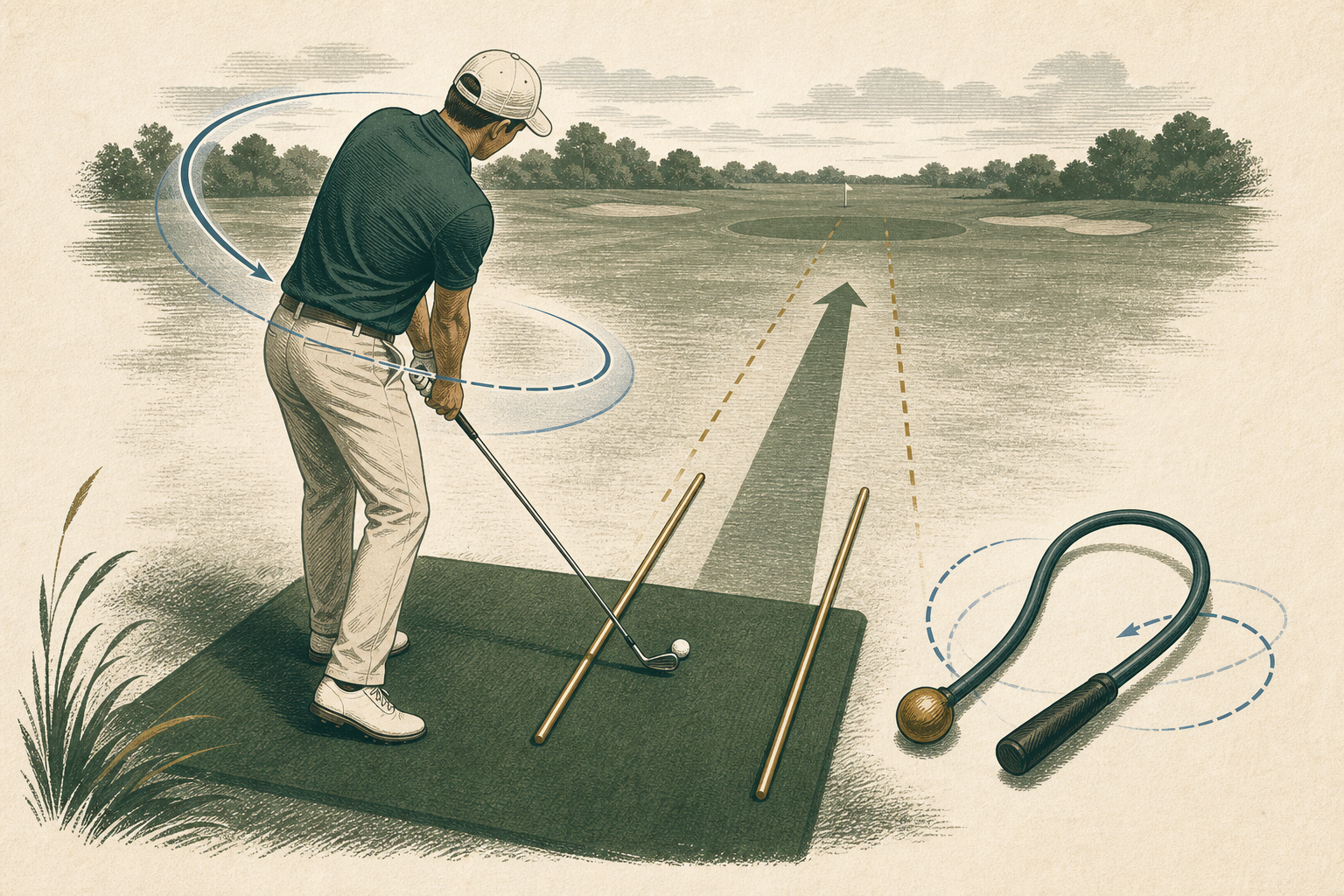
Built for: Golfers choosing between inexpensive practice aids for alignment, movement, rhythm, or speed awareness.
When a practice session produces ten different thoughts and no clear answer, another gadget rarely helps. Alignment sticks and tempo trainers can both earn a place in the bag, but they answer different questions: where you aimed and traveled, or how a motion felt and flowed.
The quick verdict
Buy alignment sticks first if you need a visible reference for setup, start line, or a repeatable practice station. Choose a swing tempo trainer when your main goal is to rehearse a consistent motion cue, and skip either one if you cannot name the single piece of feedback you plan to watch.
Best for Alignment sticks suit golfers who want clear external reference lines; a tempo trainer suits golfers who prefer to organize practice around rhythm and movement awareness.
Skip it if Skip a purchase when the problem is undefined, when you will not set up a repeatable drill, or when you expect a practice aid to explain every miss for you.
Start with the shot pattern you can see
A player who repeatedly aims left of the intended target has a different practice need from a player who feels rushed at the top of the swing. The first golfer benefits from an external reference that can remain on the ground while the ball is hit. The second may benefit more from a dedicated rhythm cue during rehearsals. Purposeful practice begins by connecting the activity to a specific goal, so name the goal before selecting the aid.
Guild recommendation: Choose alignment sticks when your question concerns aim, ball-start direction, stance reference, or the location of a practice corridor.
What alignment sticks make easier
Alignment sticks are most useful when ambiguity is the problem. Lay them down to define a target corridor, a foot-line reference, or a boundary for a drill, then look at whether your setup and ball flight relate to that reference. They do not need to tell you why a shot missed; their value is that the reference remains visible and simple. For the golfer who arrives at the range, hits a bucket, and leaves unsure where the club or body was aimed, that clarity is often the better first purchase.
Guild recommendation: Buy sticks first if a visible station would let you turn a vague range session into a repeatable setup-and-observe task.
What a tempo trainer makes easier
A swing tempo trainer is the better fit when the useful feedback is internal and repeatable: a calmer start, a continuous motion, or the feeling of finishing in balance. It can give structure to rehearsals between shots, particularly for the golfer whose practice becomes increasingly quick or effortful after a poor result. The tradeoff is important: a rhythm cue is not a target line. If your main uncertainty is where you aimed, a tempo trainer can make practice feel organized without answering the question that matters.
Guild recommendation: Choose a tempo trainer if you already have a usable target reference and want a consistent rehearsal cue before or between shots.
Do not ask one aid to do both jobs
The tempting answer is to buy both and build a complicated station. That can work later, but it can also create too many moving parts for a golfer trying to learn from one session. Use sticks to observe location and direction. Use a tempo trainer to rehearse motion and rhythm. Alternate the tools rather than stacking instructions: first see whether the setup task was met, then make a few rehearsals around one movement cue. A cleaner sequence gives each result a better chance of meaning something.
Guild recommendation: If you buy both, assign one job to each aid and limit every practice block to one observable outcome.
Keep practice aids in the practice area
A useful practice tool is not automatically something to use during a stipulated round. The applicable equipment rules govern equipment and its use during a stipulated round, so treat range drills and on-course play as separate contexts. Remove practice-station objects from the playing area, and check the rules that apply to the competition or round you are playing before relying on any aid.
Guild recommendation: Use these aids to build a clearer practice task, then play with the skills you can reproduce without the station or trainer.
Try this · 20 minutes.
The One-Question Alternating Practice Session
Use a clear, level practice area and one club you can swing comfortably. Place two alignment sticks on the ground to create a narrow target corridor without placing any object in your intended swing space. Keep people well clear, and use your tempo trainer only as its instructions allow.
- Write one observable question before hitting a ball, such as, “Did my ball begin within the corridor?” or, “Could I make the same smooth rehearsal three times?”
- Hit five shots using the alignment-stick corridor as your only feedback. After each shot, note only whether the ball’s initial direction appeared to match the corridor; do not add a swing diagnosis.
- Move the sticks aside and make three unhurried rehearsals with the tempo trainer, using one simple cue such as a smooth start and a balanced finish.
- Hit five more shots while retaining that one rhythm cue. Judge the attempt by whether the cue felt repeatable, not by trying to assign a technical cause to each result.
- Repeat the two five-shot blocks once. Finish by choosing the aid that gave you the clearer, more repeatable answer to your original question.
What progress looks like: You can state, in one sentence, which feedback source helped you repeat the chosen task more consistently across two blocks.
Put the guide to work
These searches are a starting point—not a substitute for the fit and comparison criteria above.
Simple alignment-stick pair
Compare length, visibility, and whether the pair will lie flat and stay put for the practice stations you intend to build.
Swing rhythm training aid
Compare the type of motion cue it offers and whether its use matches the single rhythm or movement question you plan to rehearse.
If you buy through these links, Guild of Golf may earn a commission at no extra cost to you.
The practical takeaway
- Alignment sticks provide an external visual reference, which makes them the stronger first choice for setup and direction questions.
- A tempo trainer is more useful when the goal is a repeatable rhythm or movement rehearsal rather than a visible target line.
- The best inexpensive aid is the one that answers one observable practice question without adding several new thoughts.
- Practice aids belong in a purposeful practice plan, while equipment use during a stipulated round is subject to applicable rules.
Frequently asked questions
Should a beginner buy alignment sticks or a tempo trainer first?
Start with alignment sticks if the beginner needs a simple way to define where to aim and how to set up a repeatable practice station. Start with a tempo trainer only when the practice goal is clearly a repeatable rhythm or movement cue.
Can alignment sticks fix my slice or hook?
They can provide a visible reference for an alignment or practice-station task, but they do not by themselves identify the cause of a curved shot. Use them to observe one defined outcome rather than expecting a complete diagnosis.
Can I use a practice aid during a round?
Equipment and its use during a stipulated round are governed by the applicable rules. Check the rules for your particular competition or round before using any practice aid on the course.
Is it worth owning both aids?
It can be worthwhile when you will use sticks for directional reference and a tempo trainer for separate rhythm rehearsals. If your practice time is limited, begin with the tool that answers your most immediate, observable question.
Sources used for this draft
- PGA of America: Practice With Purpose — The principle that purposeful practice connects an activity to a specific goal.
- USGA Equipment Rules — The statement that equipment and its use during a stipulated round are governed by applicable rules.
Guild of Golf may earn a commission from qualifying purchases made through affiliate links, at no extra cost to you.