
evergreen guide
How to Buy a Used Golf Driver Online Without Guessing
A practical, evidence-led checklist for comparing used-driver listings when photos and seller descriptions are all you have.
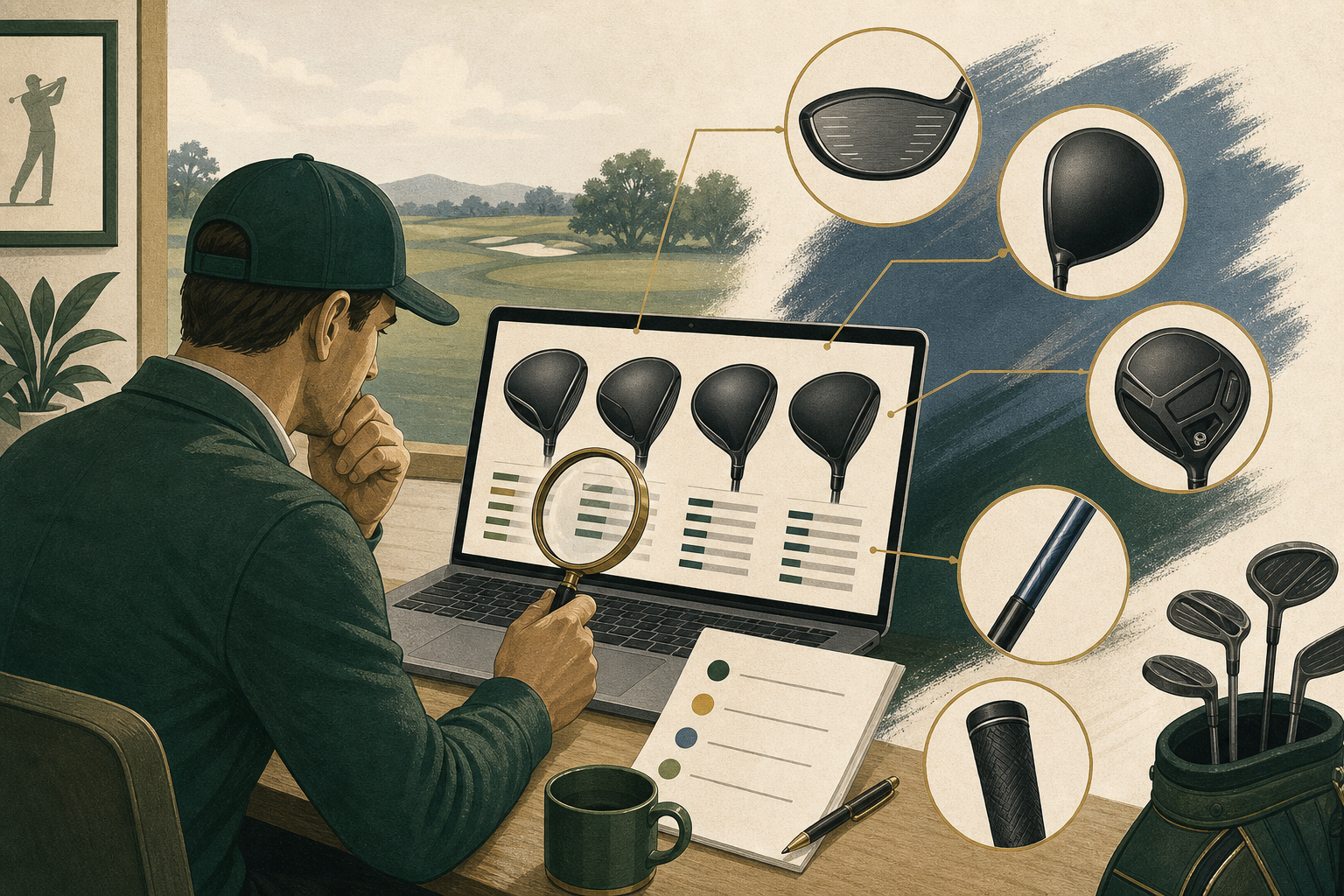
Built for: Value-conscious golfers evaluating a used driver listing without being able to inspect the club in person.
The lowest asking price is not automatically the best value when the club’s condition, identity, return terms, and conformance are unclear. Use this checklist to turn an attractive listing into a decision you can explain before you pay.
The quick verdict
Buy a used driver online only when the listing lets you identify the exact club, assess its visible condition, and resolve unanswered questions before checkout.
Best for Golfers who will trade a little browsing time for a clearer view of what they are buying.
Skip it if Skip listings with vague photos, incomplete descriptions, or a seller who cannot clarify the specific club being offered.
Start with the club’s identity, not the headline
A listing title may be brief, while your decision needs to be specific. Record the model name, the stated loft, the stated shaft, handedness, and any adjustable-setting information the seller provides. Then compare those details against every photo. If the written description and photographs appear to describe different clubs, treat that mismatch as an unanswered question rather than a minor typo.
Guild recommendation: Choose listings that identify the individual club clearly enough for you to repeat its key details in your own notes.
Read photos like an inspection, one area at a time
A single full-club image rarely answers the questions that matter. Look separately at the face, crown, sole, shaft, grip, and headcover if one is included. You are not trying to declare a club good or bad from a screen; you are deciding whether the photos give you enough information to proceed. Close images taken in usable light are more helpful than distant or heavily cropped views.
Guild recommendation: Ask for close photos of any area that is blurred, hidden, cropped out, or difficult to judge from the listing.
Turn vague condition language into direct questions
Terms such as used, good, clean, or excellent do not tell you what is present on the specific club. Ask questions that invite an observable answer: whether there are marks on the crown, whether the face has visible wear, whether the shaft has visible damage, and whether the grip is intact. Ask the seller to answer about the actual club shown, not about the model generally. The FTC states that advertising claims should be truthful, non-deceptive, and supported, which is a useful standard for reading a listing description critically.
Guild recommendation: Favor sellers who answer specific questions directly and support their answer with a photo when the issue is visible.
Treat missing details as part of the price
An unanswered question has value because it changes what you can confidently compare. A lower asking price may still leave you with more uncertainty if the listing omits the shaft, has no clear face photo, or does not show the club from several angles. Make a short list of confirmed details and unknowns for each finalist. That keeps a tempting number from becoming the only deciding factor.
Guild recommendation: Compare listings by their confirmed condition and completeness first, then use price to separate similarly documented choices.
Check conformance before you build your decision around the club
If conforming status matters for the golf you play, use the USGA Informational Club Database to check driver conformance information. Search using the club identity you have confirmed from the listing, rather than relying solely on a seller’s label. The database check does not replace examining the particular used club, but it gives you a documented place to verify conformance information for the model.
Guild recommendation: Use the USGA database when conformance is important to your intended play, and pause if you cannot identify the driver accurately enough to search it.
Make the final decision with a written exit rule
Before you pay, decide what would make you walk away: missing close-ups, inconsistent details, no response to a material question, or an identity you cannot confirm. This is especially useful when a listing feels attractive because it is ending soon or appears less expensive than alternatives. A disciplined exit rule protects the buyer from turning uncertainty into a bargain story.
Guild recommendation: Proceed only when the club identity, visible condition, and your remaining questions meet the standard you set before shopping.
Try this · 10 minutes per serious listing.
The Five-View Listing Audit
Open the listing on a larger screen if possible, keep a note open, and make five headings: face, crown, sole, shaft, and grip.
- Record what the listing photos clearly show under each heading, without filling gaps with assumptions.
- Write down the exact model name and any identifying details stated by the seller, then separate those stated details from details visible only in photos.
- Mark each heading clear, unclear, or missing.
- For every unclear or missing item that matters to your decision, send one direct question and request a close photo where needed.
- Compare only listings that have answered the same five headings, rather than comparing asking prices alone.
What progress looks like: You can state exactly what is confirmed, what remains unknown, and why one listing is worth considering over another.
Put the guide to work
These searches are a starting point—not a substitute for the fit and comparison criteria above.
Compare driver condition tools after using the checklist.
A simple magnifier can help a golfer inspect a club after delivery and compare visible details with a seller’s photos.
Compare protection options only if they fit your storage routine.
A headcover is a practical item to compare when a used listing does not include one or the included cover is not usable.
If you buy through these links, Guild of Golf may earn a commission at no extra cost to you.
The practical takeaway
- The useful unit of comparison is the individual club listing, not the model name alone.
- Separate what a seller states from what the photos visibly confirm.
- Ask direct questions about areas that are unclear rather than guessing from broad condition labels.
- Use the USGA Informational Club Database when driver conformance matters to your play.
- A lower price is only meaningful after you account for missing information and unresolved condition questions.
Frequently asked questions
What photos should I request for a used driver?
Request clear, close views of the face, crown, sole, shaft, and grip when the listing does not already show them well.
Should I trust a seller’s condition grade?
Use the grade as a starting point, then compare it with the photos and the seller’s answers about the specific club.
How can I check whether a driver is conforming?
Use the USGA Informational Club Database after confirming enough identifying information from the listing to search for the driver.
What is the simplest reason to skip a listing?
Skip it when you cannot establish what specific club is being sold or obtain clarity on a condition issue that matters to you.
Sources used for this draft
- USGA Informational Club Database — The recommendation to check driver conformance information through the USGA database.
- FTC Advertising and Marketing Basics — The statement that advertising claims should be truthful, non-deceptive, and supported.
Guild of Golf may earn a commission from qualifying purchases made through shopping links, at no additional cost to you.