
comparison
Forged vs Hollow-Body Irons: Let the Fitting, Not the Label, Decide
A fitting-first comparison for golfers who like one iron’s strike sensation but need to know whether it earns a place in the bag.
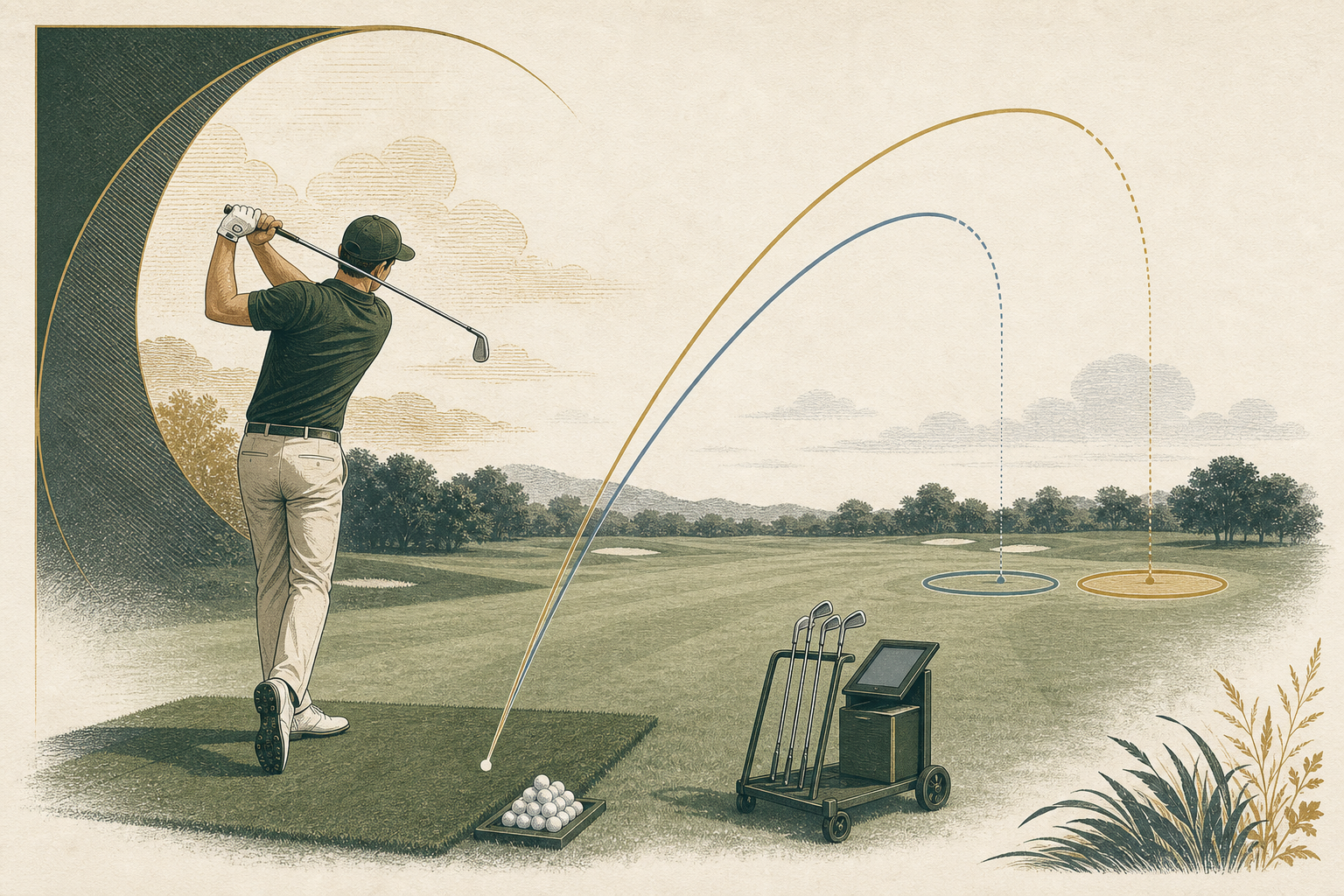
Built for: Golfers comparing iron constructions who want to separate manufacturing terms from on-course fit and performance.
The familiar dilemma is a flushed shot that feels superb in the shop, followed by uncertainty over whether that club will produce a useful, repeatable result on the course. Treat forged and hollow-body as starting points for a comparison, then let measured performance and your own strike observations settle the decision.
The quick verdict
Choose neither label by reputation alone: compare the specific irons in a fitting, using measured results and a strike pattern you can repeat.
Best for Golfers willing to narrow the choice with a clear on-course priority, such as a preferred flight window, dependable distance spacing, or a strike sensation that helps them commit to the shot.
Skip it if Skip a construction-led purchase if you have not first identified the iron shot you need to improve or verified that the club option meets the rules for the competitions you play.
The first tee problem: a great feel can still leave an unanswered question
A golfer can love the sensation of one centered strike, yet still face a practical question on the course: can this iron cover the number, hold the intended line, and fit the distance gaps already in the bag? That is why the forged-versus-hollow-body decision is more useful as a fitting conversation than as a verdict about which category is better. Start with the shot you need from the iron—an approach to a guarded green, a flight under wind, or a reliable lay-up number—and make every comparison answer that need.
Guild recommendation: Write down one specific iron-shot problem before you compare clubs, because a measurable priority gives the fitting a direction.
Separate the construction term from the decision you have to make
“Forged” and “hollow-body” are construction labels, but the golfer’s decision is about the complete club in hand and the result it produces. Avoid assuming that a label guarantees a particular strike sensation, launch pattern, or distance result for you. Instead, ask the fitter to compare the exact club options on the same set of criteria: your usable distance spacing, starting direction, flight pattern, strike consistency, and how confidently you can make a normal swing.
Guild recommendation: Use the labels to organize the shortlist, then judge each individual option by the same repeatable test.
Feel matters, but give it a job
Feel is worth recording because it can affect whether you commit to an approach shot. The helpful question is not simply, “Which one feels better?” Ask, “Which sensation helps me make my ordinary swing and recognize a poor strike?” For one golfer, a sharper sensation may provide clear feedback. For another, a more muted response may make it easier to stay relaxed over a demanding shot. Neither preference replaces ball-flight evidence, but both can matter when measured results are close.
Guild recommendation: When two options produce similarly useful results, choose the one whose feedback helps you make a committed, repeatable swing.
What to bring to a fitting
The PGA of America advises that club fitting should be guided by fit and measured results, not by a broad category alone. Bring your current irons, your normal golf shoes, and an honest description of the courses and shots you play most often. Ask to see more than a single best swing. A useful comparison includes a group of normal strikes, because that is closer to the ball you will face after an imperfect lie or late-round fatigue. The fitting should also consider whether the option creates sensible spacing beside the irons, hybrids, or wedges that remain in your bag. See the PGA guidance at https://www.pga.com/story/club-fitting-what-you-need-to-know.
Guild recommendation: Ask for a comparison based on several ordinary shots and a clear explanation of what the measured results mean for your set makeup.
Rules and the final purchase check
Construction category does not remove the need to confirm that a club conforms to the equipment rules applicable to your play. The USGA states that conforming club requirements apply regardless of marketing category or construction method. If you compete in events that require conforming equipment, verify the particular club before relying on it in competition. The relevant equipment rules are available at https://www.usga.org/equipment-standards/equipment-rules-2019/equipment-rules.html.
Guild recommendation: Before purchase, confirm the exact club’s competition suitability if you play in events governed by equipment-conformance requirements.
Try this · 25 minutes.
The Two-Target Iron Comparison
Use a practice range with two safe targets at noticeably different distances, 10 balls, your current mid-iron, and one comparison iron of a similar playing length and loft category if available.
- Pick a near target and a farther target, then decide before every swing which one you intend to cover without trying to force extra speed.
- Hit five shots with your current iron, alternating targets after each shot, and note only whether the starting direction and carry window looked suitable for the selected target.
- Hit five shots with the comparison iron using the same target order and the same ordinary pre-shot routine.
- Repeat the sequence only if you can do so without fatigue, then compare which club gave you the more repeatable target-sized pattern and the clearer sense of where a slight miss would finish.
- Take those observations to a fitter and ask for measured comparison results rather than drawing a conclusion from a single especially good strike.
What progress looks like: The useful result is not a perfect shot; it is one club producing a more repeatable pattern to both targets while you use the same unforced swing intention.
Put the guide to work
These searches are a starting point—not a substitute for the fit and comparison criteria above.
Compare fitting tools before comparing labels
These basic tools can help make strike location and sole interaction visible during a supervised fitting conversation, rather than leaving the decision to appearance alone.
Build a controlled practice station
Simple target and alignment tools support the two-target comparison by giving each shot a defined task and a visible outcome.
If you buy through these links, Guild of Golf may earn a commission at no extra cost to you.
The practical takeaway
- Forged and hollow-body are useful labels for beginning a comparison, not substitutes for a fitting result.
- A good iron choice serves a defined on-course job, such as usable distance spacing or a repeatable approach-shot pattern.
- Treat feel as meaningful information when it helps you commit and interpret the strike, especially when other results are close.
- Compare several normal swings, not only the one flushed shot that is easy to remember.
- Confirm conformance requirements for the specific competitions you play.
Frequently asked questions
Should I choose forged irons if I care most about feel?
Choose the specific iron that gives you useful strike feedback and supports a repeatable result in a fitting. A construction label alone is not a complete answer to the on-course decision.
Should I choose hollow-body irons if I want help with distance?
Start by defining the distance problem you need to solve, then compare the exact options through measured results and sensible gaps throughout the set. The PGA of America emphasizes fit and measured results in club fitting guidance: https://www.pga.com/story/club-fitting-what-you-need-to-know.
Do forged and hollow-body irons follow different equipment rules?
Conforming club requirements apply regardless of marketing category or construction method, according to the USGA Equipment Rules: https://www.usga.org/equipment-standards/equipment-rules-2019/equipment-rules.html.
Sources used for this draft
- PGA of America: Club Fitting — The fitting-first recommendation and the emphasis on fit and measured results.
- USGA Equipment Rules — The point that conforming club requirements apply regardless of marketing category or construction method.
Guild of Golf may earn a commission from qualifying purchases made through some shopping links, at no extra cost to the reader.