
comparison
Two-Piece or Three-Piece Balls: Choose by the Shot That Costs You
A practical way to compare two-piece and three-piece golf balls by recording the on-course result you want to change, rather than assuming layer count guarantees a result.
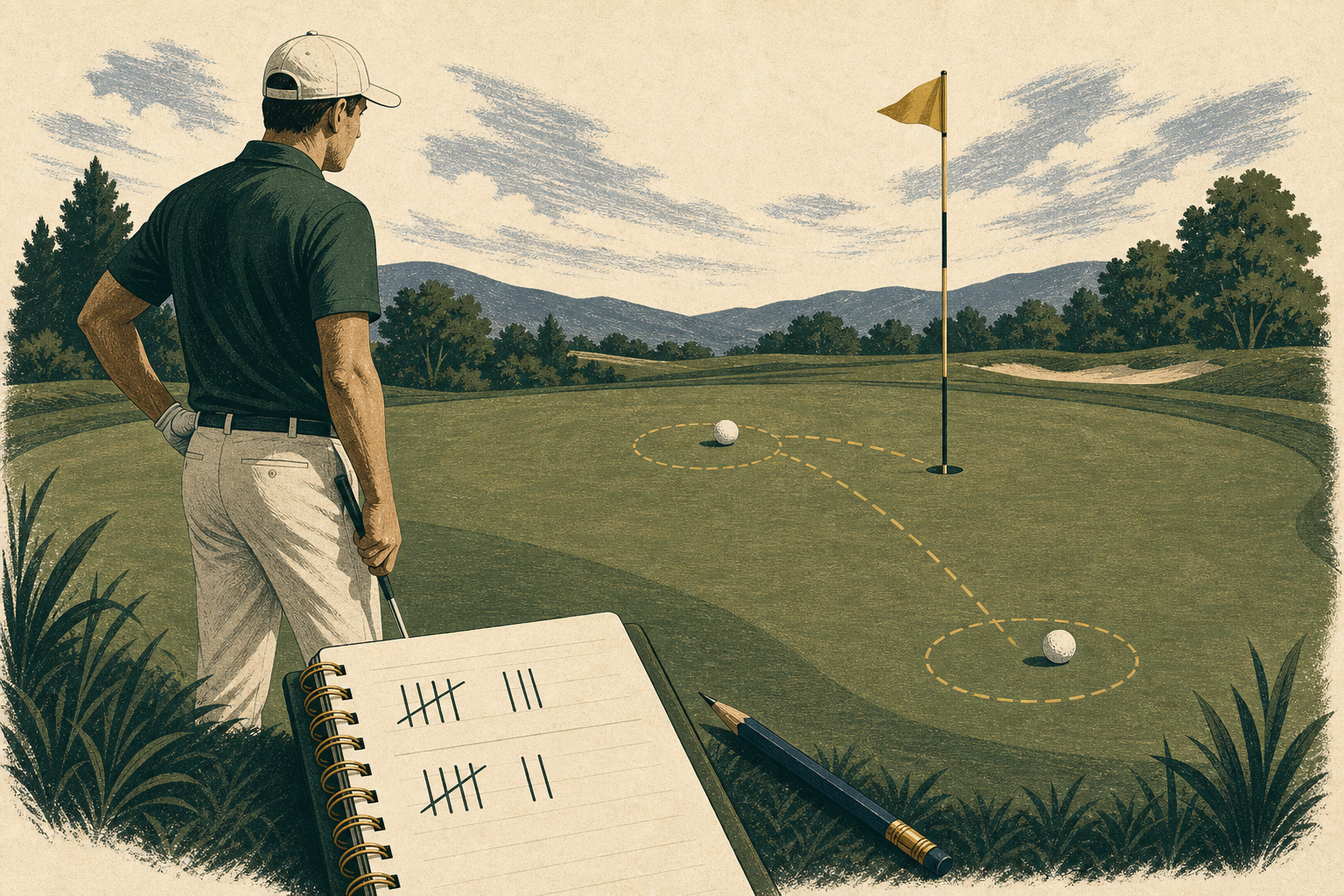
Built for: Golfers comparing golf-ball construction while balancing feel, durability, flight, and short-game control.
When one ball feels better on a wedge shot but another survives a busy practice session, the tempting answer is to buy by construction alone. A better answer is to identify the shot that repeatedly costs you a stroke, compare balls under the same conditions, and keep the option that produces the more useful pattern.
The quick verdict
Treat two-piece and three-piece as starting labels, not performance promises; choose the ball that improves your most frequent, observable miss in a simple same-day comparison.
Best for Golfers who can name a specific priority, such as a more predictable chip rollout, a preferred impact sensation, a repeatable approach flight, or a ball that remains usable through their normal practice and play.
Skip it if Skip a construction-led purchase if you have not yet identified a recurring ball-flight or scoring problem, or if you plan to switch ball models from hole to hole and cannot compare results clearly.
Start with the shot you can actually observe
A golfer who watches an approach release beyond the target may immediately blame the ball, while another golfer is more frustrated by a ball that feels unpleasant off the putter. Those are different decisions. Before comparing a two-piece label with a three-piece label, write one sentence that describes the costly result: “My routine chip finishes too far from the hole,” “I cannot predict my approach finish,” or “I want a ball that still looks acceptable after my usual round and practice.” The useful feature is the one that addresses that stated result, not the one with the more impressive-sounding construction.
Guild recommendation: Choose one primary priority for the next purchase, and make every comparison serve that priority.
What the construction label can and cannot tell you
“Two-piece” and “three-piece” describe construction categories, but the label alone does not establish how any particular ball will fly, feel, stop, or wear for your swing and playing conditions. Avoid turning layer count into a shortcut for distance, spin, softness, or durability. Instead, use it to organize your comparison: select a small group of balls in each category, read their stated information carefully, and judge them through the same on-course or practice task. This approach protects you from buying a category when what you really need is a more predictable result.
Guild recommendation: Do not infer a performance outcome from the number of pieces alone; compare actual candidates in matched conditions.
Match the choice to your priority
For feel, use a simple and repeatable reference shot, such as five putts from the same distance or short chips to the same landing area. The question is not which ball feels “premium”; it is which sensation helps you commit to the shot. For short-game control, focus on finish position rather than one memorable check or release. For flight, use a familiar tee shot or approach and note a repeated start line, height impression, and finishing area across several swings. For durability, inspect balls only after comparable use and decide what level of visible marking you are willing to accept. Each priority calls for a different observation, so a single all-purpose winner is unlikely to be useful for every golfer.
Guild recommendation: If two candidates solve different problems, keep the one that solves the problem you encounter most often during a round.
Keep the test fair enough to trust
Testing one ball on a flushed shot and another on a poor strike does not reveal much about either construction. Alternate balls, use the same club and target, and avoid changing the task halfway through. A player who normally loses strokes around the green might compare alternating chip groups; a player whose concern is tee-shot behavior can use a defined fairway target and record only broad finish areas. Do not use the exercise to diagnose your swing. Its purpose is narrower: to see whether one ball consistently produces a result you prefer when you make your normal shot.
Guild recommendation: Limit the test to two or three candidates, because fewer variables make the result easier to understand.
Conformity is a separate check
Performance preference does not replace equipment compliance. Golf balls used under the Rules must meet applicable equipment requirements, and the USGA Conforming Ball List identifies balls submitted and evaluated for conformance. If you play in an event or setting where conformity matters, verify the exact ball on the applicable list rather than assuming that a familiar name, construction category, or packaging description settles the question.
Guild recommendation: Check the exact ball model against the USGA Conforming Ball List before using it where conformance is required.
Try this · 25 minutes.
The 18-Ball Priority Check
Choose a quiet practice-green area with a clear landing spot and a safe putting surface. Bring six balls from each construction group, a towel or headcover to mark a landing area, and a notebook. Use the same club, the same target, and alternating groups of balls.
- Pick one ordinary scoring situation that you see often, such as a short chip that must land on a small area before rolling toward a target.
- Hit three balls from the first group, then three from the second group, always aiming at the same landing area and using your normal motion.
- Repeat that alternating sequence until all 18 shots are complete, and record only three observations: whether the ball reached the intended landing area, where it finished relative to the target, and whether its sound and feel gave you confidence.
- Inspect each ball after the session and note any visible cover marks without trying to assign a cause to them.
- Repeat the check on another day before making a final choice, because a single short session can be influenced by changing turf, wind, or contact.
What progress looks like: A useful winner is the group that gives you the tighter and more repeatable finishing pattern for your chosen shot, while meeting your personal preference for feel and visible wear.
Put the guide to work
These searches are a starting point—not a substitute for the fit and comparison criteria above.
Compare two-piece options
After defining your priority, compare the product description, construction label, and whether the exact ball is listed as conforming when that matters for your rounds.
Compare three-piece options
Use the same checklist as for two-piece choices, then test a small number of candidates with one repeatable scoring shot rather than buying on layer count alone.
Find balls for short-game comparison
This search can help narrow candidates when your measurable priority is the finish of chips and pitches, but the practice check should make the final call.
If you buy through these links, Guild of Golf may earn a commission at no extra cost to you.
The practical takeaway
- Begin with the one ball result that costs you the most, not with a belief that more or fewer pieces must be better.
- A two-piece or three-piece label is a comparison filter, not a guarantee of feel, flight, durability, or short-game outcome.
- Alternate balls during a single repeatable practice task and record finish patterns rather than relying on isolated good shots.
- Use the exact USGA Conforming Ball List entry when conformity is relevant to your round or competition.
Frequently asked questions
Is a three-piece golf ball automatically better than a two-piece ball?
No. The construction label by itself does not establish which ball will best address your preferred feel, observed flight, short-game finish, or tolerance for visible wear.
How many balls should I compare at once?
Compare two or three candidates at most, because alternating a small group on the same shot gives you a clearer result than mixing many variables.
Should I choose a ball based on driver distance or greenside shots?
Choose based on the part of the game where a different ball result would most often improve your score or confidence, then test that specific situation first.
How do I know whether a ball is allowed under the Rules?
Consult the USGA Conforming Ball List for the exact ball and remember that balls used under the Rules must meet applicable equipment requirements.
Sources used for this draft
- USGA Equipment Rules — Golf balls used under the Rules must meet applicable equipment requirements.
- USGA Conforming Ball List — The list identifies balls submitted and evaluated for conformance.
Guild of Golf may earn a commission from qualifying purchases made through affiliate links, at no extra cost to the buyer.