
evergreen guide
Choose Driver Loft From Your Launch, Strike Pattern, and Ball Flight
A repeatable way to narrow driver loft choices by starting with what you can observe on the course and range, then confirming the decision in a fitting.
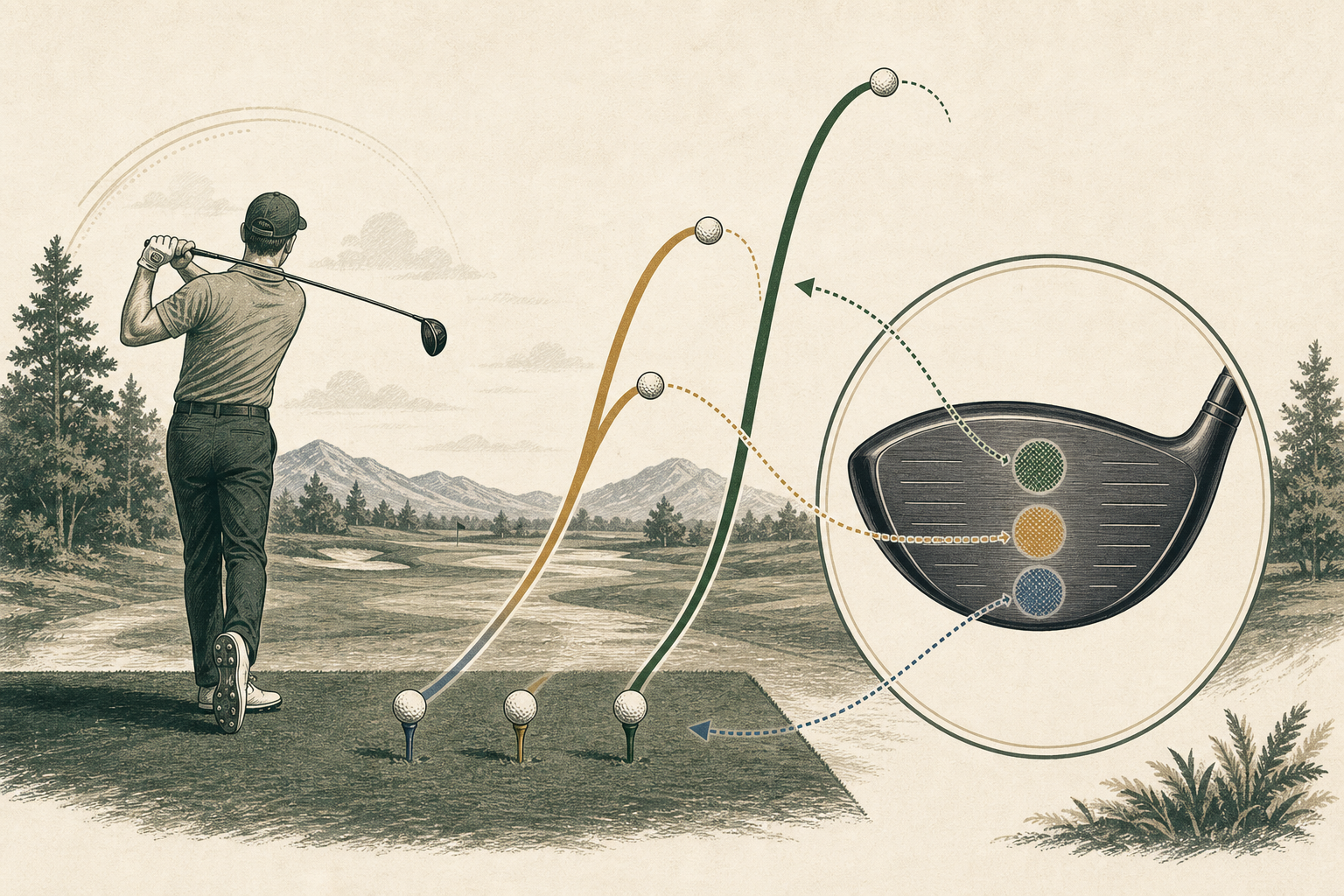
Built for: Golfers comparing driver lofts who want a repeatable decision process instead of a universal loft recommendation.
The tee shot that looks fine on one hole and unusable into the wind on the next can tempt you to buy more or less loft on instinct. Start instead with a repeatable record of launch height, face strike, and ball flight. Then use loft as one fitting variable aimed at the specific outcome you want to change.
The quick verdict
Do not choose driver loft from a handicap, a friend’s recommendation, or one unusually good drive. Choose the loft setting or loft range that addresses a repeatable, observable ball-flight problem after you have separated strike pattern from launch pattern.
Best for Golfers who can watch several tee shots or range balls and describe a consistent height, starting direction, curve, and impact location.
Skip it if Skip a loft change as the first move when your strike pattern and ball flight vary dramatically from swing to swing; collect a clearer pattern and use a fitting before assigning one setting to an inconsistent sample.
Begin with the shot that is costing you.
A familiar dilemma arrives when a driver produces a few long, attractive shots but leaves you unsure which loft to buy. Perhaps the ball repeatedly comes out lower than your intended window despite similar-looking contact. Perhaps it launches high, yet the strike marks live all over the face. Those are not the same equipment question. The first task is to describe what happens often enough to trust: where the ball starts, how high it initially rises, how it curves, where it finishes, and where it contacts the face. This is the observable performance problem. Loft is the feature to consider only when that problem remains recognizable across several shots.
Guild recommendation: Write down the repeated outcome in plain language before comparing lofts; “too low on centered contact” is more useful than “my driver is bad.”
Sort the evidence in the right order.
Start with strike. A cluster of impacts in a similar part of the face gives you a more stable sample for judging launch and flight. Scattered impacts tell you that a loft-only purchase may simply give you a different-looking version of the same uncertainty. Next, look at launch: not a guessed number, but a practical description such as low, middle, or high relative to your normal target and conditions. Finally, note the completed ball flight, including its start line and curve. This order prevents a common shortcut: blaming loft for every shot that finishes in trouble.
Guild recommendation: Use one tee height and one ball type during your comparison session so the observations are not muddled by changing the setup.
Match loft to the problem, not to a golfer category.
A golfer whose centered strikes repeatedly launch below the desired window has a legitimate loft question to take into a fitting. A golfer whose flight is generally acceptable but whose impact marks scatter needs a different conversation; changing loft may not address the most visible problem. Likewise, a player whose ball repeatedly begins or curves away from the intended line should record that pattern rather than assume loft alone is the solution. The valuable distinction is simple: select only the feature connected to the pattern you actually see. Loft is one adjustable part of a driver decision, not a universal cure for height, contact, and direction at once.
Guild recommendation: Ask a fitter to compare loft choices against your recorded strike-and-flight pattern, rather than asking for the loft a golfer of your handicap “should” use.
Use a fitter to confirm, rather than guess.
The PGA of America advises that equipment choices should be evaluated for the individual golfer through fitting. Bring your nine-ball record, explain the repeatable outcome you want to improve, and keep the question narrow: which loft option best serves this launch-and-strike pattern? A useful comparison changes one variable at a time where possible, then checks whether the observable result becomes more consistent. If you play in competitions, also ensure that the club you choose conforms to the applicable equipment rules, as required by the USGA.
Guild recommendation: Treat a fitting as confirmation of a specific decision hypothesis, such as whether a different loft option improves a repeatable launch window with comparable strike.
What to compare once the evidence points to loft.
After you have identified a stable pattern, compare drivers by the loft choices they actually offer and by how clearly their adjustment system lets you return to a known setting. Also consider whether the club can be evaluated in a fitting with an appropriate shaft and grip, because the PGA of America frames equipment choice as individual evaluation rather than a one-size-fits-all purchase. Avoid making the shopping decision from cosmetics, a claimed golfer type, or a single launch monitor number viewed without its matching strike and ball flight. The target is a repeatable on-course result, not a label on the sole.
Guild recommendation: Narrow the search to adjustable-loft models only if you value the ability to compare settings during fitting; otherwise, prioritize an individual evaluation of the complete club.
Try this · 20 minutes.
Nine-Ball Loft Decision Record.
Use one driver, one ball model, and a level practice tee if available. Apply removable face-impact spray or another non-damaging strike marker permitted by the club manufacturer. Pick a clear target line and use the same tee height for all nine shots.
- Hit three sets of three shots with your normal tee-shot intention; do not try to manufacture a different launch or curve.
- After each shot, record only four observations: strike location on the face, initial height, starting direction, and whether the shot finished left, right, or near the target line.
- Ignore the single best and single worst shot. Review the remaining pattern for a repeated strike location and a repeated flight picture.
- If the strike is broadly similar but the launch picture remains consistently different from the flight you want, bring the record to a fitter and compare loft options while keeping the rest of the setup as consistent as possible.
- If strike marks are scattered across the face, repeat the same record on another day before making a loft decision.
What progress looks like: The practice is successful when you can state one repeatable observation, such as “most centered strikes launch lower than I want,” rather than naming a loft from one memorable drive.
Put the guide to work
These searches are a starting point—not a substitute for the fit and comparison criteria above.
Compare adjustable-loft drivers.
Compare the available loft settings and the clarity of the adjustment information only after you have identified a repeatable flight pattern to discuss in a fitting.
Compare driver face impact spray.
A temporary strike marker can help distinguish a face-contact pattern from a launch pattern before you change equipment.
If you buy through these links, Guild of Golf may earn a commission at no extra cost to you.
The practical takeaway
- Start with the repeatable tee-shot problem you can observe, not with a universal loft recommendation.
- Read strike pattern before deciding that launch height is a loft problem.
- Record launch, start line, curve, finish, and face contact over several normal swings.
- Use loft to address the specific pattern that remains after your strike evidence is clear.
- Confirm the complete club choice in an individual fitting, and use conforming equipment for competition.
Frequently asked questions
What driver loft should most golfers use?
There is no single loft recommendation in this process. The useful choice is the loft range that a fitting finds appropriate for your individual strike pattern, launch picture, and ball flight.
Should I change loft when my drives go right or left?
Not from direction alone. First record where the shots start, how they curve, and where you strike the face. A repeated directional pattern is useful fitting information, but it does not automatically identify loft as the feature to change.
How many shots should I use before judging driver loft?
Use enough normal shots to see a pattern rather than reacting to one excellent or poor drive. The nine-ball record in this guide is a practical first sample, and repeating it on another day is sensible when contact is scattered.
Can I use an adjustable driver setting without a fitting?
You can observe different settings, but a fitting is the recommended way to evaluate equipment for the individual golfer. Keep a record of strike and flight so the comparison is based on a repeatable outcome.
Does competition affect my driver choice?
Yes. Equipment used in competition must conform to the applicable club rules. Confirm that the driver and its configuration meet the rules that apply to your competition.
Sources used for this draft
- PGA of America: Club Fitting — The recommendation that equipment choices be evaluated for the individual golfer through fitting.
- USGA Equipment Rules — The reminder that equipment used in competition must conform to applicable club rules.
Guild of Golf may earn a commission from qualifying purchases made through shopping links, at no additional cost to you.