
evergreen guide
Choose Driver Loft by Reading Your Launch, Strike and Ball Flight
A practical driver-loft decision process that begins with the shot you actually see, separates launch from strike location, and narrows the feature to change before you shop.
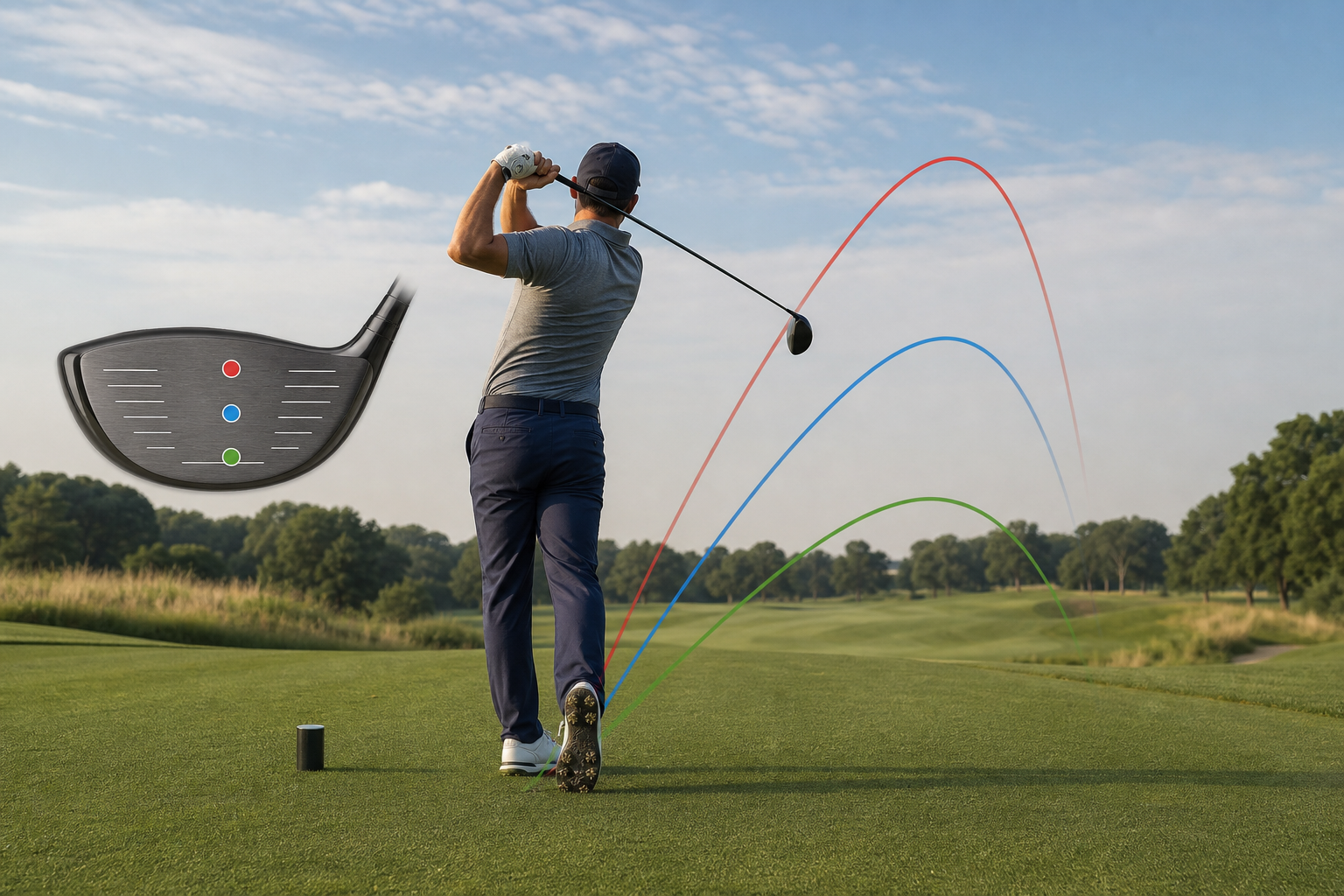
Built for: Golfers comparing driver lofts who want a repeatable decision process instead of a universal loft recommendation.
A tee shot that flies too low, balloons, or loses its line can tempt you to change loft immediately. First identify the repeatable ball-flight problem, then compare loft settings only when they address that observed result.
The quick verdict
Choose driver loft from a repeatable pattern of launch, strike location and ball flight, not from a standard loft recommendation. Change loft only after you can describe the flight you want to alter and can strike enough shots from a consistent setup to judge the result.
Best for Golfers who can observe a recurring tee-shot pattern or collect a small sample of launch data, then compare two loft settings without changing several other variables at once.
Skip it if Skip a loft-first purchase if your contact point and starting direction vary wildly from shot to shot. A fitting can evaluate the whole club for your individual needs rather than asking loft to solve every miss.
The tee shot that makes loft look guilty
You hit a driver that starts on a sensible line, climbs only modestly and runs when it lands. On the next hole, you tee it higher, catch it nearer the top of the face and suddenly see a much taller flight. It is easy to conclude that you need more loft. But those two shots changed more than one input, so they do not answer the question.
Driver loft is a feature to test against an observable problem. The useful starting sentence is specific: “My solid tee shots launch lower than I can use,” “my normal shots climb excessively,” or “I do not know whether the flight changes because of loft or because I strike different parts of the face.” That statement creates a decision you can test. “I heard that 10.5 degrees is better” does not.
Guild recommendation: Write down one recurring flight problem before comparing lofts. If you cannot name a repeating pattern, do not choose a loft yet.
Read three clues before changing anything
First, watch launch. A low-launching shot, a mid-window shot and a steep, high-climbing shot are distinct observations. Note whether the ball carries to a useful landing area or relies mostly on rollout. Second, mark strike location. Contact that moves around the face can produce changing flight that makes a loft verdict unreliable. Third, record the whole ball flight: starting direction, curve, peak height, landing behavior and the shot that misses your fairway.
This is deliberately a three-clue process. Launch alone can obscure a changing strike pattern. Strike alone does not tell you whether the resulting trajectory works on your course. Curve and start line matter because a golfer whose main issue is a large directional miss should not expect loft alone to settle that miss.
Guild recommendation: Use five to ten normal tee shots, not rehearsed swings, and log the same observations for every shot.
Match the loft adjustment to the observed outcome
If a golfer repeatedly strikes the ball in a similar place and sees a flight that launches too low to carry a hazard or reach a preferred landing area, testing more loft is a sensible next comparison. The outcome to seek is a noticeably higher, more useful launch across the group of shots, not merely one towering ball.
If another golfer already sees a steep flight that climbs too much or lands without the desired forward progress, testing less loft is the logical comparison. The acceptable result is a more playable trajectory without creating a worse directional pattern or sacrificing repeatable contact.
There is a third, common answer: leave loft alone for now. When one shot flies low from a lower-face strike and the next launches high from a higher-face strike, the immediate evidence is contact variation. A different loft might change both flights, but it has not established a dependable result. Gather better strike evidence first.
Guild recommendation: Test more loft for a repeatably low useful-flight problem, less loft for a repeatably excessive-flight problem, and neither when contact variation dominates the sample.
Why a universal loft answer fails
Two golfers can play the same hole with very different needs. One may need more carry to clear a bunker; another may have ample height but need a trajectory that fits beneath wind. Even on the same tee, their strike patterns and recurring ball flights may not match. A single loft recommendation strips out the conditions that make the choice meaningful.
That is why fitting remains valuable. The PGA of America describes club fitting as an individual evaluation of equipment choices. Bring the notes from your tee-shot check: the setting tested, strike pattern, typical launch, preferred target and miss. Those details allow a fitter to evaluate loft in the context of the golfer, rather than treating it as an isolated cure.
Guild recommendation: Use your observed pattern to make a short list, then use a fitting when the decision affects a purchase or the results remain mixed.
Shop for comparison control, not a promised cure
Once you know what you are testing, an adjustable-loft driver can be useful because it lets you compare settings while holding the rest of the club constant. The key constraint is discipline: keep the same shaft, ball, tee height, target and swing intention. Changing everything at once creates an attractive but meaningless result.
A simple face-marking product is equally useful for golfers whose flights vary. Its value is not a diagnosis; it tells you whether the shots used to judge loft were struck in roughly the same place. A launch monitor can add recorded launch information, but it is most useful when you compare like for like and focus on repeated outcomes instead of chasing a single reading.
If you intend to play competition golf, ensure that the equipment you use conforms to the applicable club rules. The USGA equipment rules set the applicable conformance requirement.
Guild recommendation: Choose tools that help you control and observe the test. Do not buy a loft setting on the promise that it will automatically fix a slice, hook or inconsistent strike.
Try this · 25 minutes.
The Two-Loft, One-Pattern Tee Shot Check
Use one driver with two available loft settings, the same ball model, and a level practice tee. Pick a target and use two alignment sticks or clubs on the ground to make your aim line repeatable. If you have a launch monitor, record its launch readings; if not, record starting height, peak height, carry versus rollout, and strike location using face spray or impact tape.
- Warm up, then hit five tee shots at your current loft. Keep the tee height, ball position, target and normal swing intention unchanged.
- Record where each ball contacts the face and note its launch and flight. Do not judge a setting from one unusually good or poor strike.
- Change only the loft setting. Hit another five shots with the identical tee height and setup.
- Compare the two groups, not the single longest shot. Look for the setting that produces the more useful repeating launch window and playable flight while preserving acceptable face contact.
- If the new setting changes the ball flight but your strike pattern remains scattered, keep your notes and use them in a fitting rather than making further random adjustments.
What progress looks like: A useful result is not a perfect number. It is one loft setting producing a visibly more repeatable, playable flight across several similarly struck shots.
Put the guide to work
These searches are a starting point—not a substitute for the fit and comparison criteria above.
Adjustable loft drivers
Compare the available loft settings and confirm that you can test them without also changing your shaft, tee height or intended shot shape.
Driver face impact spray
Use strike feedback to separate a loft question from a contact-pattern question before you buy a different head.
Portable golf launch monitors
Compare which launch and shot-result measurements the device reports, then use the same conditions for both loft settings.
If you buy through these links, Guild of Golf may earn a commission at no extra cost to you.
The practical takeaway
- Start with a named, repeatable tee-shot problem rather than a preferred loft number.
- Judge loft through launch, strike location and complete ball flight together.
- Change one variable at a time and compare groups of shots, not highlights.
- When strike location changes substantially, collect better contact evidence before blaming loft.
- Use a fitting to evaluate the driver for your individual game, especially before a purchase.
Frequently asked questions
Should I choose more driver loft if I hit the ball low?
Test more loft only when your normal strikes come from a reasonably consistent face area and repeatedly produce a launch that is too low for the carry and trajectory you need. If the low shots also come from varying contact, establish the strike pattern before judging loft.
Can lower loft fix a driver that flies too high?
It is a sensible setting to compare when your normal, similarly struck tee shots repeatedly climb too high for the flight you want. Keep tee height, ball, target and swing intention constant, then compare several shots at each setting.
Can loft fix a slice or hook?
Loft is not a substitute for identifying a directional pattern. Record start line and curve alongside launch and strike. If direction is the dominant issue, a fitting can assess the individual golfer and the complete club setup.
Do I need a launch monitor to choose driver loft?
No. You can compare observed starting height, peak height, carry versus rollout, landing behavior and marked face contact. A launch monitor can help record launch information, but it does not replace a controlled comparison of similarly struck shots.
Should I get fit for a driver?
A fitting is especially useful when you are buying a driver or your loft tests give mixed results. The PGA of America advises evaluating equipment choices for the individual golfer through fitting.
Sources used for this draft
- PGA of America: Club Fitting — The recommendation to evaluate equipment choices for the individual golfer through fitting.
- USGA Equipment Rules — The requirement that equipment used in competition conform to applicable club rules.
Guild of Golf may earn a commission from qualifying purchases made through shopping links, at no extra cost to you.