
comparison
Forged vs. Hollow-Body Irons: Choose for the Miss You See
A fit-first guide to separating iron construction labels from the ball-flight and contact patterns you can observe on the course.
Built for: Golfers comparing iron constructions who want to separate manufacturing terms from on-course fit and performance.
When a well-struck iron feels wonderful on the range but the same set leaves awkward approach distances on the course, the construction label is not the answer. Start with the result you can see—unreliable contact, an unwanted start line, or inconsistent distance—and use a fitting to learn whether either option addresses it.
The quick verdict
Forged and hollow-body are construction labels, not performance guarantees; choose the iron that produces more useful measured results for your recurring on-course problem.
Best for Golfers who can name a repeatable issue, such as a distance gap or a pattern of misses, and are willing to compare candidates in a fitting.
Skip it if Skip a construction-led purchase if you have not established a repeatable performance problem or cannot compare results with an appropriate shaft and setup.
Begin with the shot that costs you strokes
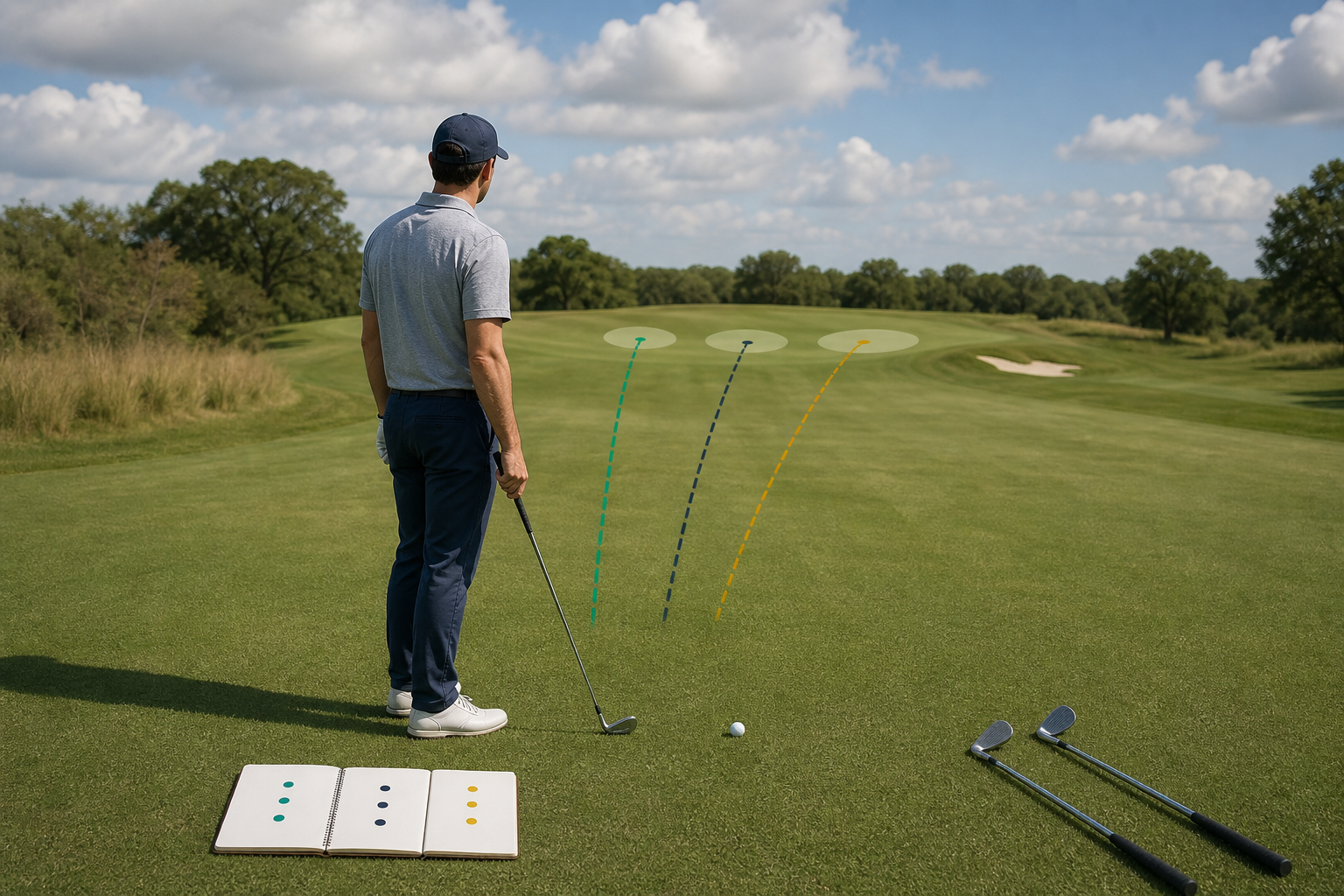
The decision often starts in the wrong place. A golfer sees “forged” and expects a certain response, or sees “hollow-body” and expects a certain kind of help, then chooses before defining the actual problem. Instead, replay a familiar hole: perhaps your mid-iron starts near the flag but repeatedly finishes short of the front bunker, or perhaps acceptable strikes scatter across the width of the green. Those are observable outcomes. They give a fitter something useful to compare.
Guild recommendation: Write down one primary issue to bring to the comparison: playable-contact rate, typical finish pattern, or the distance window you need from a specific iron.
Construction is a clue, not a promise
Forged and hollow-body describe iron construction categories, but neither label alone establishes how an individual club will perform for you. It cannot tell you whether the club arrives at the ball with a suitable lie, whether its shaft suits your delivery, or whether its distance spacing works with the rest of your set. A clean-looking head or a pleasing strike sensation can matter to confidence, but it should not overrule the result of a structured comparison.
Guild recommendation: Treat the label as the reason to include an iron in a comparison, not as the reason to buy it.
Match one feature to one observable need
Keep the decision narrow. If your concern is that good swings create awkward distance overlaps, compare carry windows and spacing through the set. If the issue is that shots miss one side of the green, compare the dispersion pattern from the same target. If confidence disappears when contact moves away from the center of the face, record how often each candidate produces a shot you would accept on the course. Do not ask one club to solve every issue at once; a single clear priority makes tradeoffs visible.
Guild recommendation: Choose the candidate that improves your primary pattern without creating a larger problem in gapping, start line, or playable-contact frequency.
Feel belongs in the fitting, after the ball-flight evidence
Feel is real because it affects whether you trust a club enough to make a committed swing. Yet feel is personal, and a satisfying sensation on one shot does not prove a better pattern over several shots. First compare measured results and repeated outcomes. Then use feel as the tiebreaker between options that meet your performance requirement. The PGA of America emphasizes that fitting and measured results matter when comparing club options.
Guild recommendation: Ask to compare candidates with a suitable shaft and consistent setup, then keep only the options that satisfy both your measured priority and your confidence at address.
Protect the rest of the bag
An iron is part of a sequence, not an isolated purchase. A promising mid-iron is less useful if it creates an unhelpful gap to the club above or below it. Bring your current iron specifications and the clubs you plan to keep to the fitting conversation. Also confirm that the final clubs meet the applicable equipment rules; conforming-club requirements apply regardless of construction method or marketing category.
Guild recommendation: Before ordering, verify the full set makeup, loft and lie choices, shaft option, and conformity status for the exact configuration you intend to play.
Try this · 20 minutes.
Build a Baseline Before You Compare Irons
At a practice range, choose one target and use your current mid-iron. Bring 12 balls and a phone note or scorecard. Use the same target, teeing condition, and normal pre-shot routine for every ball.
- Hit two relaxed shots without recording them.
- Hit 10 normal shots toward the same target, recording only whether each strike felt centered enough to play and whether the ball finished left, near, or right of the target line.
- After the set, note the most common finish category and count the shots you would be comfortable playing toward a green.
- Take this note to a fitting and repeat an equivalent sample with each candidate iron under comparable conditions. Ask to compare the same outcomes rather than relying on one standout shot.
What progress looks like: The useful result is a clear baseline—such as six of 10 playable strikes with a repeated right-side finish—that lets you judge whether a candidate produces a meaningfully better pattern.
Put the guide to work
These searches are a starting point—not a substitute for the fit and comparison criteria above.
Compare forged iron options
After identifying the outcome you need to improve, compare available loft, lie, shaft, and set-composition choices rather than treating the forged label as the deciding feature.
Compare hollow-body iron options
Use this search to find candidates to fit and measure against your baseline, then narrow them by the results they produce with an appropriate shaft and setup.
If you buy through these links, Guild of Golf may earn a commission at no extra cost to you.
The practical takeaway
- Name the recurring shot result before comparing construction labels.
- Use a repeatable sample of shots and measured results to judge candidates.
- Let feel break a tie between irons that already meet your main performance need.
- Check set spacing and the exact final configuration before making a purchase.
- Construction does not remove the need for a proper fitting.
Frequently asked questions
Is forged automatically better for feel?
No construction label can determine what you will prefer or how consistently you will perform. Compare feel only after establishing whether the club improves the measured outcome you care about.
Will a hollow-body iron automatically fix inconsistent approach shots?
No. An inconsistent approach pattern can involve several fitting variables and cannot be resolved from a construction label alone. Use a fitting and a repeatable comparison to determine whether a candidate improves your specific pattern.
What should I bring to an iron fitting?
Bring your current irons, a note on your common on-course miss, and the baseline from the practice plan. This gives the comparison a practical target beyond appearance or a single memorable strike.
Do construction labels affect whether an iron conforms to the Rules?
Conforming club requirements apply regardless of marketing category or construction method. Confirm the status of the exact club configuration you plan to use.
Sources used for this draft
- PGA of America: Club Fitting — The recommendation to prioritize fitting and measured results when comparing club options.
- USGA Equipment Rules — The point that conforming-club requirements apply regardless of construction method or marketing category.
Guild of Golf may earn a commission from qualifying purchases made through shopping links, at no extra cost to the buyer.