
comparison
Alignment Sticks vs. Tempo Trainers: Buy the Feedback You Can Use
Choose an alignment stick or swing tempo trainer by starting with the performance pattern you can observe, then buying only the feedback that addresses it.
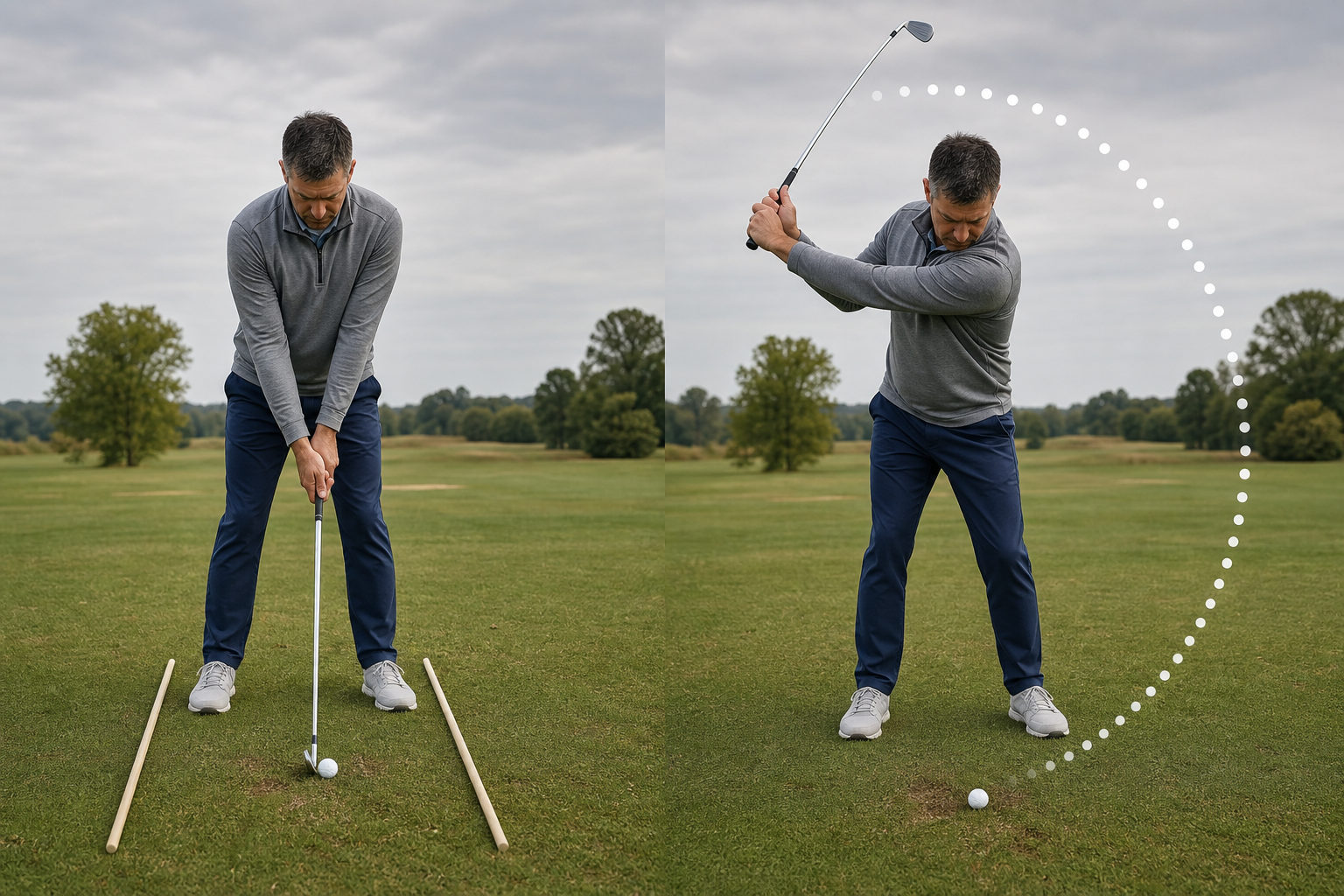
Built for: Golfers choosing between inexpensive practice aids for alignment, movement, rhythm, or speed awareness.
When a practice session produces scattered starts rather than one repeatable pattern, another gadget is rarely the answer. Alignment sticks give you a visible reference; a tempo trainer gives you a movement-timing cue. The useful choice is the one that makes your specific miss easier to notice and test.
The quick verdict
Buy alignment sticks when you need an external reference for where you are aimed or how you are set up; choose a tempo trainer only when your clearest, repeatable problem is an inconsistent sense of swing rhythm.
Best for Alignment sticks suit golfers who can see a setup or start-line mismatch, while tempo trainers suit golfers who lose sequence when they rush, stall, or change pace from swing to swing.
Skip it if Skip both for now if you cannot name an observable pattern, because purposeful practice starts with a specific goal rather than a purchase.
Start with the shot you can describe
Picture the golfer who steps behind a seven-iron, sees the flag slightly right of a bunker, then sends three balls in three different starting directions. That golfer has a useful question: was the setup aimed differently each time, or was the motion changing before impact? A second golfer may set the club down consistently yet feel the backswing race on one ball and drag on the next. Those are different observable problems, so they deserve different feedback. Purposeful practice connects an activity to a specific goal, which makes the first step naming the pattern before selecting an aid.
Guild recommendation: Choose one observation for a session: setup and intended line, or the consistency of your movement pace. Do not ask one inexpensive aid to solve both at once.
Alignment sticks answer a visual-reference problem
Alignment sticks are the better choice when the golfer needs to see a reference before making a swing. Laid on the ground, they can create a corridor that makes a chosen target line and foot line easier to compare. That is valuable for the player who repeatedly realizes after the shot that the body was aimed somewhere other than intended, or who cannot tell whether a practice station was set the same way from ball to ball. The outcome to seek is not a perfect swing position. It is a setup you can repeat and a ball-start pattern you can record.
Guild recommendation: Buy alignment sticks if you will use them on the ground to make a target decision visible. Skip them if your setup already looks and feels repeatable but your pace changes dramatically from swing to swing.
A tempo trainer answers a movement-timing problem
A swing tempo trainer earns its place when the golfer’s setup is stable but the motion has no dependable cadence. For example, a player may make a balanced rehearsal, then snatch the club away over the ball and finish off-balance. A timing cue can give that player a consistent reference for rehearsals and practice swings. It cannot tell you where you aimed, and it should not be treated as a diagnosis of why a swing changes. Its practical value is narrower: it helps you notice whether the pace you intended is the pace you produced.
Guild recommendation: Choose a tempo trainer when you can describe a repeatable rhythm problem and can commit to one simple cue. Skip it if you are hoping a cue will replace a target-line decision or a consistent setup routine.
Do not confuse a visible aid with a cure
Both choices can create a productive practice constraint, but neither belongs in every drill. An alignment corridor is helpful only if you look at it, establish a target, and then remove your attention from the rods before swinging. A tempo cue is helpful only if it is simple enough to repeat without turning each shot into a performance. If the aid leaves you unable to say what changed in your setup, start line, or movement pace, it is adding activity rather than feedback. Keep the goal small enough to observe within a short set of balls.
Guild recommendation: Use one aid for a defined block, record one result, and then hit a few balls without it to see whether the chosen reference carries into a normal routine.
Keep practice aids out of the decision on the course
Training equipment may be useful during practice, but equipment and its use during a stipulated round are governed by the applicable Rules. Before bringing any training aid into a competitive setting, check the relevant competition conditions and rules rather than assuming practice use is permitted.
Guild recommendation: Treat sticks and tempo cues as practice tools unless the governing rules and competition conditions clearly allow their use.
Try this · 15 minutes.
The Two-Ball Feedback Test
Use a flat practice area, six balls, a target in the distance, and two alignment sticks or ordinary clubs placed on the ground. Make sure the rods are well away from the swing path and never swing at an object on the ground.
- Pick one modest target and hit three balls with your normal routine. After each shot, note only whether the ball appeared to begin left, near, or right of the target line, and whether the swing felt rushed, steady, or interrupted.
- Place one rod on the ground parallel to your intended target line and a second far enough away to form a visible corridor for your feet. Do not use the rods to force a swing change. Hit three more balls and compare your start-line notes with the first group.
- If the visual corridor makes your setup choice clearer and the second group begins nearer your intended line more often, alignment feedback is the more useful purchase. If setup looks repeatable but your pace notes vary sharply, make six slow practice swings with a simple, comfortable count before considering a tempo cue.
- End by writing one next-session goal, such as beginning four of six shots near the chosen target line or maintaining the same comfortable count on six practice swings.
What progress looks like: A useful aid produces a clearer observation and a more repeatable result in the second group, rather than simply making the session feel busier.
Put the guide to work
These searches are a starting point—not a substitute for the fit and comparison criteria above.
Compare alignment-stick sets
After confirming that a ground reference helps, compare visibility, durability, length, and whether the set is convenient to carry to the range.
Compare swing tempo trainers
After confirming that a timing cue is the need, compare how clearly the trainer communicates rhythm, whether it feels manageable in practice, and whether its instructions define one simple task.
If you buy through these links, Guild of Golf may earn a commission at no extra cost to you.
The practical takeaway
- An alignment stick is the stronger buy when a visual target-line or setup reference changes what you can observe.
- A tempo trainer is the stronger buy when your setup is repeatable but your movement pace is not.
- The best first practice aid creates one clear constraint and one result you can track.
- A specific practice goal is more valuable than accumulating several overlapping training tools.
Frequently asked questions
Should a beginner buy alignment sticks or a tempo trainer first?
Start with alignment sticks if the beginner needs a simple, visible reference for setting up to a chosen target, then move to a tempo cue only when an inconsistent rhythm is the clearly observed problem.
Can alignment sticks improve swing tempo?
They can help organize a practice station, but their primary value in this comparison is visual reference rather than a direct timing cue.
Can a tempo trainer fix an alignment problem?
No. A tempo cue may help a golfer repeat a chosen pace, but it does not provide the ground reference needed to compare setup and intended target line.
Can I use these aids during a round?
Equipment and use during a stipulated round are governed by applicable rules, so check the relevant rules and competition conditions before using any practice aid on the course.
Sources used for this draft
- PGA of America: Practice With Purpose — The recommendation to connect each practice activity and purchase decision to a specific goal.
- USGA Equipment Rules — The reminder that equipment and its use during a stipulated round are governed by applicable rules.
Guild of Golf may earn a commission from qualifying purchases made through shopping links, at no additional cost to the reader.