
comparison
Forged vs. Hollow-Body Irons: Choose for the Shot Problem You Can See
A fitting-first guide to separating forged and hollow-body labels from the measurable iron result that matters on the course.
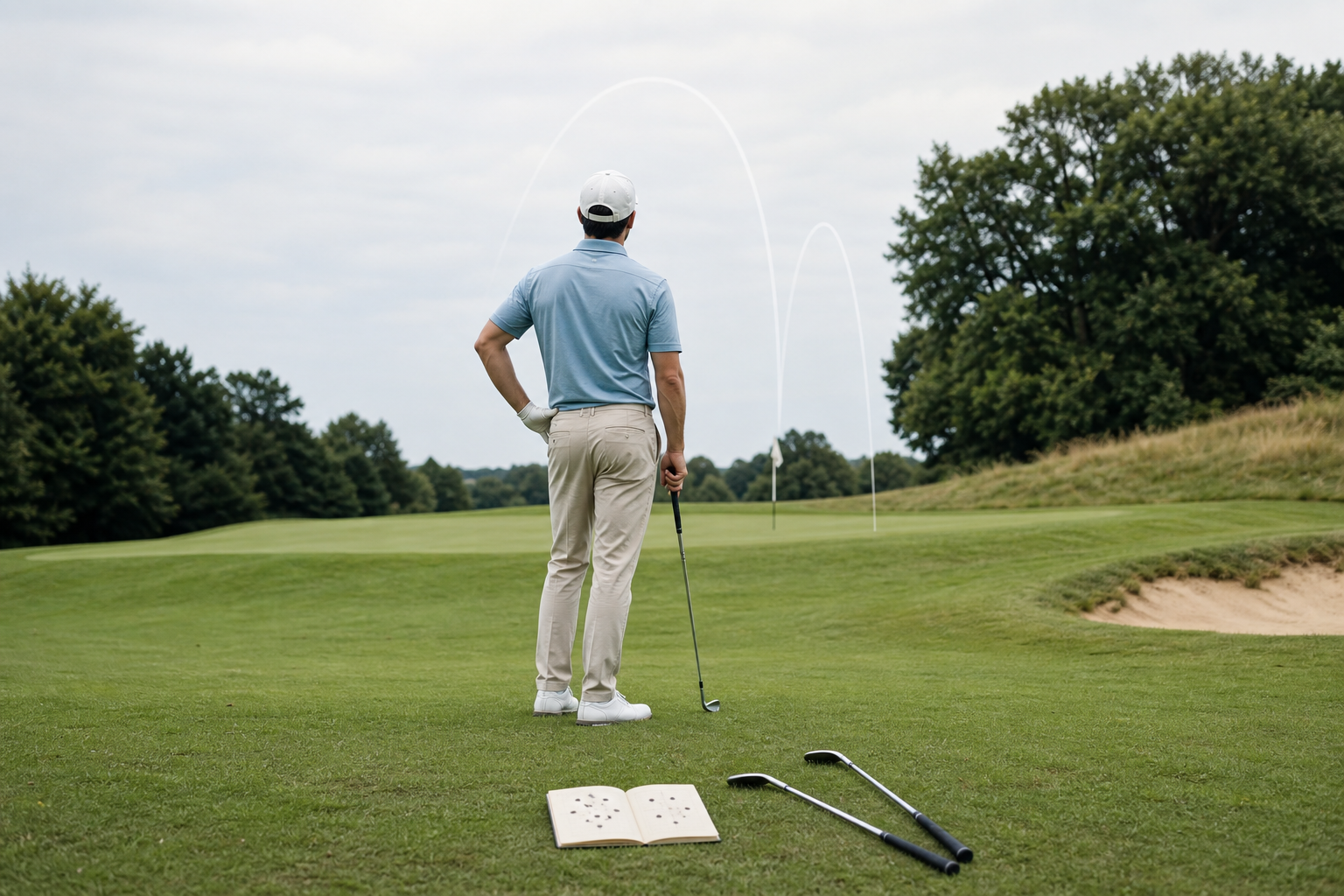
Built for: Golfers comparing iron constructions who want to separate manufacturing terms from on-course fit and performance.
When one iron feels appealing on a clean range strike and another keeps more shots on the green, the label on the back of the head is not the decision. Start with the miss or distance problem you can observe, then compare only the club features and measured results that address it.
The quick verdict
Forged and hollow-body describe construction, not a universal performance ranking. Choose the option that produces the more useful measured result for your recurring on-course problem, then confirm it in a fitting.
Best for Golfers who can name a specific issue, such as an unreliable carry window, a recurring short-side miss, or inconsistent strike pattern, and are willing to compare outcomes rather than buy a category.
Skip it if Skip a construction-led purchase if you have not identified the shot problem to solve or cannot compare clubs under a consistent fitting process.
The first-tee problem is rarely “forged or hollow-body.”
Picture a par 3 where a solid-looking 7-iron repeatedly finishes short of the front edge, or a familiar approach yardage that produces a broad left-right spread. Those are observable problems. “I want forged” and “I want hollow-body” are not. A construction name may help organize a search, but it cannot tell you whether a particular club will make your carry distance more usable or your approach pattern tighter.
The better question is narrow: what result needs to change? Write down one issue from recent rounds or a structured range session. Examples include too many shots missing one side, uncertainty about how far a well-struck iron carries, or a distance gap that leaves an awkward number into greens. This keeps a club comparison tied to a consequence you can see.
Guild recommendation: Arrive at a fitting with one primary problem and one backup observation, not a preferred construction label.
Construction is a description, not a verdict on feel or fit.
Forged and hollow-body are manufacturing and design terms. They should not be used as shortcuts for whether an iron will feel right, launch in a useful window, or fit a golfer. The same category word can appear on clubs built for different players, and a golfer’s experience of an impact is only one part of a full iron result.
This matters when a clean strike feels compelling but the resulting shot does not solve the course problem. Feel can be a valid preference: it can affect confidence and whether a player enjoys using a club. Keep it in its proper place, though. Judge feel alongside the shot’s carry, direction, and repeatability, not instead of them.
Guild recommendation: Use construction terms to make a shortlist, then require each candidate to earn its place with an observable result.
Match the comparison to the problem you actually have.
If the problem is unreliable distance to a green, compare carry results across several normal swings. Do not let one unusually long or pure strike settle the choice. If the problem is directional misses, compare where a useful group of shots finishes relative to the intended landing area. If the issue is confidence from uneven lies or late-round fatigue, say so in the fitting and observe whether the club still produces a playable pattern under ordinary swings.
A golfer who likes to shape approaches has a different constraint from a golfer whose immediate goal is simply to cover a front bunker more often. Neither goal automatically points to one construction. The right choice is the one that creates the better tradeoff for that golfer’s most frequent shot and most costly miss.
Guild recommendation: Compare candidates using the same target, the same intended shot, and enough swings to see a pattern instead of a highlight.
Treat fitting as the decision point.
The PGA of America advises that fit and measured results matter when comparing club options. That is especially useful here because labels do not account for the full club: loft, shaft, length, lie, set composition, and the golfer’s delivery all belong in the comparison. Ask the fitter to explain what was measured and which result improved relative to your current iron.
There is also a practical rules check. The USGA’s conforming-club requirements apply regardless of marketing category or construction method. A “forged” or “hollow-body” description does not itself establish conformity. If competition use matters, confirm the specific club’s status through appropriate channels rather than relying on its category name.
Guild recommendation: Choose the club configuration that gives the most useful measured improvement for your stated problem, and verify conformity separately when it is relevant.
A calm buying sequence prevents a category mistake.
First, identify the observable shot problem with the 12-ball check or notes from recent rounds. Second, build a small shortlist that includes any construction types you are genuinely open to. Third, compare the same iron role and intended target under a fitting process. Finally, review the result in plain language: which option gave you the more useful carry and finish pattern, and what tradeoff did it require?
This process also protects against a common decision trap: assuming that a club marketed with a familiar construction term must deliver a familiar outcome. It may be an excellent option, but the evidence worth trusting is the comparison in front of you.
Guild recommendation: Buy after the measured comparison answers your own shot problem, not when the category name merely sounds like the golfer you want to become.
Try this · 20 minutes.
The 12-Ball Iron Pattern Check
Use one familiar iron, a level practice area, a target at a comfortable full-swing distance, and two alignment sticks or clubs laid on the ground to create a target line. Pick a landing area rather than aiming at a single tiny point.
- Hit six balls with your normal routine, allowing your usual shot pattern to show.
- After each shot, note only three observations: whether contact sounded and felt centered or not, whether the ball finished left, near, or right of the target line, and whether it carried short, near, or beyond your intended landing area.
- Hit another six balls with the same club and target, maintaining the same intention rather than trying to manufacture a different swing.
- Count the most common start-and-finish pattern, plus the number of shots that reached the intended landing area. Bring those notes to a fitting and ask to compare candidate irons against that baseline.
What progress looks like: The useful outcome is a repeatable description of your pattern, such as “most misses finish right and short” or “carry is usually near target but spread is wide,” rather than a conclusion about what your swing needs.
Put the guide to work
These searches are a starting point—not a substitute for the fit and comparison criteria above.
Compare forged iron sets
After identifying the pattern to improve, compare loft, shaft, set makeup, and fitting availability rather than treating the forged label as the answer.
Compare hollow body iron sets
Use this search to find candidate sets for a like-for-like fitting comparison, with the same attention to shaft, loft, set makeup, and measured results.
Compare iron fitting tools
A simple note-taking aid can help retain carry, direction, and strike observations from a fitting or range session.
If you buy through these links, Guild of Golf may earn a commission at no extra cost to you.
The practical takeaway
- Forged and hollow-body are construction labels, not universal predictions of feel, forgiveness, or distance.
- Start with an observable performance issue, then evaluate whether a candidate iron changes that outcome.
- A useful comparison holds the target and intended shot constant while tracking carry, direction, and strike pattern.
- Fitting and measured results should decide the final choice, while conformity is a separate question from construction category.
Frequently asked questions
Are forged irons automatically better for feel?
No construction label can settle feel for every golfer or every model. Treat feel as a personal preference to assess alongside the shot’s measurable carry, direction, and repeatability.
Are hollow-body irons automatically the better choice for a golfer who misses greens?
Not automatically. First identify how the misses happen: short, long, left, right, or with an inconsistent strike pattern. Then compare candidate clubs in a fitting to see which produces the more useful result for that pattern.
What should I bring to an iron fitting?
Bring your current iron, a clear description of one recurring on-course problem, and simple notes from a range session or rounds. Ask what was measured and how each candidate changed the result relative to your current club.
Does a construction category determine whether an iron conforms to the rules?
No. The USGA states that conforming-club requirements apply regardless of marketing category or construction method. Confirm the status of the specific club when that matters for your play.
Sources used for this draft
- PGA of America: Club Fitting — The recommendation to prioritize fit and measured results when comparing iron options.
- USGA Equipment Rules — The point that conforming-club requirements apply regardless of construction or marketing category.
Guild of Golf may earn a commission from qualifying purchases made through shopping links, at no extra cost to the reader.