
comparison
Alignment Sticks vs. Tempo Trainers: Buy Feedback You Can See
Choose a practice aid by the on-course result you can observe: aim and setup reference, or a repeatable sense of rhythm.
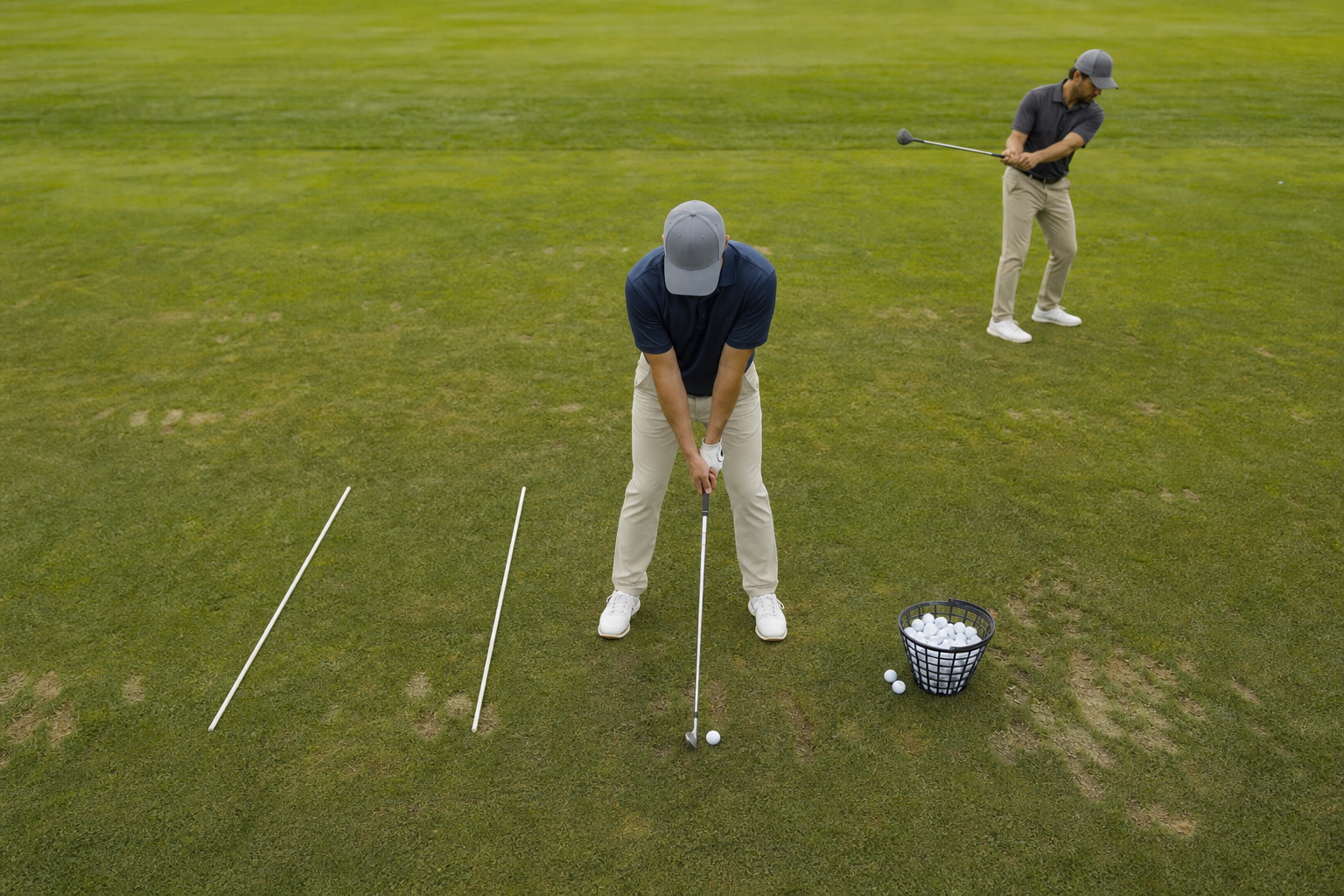
Built for: Golfers choosing an inexpensive practice aid for alignment, movement, rhythm, or speed awareness.
A tee shot that starts nowhere near your intended line and a swing that feels rushed can both produce a frustrating day, but they are not the same practice problem. Alignment sticks and tempo trainers give different feedback, so buy the one that makes your next practice goal visible.
The quick verdict
Choose alignment sticks when you need an external reference for where you set up and aim; choose a tempo trainer when your useful practice goal is a repeatable movement rhythm rather than a target-line reference.
Best for Alignment sticks suit golfers who can point to an observable setup or start-line inconsistency, while a tempo trainer suits golfers who want a consistent rehearsal cadence before hitting shots.
Skip it if Skip both as a first purchase if you cannot name the result you want to observe, because a vague practice session turns either aid into another item in the bag.
Start with the shot pattern you can actually describe
The useful question is not whether your swing needs “work.” It is whether you can observe a particular problem. Perhaps you repeatedly set your feet toward the left edge of the range while believing you are square. Perhaps your first few holes feel hurried, then settle only after several swings. Those are different constraints, and a single practice aid should address only one of them. Purposeful practice connects an activity to a specific goal, according to the PGA of America: https://www.pga.com/story/practice-with-purpose-to-improve-your-game.
Guild recommendation: Write a one-sentence goal that names what you will look at or feel before adding either tool to the bag.
Choose alignment sticks for location feedback
Alignment sticks create a visible reference on the ground. Their value is immediate when the question is spatial: Where is my target line, and how am I placing my body relative to it? A golfer who often aims a short iron differently from one shot to the next can build the same station repeatedly, then check setup before swinging. That is more useful than relying on a remembered feeling of being aligned. The tradeoff is that rods do not supply a cadence, and they do not tell you why a ball curves or misses.
Guild recommendation: Choose alignment sticks if your desired outcome is a repeatable setup picture or a clearer reference to the intended line.
Choose a tempo trainer for movement feedback
A tempo trainer is the better fit when the issue you can observe is inconsistent rhythm during rehearsals or a tendency to rush from one part of the swing to another. Its role is to make a repeated motion cue easier to notice before you return to your normal club. For example, a golfer whose warm-up swings look calm but whose first tee swing feels abrupt can use rehearsals to establish one consistent cadence. The tradeoff is equally important: a rhythm cue cannot show whether your feet, shoulders, or clubface are aimed where you intend.
Guild recommendation: Choose a tempo trainer if you need a consistent rehearsal rhythm and can keep the goal separate from target-line work.
Do not make one aid answer both questions
The common buying mistake is expecting a line reference to cure a rushed swing or expecting a rhythm aid to prove that you are aimed correctly. Use the aid to create feedback, then judge the narrow result it can show. With rods, that may be whether your setup repeatedly matches your chosen target corridor. With a tempo trainer, that may be whether you can make the same calm rehearsal several times without changing the count. If neither outcome matters to your current golf, save the purchase for later.
Guild recommendation: Buy the aid that reduces uncertainty about one observable problem, not the one that promises the broadest change.
Take range tools to the course with care
Practice aids belong in a deliberate practice plan, but equipment and its use during a stipulated round are governed by the applicable rules. Check the relevant requirements before using any training item in competition or during a stipulated round: https://www.usga.org/equipment-standards/equipment-rules-2019/equipment-rules.html.
Guild recommendation: Use the aid in practice, then take one simple learned cue—not the training device itself—onto the course when appropriate.
Try this · Twenty minutes.
The Two-Feedback Practice Check
Use an open practice area with enough room for a full swing, a clearly chosen target, ten balls, two ground rods, and your normal club. Place one rod along the intended target line and a second rod parallel to it outside the ball area, leaving safe space for the clubhead. If using a tempo trainer, follow its intended-use instructions and make rehearsal swings only unless it is specifically designed for hitting balls.
- State one observable goal before beginning, such as setting your feet parallel to the target reference or completing each rehearsal with the same unhurried cadence.
- Hit five shots from the rod station with your normal club, resetting your setup each time and noting only whether each ball begins generally on the intended side of the target corridor.
- Step away from the balls and make five controlled rehearsal swings with the tempo trainer, using one simple count such as “back-and-through” rather than trying to force a faster motion.
- Return to the rod station for five more normal-club shots, keeping the same stated goal and avoiding mid-session changes to grip, stance, and tempo all at once.
- Write down which feedback was clearest: the visual setup reference from the rods or the repeatable rhythm cue from the rehearsals.
What progress looks like: Success is being able to name one repeatable cue and one observable result for the next session, rather than assuming that either aid has identified the cause of a miss.
Put the guide to work
These searches are a starting point—not a substitute for the fit and comparison criteria above.
Compare alignment-stick sets after deciding that a target-line reference is your
Compare whether the set gives you a clear, practical ground reference and fits the way you travel to the range.
Compare tempo trainers after deciding that a rhythm rehearsal is your priority.
Compare the trainer’s intended use and whether its feedback is simple enough to repeat before normal swings.
If you buy through these links, Guild of Golf may earn a commission at no extra cost to you.
The practical takeaway
- Alignment sticks give visual location feedback for setup and intended target line.
- Tempo trainers give a repeatable movement-rhythm cue during rehearsals.
- A useful purchase starts with an observable performance problem, not a broad wish to improve.
- Keep practice goals narrow enough that the feedback from the aid can answer them.
- Review applicable rules before using training equipment during a stipulated round.
Frequently asked questions
Should a beginner buy alignment sticks or a tempo trainer first?
Choose the one linked to the clearest current observation. If setup direction is unclear, start with alignment sticks; if the golfer can already set a target line but cannot repeat a calm rehearsal rhythm, consider a tempo trainer.
Can alignment sticks and a tempo trainer be used in the same practice session?
Yes, provided they are assigned separate jobs. Use the rods for a setup or target-line check, then use the tempo trainer for rehearsals, rather than trying to interpret both forms of feedback at once.
Will a tempo trainer fix a slice or hook?
It can provide rhythm feedback, but it does not by itself identify the cause of ball curvature. Keep the practice goal to the repeatability of the rehearsal cadence.
Can I use either aid during a competitive round?
Equipment and use during a stipulated round are subject to applicable rules, so consult the USGA Equipment Rules and any competition conditions before doing so: https://www.usga.org/equipment-standards/equipment-rules-2019/equipment-rules.html.
Sources used for this draft
- PGA of America: Practice With Purpose — The principle that purposeful practice connects the activity to a specific goal.
- USGA Equipment Rules — The reminder that equipment and its use during a stipulated round are governed by applicable rules.
Guild of Golf may earn a commission from qualifying purchases made through shopping links, at no additional cost to the reader.