
comparison
Choose a Two- or Three-Piece Ball From the Shot You Can Observe
A practical way to compare two-piece and three-piece golf balls by starting with a repeatable on-course problem rather than a construction label.
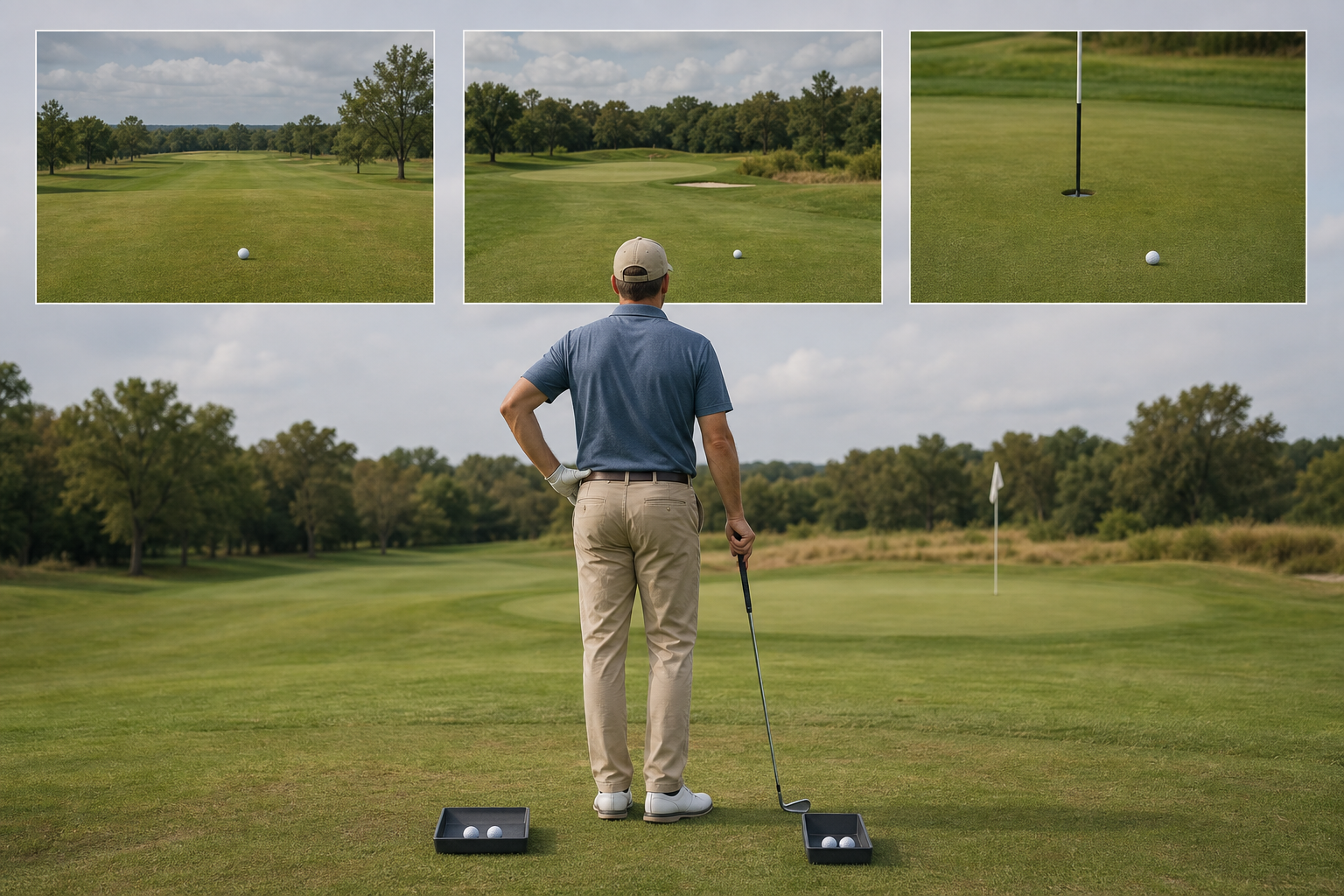
Built for: Golfers comparing golf-ball construction while balancing feel, durability, flight, and short-game control.
When one ball feels fine from the tee but leaves you unsure around the green, the tempting answer is to buy more layers. A better answer is to identify the shot that is costing you strokes, compare only that outcome, and choose the construction category that earns a place in your bag.
The quick verdict
Treat two-piece versus three-piece as a starting filter, not a performance verdict. Choose the ball whose observable result is more repeatable on the shot you most need to improve, then verify that the exact model is conforming when the Rules apply.
Best for A two-piece comparison is sensible for golfers who prioritize a straightforward, durable-feeling ball choice and want to judge it by tee-to-green consistency. A three-piece comparison is sensible for golfers willing to make their decision at the green, where touch and stopping behavior are the outcomes they want to compare.
Skip it if Skip a construction-led purchase if you have not identified a repeatable problem or cannot compare balls under the same conditions. More pieces alone do not tell you which ball will fly, feel, last, or perform best for your game.
The decision begins after a familiar miss
You hit a solid approach, watch it land near the front of the green, and then have a longer putt than expected. On the next hole, you may instead find a ball still in fine shape but less pleasant to strike on a delicate pitch. Those are different problems. Neither is solved merely by reading “two-piece” or “three-piece” on a box.
Construction count is a useful way to organize a comparison, but it is not an outcome. The useful question is narrower: which ball gives you the result you can observe on the shot that matters most right now? That keeps a golfer who values a tidy, consistent tee-to-green choice from paying attention to the wrong test, and it keeps a short-game-focused golfer from deciding only from a full-swing impression.
Guild recommendation: Write down one priority before shopping: durability over a round, a preferred feel, predictable full-shot flight, or a more useful finish near the green. Do not ask one label to guarantee all four.
Use two pieces when simplicity is your constraint
A two-piece ball belongs in the conversation when your decision is constrained by simplicity. Perhaps you lose enough balls that replacing them is part of the round, play firm municipal turf where a ball takes plenty of visible punishment, or simply want one dependable candidate to evaluate from the tee through the green.
The correct test is practical. Does the ball remain acceptable to you after normal play? Do your well-struck tee shots and routine approaches start and finish in a pattern you can manage? If the answer is yes, do not reject that result because a three-piece option sounds more specialized. A more elaborate construction is not automatically a better match for the problem you actually have.
Guild recommendation: Favor a two-piece candidate when your main constraint is a straightforward, repeatable ball choice. Skip it only if your controlled short-game comparison shows that another candidate gives you a clearly more useful result.
Use three pieces when the scoring shots are your constraint
A three-piece ball deserves close attention when your recurring decision happens inside scoring range. Imagine a golfer who reaches greens often enough but repeatedly faces uncertain first putts after pitches and partial wedges. That golfer should judge candidates from the same lie, to the same landing area, with the same club and intention.
Feel belongs in that decision, but it needs an observable companion. A ball may sound or feel preferable while delivering a finishing pattern that does not help you. Conversely, a ball that feels different may repeatedly finish in a more usable window. Give the result more weight than the label, and repeat the comparison before changing your gamer ball.
Guild recommendation: Favor a three-piece candidate when you will actually compare its short-game and approach outcomes. Skip it if the supposed advantage never appears in a repeatable, same-condition test.
Keep flight, durability, and feel from becoming vague claims
Golf-ball decisions often go wrong when a golfer turns one memorable shot into a general verdict. A ball that survived a cart path is not necessarily the best ball for every shot. A pleasing strike on the range does not establish how it will finish from a greenside lie. A single high or low flight may reflect the strike, wind, lie, or club as much as the ball.
Instead, make each priority measurable in modest terms. For flight, record starting direction and broad finishing area on comparable full shots. For durability, inspect each candidate after equivalent play and decide what level of scuffing or marking you accept. For feel, compare the same putt or chip length and ask which sound and impact sensation helps you commit to the stroke. These are personal selection criteria, not universal promises about construction.
Guild recommendation: Change one variable at a time. Keep the club, target, lie, and intended shot as constant as possible before crediting a result to the ball.
Check conformity when your round is played under the Rules
For play conducted under the Rules, a golf ball must meet the applicable equipment requirements. The USGA Conforming Ball List identifies balls submitted and evaluated for conformance. Construction count does not replace that check, and a familiar brand name does not confirm every version of a ball.
This is especially important when shopping across colorways, generations, and similarly named models. Match the exact ball you intend to play with the current list and with the competition conditions set by your club or event organizer.
Guild recommendation: Before a competition or any round where conformity matters, verify the exact ball on the USGA Conforming Ball List and follow the event’s conditions.
Try this · 25 to 35 minutes.
The One-Problem Ball Comparison
Bring two clearly separated groups of plain, conforming golf balls: one two-piece option and one three-piece option. Use a practice green or a quiet short-game area, one club, one target, and the same starting location. Mark a landing area with two alignment sticks or use an existing patch of turf, keeping all practice well away from other golfers.
- Name one observable priority before hitting a ball: a predictable starting direction, a preferred landing-to-finish distance, a comfortable sound and feel, or a ball that remains presentable through a normal round.
- Hit six shots with the first ball from the same lie, aiming at the same landing area. Note only where each ball finishes relative to the target and whether its appearance still meets your own durability standard.
- Hit six shots with the second ball using the same club, lie, target, and intended shot. Alternate the two groups in pairs if the practice area is busy or the ground is changing.
- Repeat the comparison from a second nearby lie only if you can preserve the same target and intended landing area. Do not use the session to assign a cause to a swing change.
- Choose the ball that produces the tighter, more useful finishing pattern for your stated priority. If the result is mixed, keep both candidates and repeat on another day rather than declaring a winner from a handful of shots.
What progress looks like: You can state a specific reason for your choice, such as, “This ball finished closer to my chosen landing-to-finish window on eight of 12 comparable shots,” instead of relying on its layer count alone.
Put the guide to work
These searches are a starting point—not a substitute for the fit and comparison criteria above.
Compare two-piece golf balls
After defining the outcome you need to observe, compare models by their stated construction, cover information, and whether the exact ball appears on the applicable conforming list.
Compare three-piece golf balls
Use this search when your test priority is short-game touch or approach finishing behavior, then compare the exact models under the same conditions rather than assuming every three-piece ball behaves alike.
If you buy through these links, Guild of Golf may earn a commission at no extra cost to you.
The practical takeaway
- Start with one observable weakness or priority, not with the number of layers.
- A two-piece ball is a reasonable candidate when simplicity and durable, repeatable tee-to-green use are your constraints.
- A three-piece ball is worth comparing when your choice will be decided by controlled approach or short-game finishing results.
- Use the same club, lie, target, and intended shot when comparing balls, then repeat the exercise before committing.
- For Rules-based play, confirm that the exact ball meets applicable requirements and appears on the relevant conforming list.
Frequently asked questions
Is a three-piece ball automatically better than a two-piece ball?
No. The layer count alone does not establish that a ball will be better for your flight, feel, durability, or short-game result. Choose from a controlled comparison tied to the shot outcome you want to improve.
What should I compare first if I am unsure which ball I need?
Choose the problem that appears most often in your rounds. A golfer concerned with a ball’s condition and a straightforward tee-to-green choice can begin with durability and full-shot consistency, while a golfer focused on scoring shots can begin with landing-to-finish behavior around the green.
How many shots are enough for a useful comparison?
Start with six comparable shots per ball and repeat the session if the pattern is unclear. The goal is not a perfect laboratory result; it is a decision based on more than one unusually good or poor shot.
Do I need to check whether my ball conforms?
If your round is played under the Rules or an event requires a conforming ball, check the exact model against the applicable requirements and the USGA Conforming Ball List.
Sources used for this draft
- USGA Equipment Rules — Golf balls used under the Rules must meet applicable equipment requirements.
- USGA Conforming Ball List — The list identifies balls submitted and evaluated for conformance.
Guild of Golf may earn a commission from qualifying purchases made through shopping links, at no additional cost to the reader.