
comparison
Forged vs. Hollow-Body Irons: Choose for the Shot You Need
A fit-first guide to separating iron labels from the ball-flight and contact patterns that matter on the course.
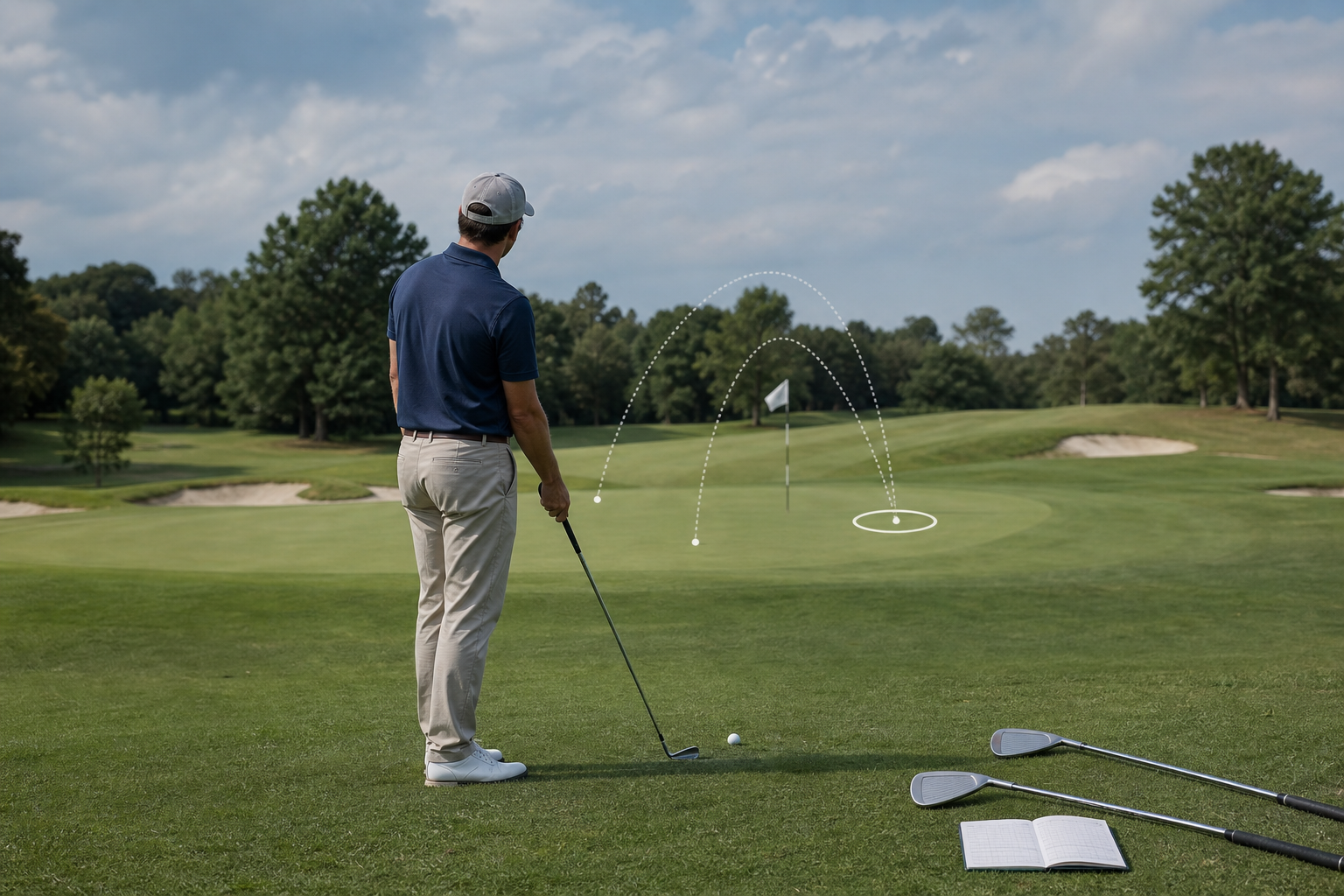
Built for: Golfers comparing forged and hollow-body irons who want to separate manufacturing terms from on-course fit and performance.
When a flushed 7-iron still finishes short of the target, or a thin strike turns a simple approach into trouble, the answer is not automatically “forged” or “hollow-body.” Start with the result you can see, then use a fitting to determine whether either construction belongs in your bag.
The quick verdict
Forged and hollow-body are construction labels, not performance guarantees. Choose the head that produces the most useful measured pattern for your recurring on-course problem, then confirm loft, lie, shaft, and gapping in a fitting.
Best for Golfers who can name an observable priority, such as holding a green more reliably, tightening a common miss, or creating workable distance gaps.
Skip it if Skip a construction-first purchase if you have not identified a repeatable ball-flight or distance problem, or if you cannot compare measured results with a qualified fitter.
The problem is rarely “I need a forged iron.”
Picture a par 3 where your usual 7-iron reaches the front edge but rarely stays near the pin. Or picture a familiar 150-yard approach in which one well-struck ball flies the number and the next leaves an awkward pitch. Those are useful starting points because they describe outcomes. “I want forged” and “I want hollow-body” are not outcomes; they are labels that still leave the essential question unanswered: what must improve in your own delivery and ball flight?
Guild recommendation: Write down one repeated approach-shot problem before comparing models. Keep it concrete enough to observe on the course or range.
Use construction names as categories, not conclusions.
Forged and hollow-body describe club construction categories, while the rules for a conforming club apply regardless of its marketing category or construction method. That distinction matters. A label cannot tell you whether a particular head, shaft, loft, and lie combination will produce your preferred result. Conformity is one question; fit is another.
Guild recommendation: Do not treat either label as a shortcut to legality, scoring performance, or a particular feel. Ask what the complete club produces in measured shots.
Match the comparison to the pattern you can observe.
A golfer whose solid strikes repeatedly finish short has a different decision from a golfer whose issue is a wide left-right window. A player who likes the starting distance but cannot cover a predictable gap between irons has a third decision. These problems can overlap, but they should not be bundled into a generic search for “better irons.” In a fitting, state the one pattern that costs you the most strokes and compare options against that pattern first.
Guild recommendation: For a distance concern, compare carry and the separation between neighboring irons. For directional concern, compare the spread around the target. For a gapping concern, compare the whole relevant section of the set rather than one favorite club.
Feel belongs in the decision, but it should not end it.
Feel is a valid preference because confidence affects whether you commit to a shot. Yet it is most useful after the candidate clubs have met the task. If two options create similarly useful measured results, choose the one whose sound, appearance, and impact response make you comfortable standing over a demanding approach. If the preferred-feeling option leaves you with an outcome you were trying to solve, the preference has to be weighed against that on-course cost.
Guild recommendation: Use feel as a tie-breaker after comparing results. Keep the same target and the same stated objective when evaluating candidates.
A fitting turns the label debate into a useful decision.
The PGA of America advises golfers to focus on fitting and measured results when comparing club options. This is especially important with irons because the head is only one part of the club you swing. Ask for the comparison to include your current iron, candidate heads, and the setup choices that affect the result. Then look for a repeatable advantage, not one exceptional shot.
Guild recommendation: Bring your 12-ball notes and ask the fitter to show the measurements that relate directly to your stated problem. Do not finalize a choice solely because one shot looked unusually good.
Do not forget the set-level consequences.
An iron can look compelling by itself yet create an awkward place in the bag if its measured distance pattern does not connect sensibly with the clubs around it. That is why a golfer replacing only long irons may need a different comparison from a golfer replacing the entire set. The choice should preserve useful decisions on the course: a confident club for a carry number, a predictable option into a green, and no mysterious hole between adjacent clubs.
Guild recommendation: Before buying, map the clubs you expect to keep and ask how the prospective replacement changes the gaps you actually face during a round.
Try this · 20 minutes.
The 12-Ball Approach Pattern Check
Choose one safe target on a practice range and one iron you already play. If the range has clear distance markers, select a target near your typical carry for that club. Use the same ball type when possible, and make sure the hitting area is clear before each shot.
- Hit three easy warm-up shots that do not count, then hit 12 normal shots toward the same target.
- After each shot, record only an observable result: short, target-distance, long, left, right, or an obvious heavy or thin strike.
- Group the 12 outcomes into the pattern that appears most often. For example, note whether the recurring issue is finishing short, missing one side, or varying strike quality.
- Repeat on another day before treating the pattern as a buying priority. Bring the two sets of notes to a fitting and ask to compare candidate heads against the same priority.
What progress looks like: You finish with a plainly stated pattern, such as “my normal 7-iron most often finishes short” or “my usable shots vary too widely left and right,” rather than a vague sense that you need a different construction.
Put the guide to work
These searches are a starting point—not a substitute for the fit and comparison criteria above.
Compare forged iron sets
Use this search after identifying the result you want to improve, then compare candidates in a fitting rather than assuming the forged label supplies that result.
Compare hollow body iron sets
Use this search to build a shortlist for measured comparison when a fitter can test whether a hollow-body option improves your specific distance, dispersion, or gapping outcome.
If you buy through these links, Guild of Golf may earn a commission at no extra cost to you.
The practical takeaway
- Start with a repeatable result you can observe, such as coming up short, missing one side, or having inconsistent gaps.
- Forged and hollow-body are construction categories, not promises of a particular on-course outcome.
- Use measured fitting results to compare candidate clubs against your own stated priority.
- Let feel decide between options that already meet the performance task.
- Evaluate the iron within the distance pattern of the full bag, not as an isolated purchase.
Frequently asked questions
Is forged or hollow-body automatically better?
No. The supplied fitting guidance supports comparing options through fit and measured results, while club conformity requirements apply regardless of construction method. The better option is the one that addresses your observable priority in a suitable full-club setup.
What should I bring to an iron fitting?
Bring your current iron if possible, plus notes from two practice sessions describing your normal distance, directional, or contact pattern. State one priority before testing so the comparison has a clear purpose.
Should I choose based on feel?
Feel can be an important preference, especially when two choices produce similarly useful results. It should not replace a comparison of the measured outcome connected to your recurring on-course problem.
Why compare more than one iron in a set?
A useful iron decision must work with the rest of the bag. Comparing neighboring clubs helps reveal whether the candidate creates a distance pattern that serves the approach shots you face.
Sources used for this draft
- USGA Equipment Rules — The point that conforming-club requirements apply regardless of marketing category or construction method.
- PGA of America: Club Fitting — The recommendation to use fitting and measured results when comparing club options.
Guild of Golf may earn a commission from qualifying purchases made through Amazon links or searches.