
comparison
Alignment Sticks vs. Tempo Trainers: Buy the Feedback You Need
Choose between alignment sticks and a swing tempo trainer by matching the aid to an observable practice problem, then use a simple drill to judge whether the feedback helps.
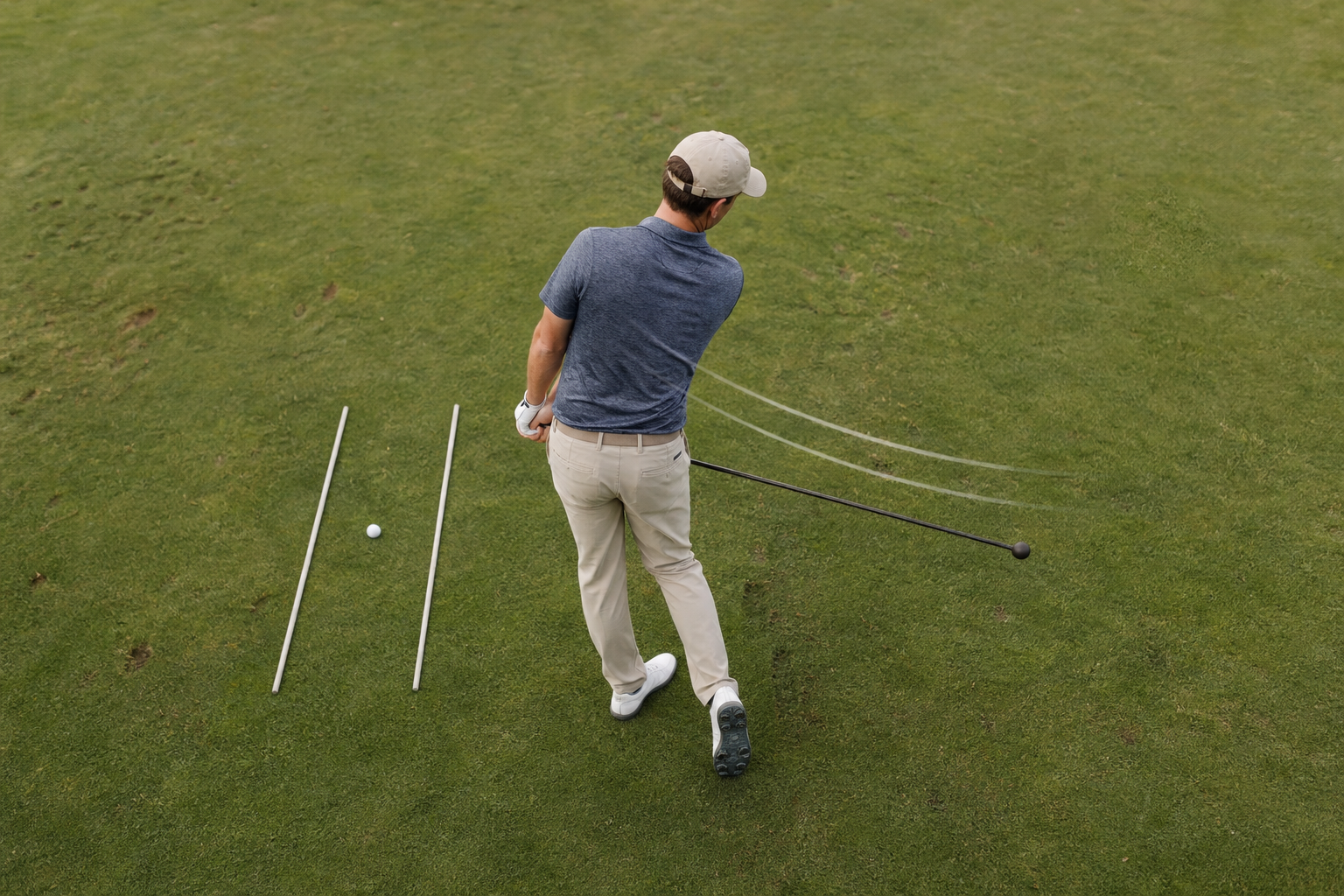
Built for: Golfers choosing between inexpensive practice aids for alignment, movement, rhythm, or speed awareness.
When a range session produces plenty of swings but no clear answer, a practice aid should narrow the question. Alignment sticks help make a spatial reference visible; a tempo trainer is better suited to a golfer who wants a repeatable rhythm or movement cue. Buy the one that gives feedback on the problem you can actually observe.
The quick verdict
Choose alignment sticks when you need a visible reference for where you aimed, stood, or intended the club to travel. Choose a swing tempo trainer when your useful question is whether the motion felt rushed, uneven, or consistently paced.
Best for Alignment sticks are best for golfers who can point to a setup or start-line reference they want to rehearse. A tempo trainer is best for golfers who want a repeatable motion cue without turning practice into a search for positions.
Skip it if Skip both for now if you cannot name the one outcome you want to observe, such as a repeatable setup reference or a steadier-feeling motion. Purposeful practice begins by connecting the activity to a specific goal.
Start with the miss you can observe
A golfer who repeatedly sets up and wonders where the intended line was has a different practice problem from the golfer whose first few swings feel abrupt and the next few feel slow. Neither golfer needs more gadgetry; each needs feedback that makes one question easier to answer. Purposeful practice connects an activity to a specific goal, so write the goal in plain language before buying: “I want the same setup reference on every ball,” or “I want to recognize an even pace in my rehearsal swings.”
Guild recommendation: If your goal contains a location, line, or address reference, begin with alignment sticks. If it contains words such as rushed, hurried, smooth, or paced, begin with a tempo trainer.
Alignment sticks answer a spatial question
Alignment sticks are most useful when the golfer needs an external reference. Picture the player who aims at a flag, steps in, and then cannot tell whether the feet, ball, and intended direction were organized the same way as on the previous shot. Ground references make the practice task visible. They can also give a golfer a repeatable framework for rehearsals without requiring a verdict on what their swing should look like.
Guild recommendation: Choose sticks when you can set them down, make a specific setup or direction reference visible, and check it before every repetition. Skip them if you tend to keep adding rods, stations, and swing thoughts until the original question disappears.
A tempo trainer answers a movement question
A swing tempo trainer belongs in a different kind of session. It is for the golfer who can establish a reasonable setup but loses the sense of sequence or pace once a ball is present. The feedback is chiefly internal: did the motion feel more even, and could that feeling be repeated with the normal club? That makes it a narrower tool than a set of ground references, but a useful one for a player who needs one stable movement cue rather than another line to inspect.
Guild recommendation: Choose a tempo trainer when a consistent rhythm cue is the missing ingredient in your rehearsal-to-shot transition. Skip it if you are hoping it will tell you where to aim or replace a visible setup reference.
Do not ask one aid to solve both problems
The costly mistake with inexpensive aids is not the purchase; it is assigning one tool a job it cannot clearly perform. A player whose ball starts in an unexpected direction may want a ground reference first, because the immediate practice question is spatial. A player whose contact and balance change from swing to swing may prefer to first test a rhythm cue, because the immediate question is whether the motion can be repeated at a steadier pace. These are practice choices, not diagnoses of why a shot happened.
Guild recommendation: Use one aid for one block, measure one observable outcome, and remove it for a few final swings. If the intended feedback does not survive without the aid, reduce the task before buying another device.
Keep the course separate from the practice bay
A practice aid that is helpful on the range is not automatically appropriate during a stipulated round. The USGA Equipment Rules state that equipment and its use during a stipulated round are governed by applicable rules. For competition, check the applicable rules and any conditions set by the committee rather than assuming a training aid may be used.
Guild recommendation: Reserve these aids for practice unless you have confirmed that their use is permitted for the round you are playing.
Try this · 15 minutes.
The One-Question Feedback Test
Use a quiet range bay or an open practice area, a ball, two alignment sticks if available, and your normal club. Pick one observable question before starting: either whether your setup has a repeatable reference or whether your motion feels evenly paced. Do not try to solve both questions in the same set.
- For the setup-reference question, place one stick on the ground outside the ball line and a second stick parallel to it at your feet. Make five slow rehearsal swings, then hit five balls while checking only whether you returned to the same address reference.
- For the rhythm question, leave the ground references aside. Make five rehearsal swings with the tempo trainer or a comparable rhythm cue, noticing whether the motion has the same unhurried start and finish each time. Then make five swings with your normal club while preserving that single feel.
- After each group, record only one simple result: how many times you could clearly identify the intended reference or reproduce the intended pace. If the feedback is unclear, simplify the task rather than adding another aid.
- Finish with three ordinary shots without the aid. Keep the aid only if you can still name the same reference or reproduce the same pace on those final swings.
What progress looks like: The useful aid is the one that lets you describe a consistent, observable result in the final three unaided swings.
Put the guide to work
These searches are a starting point—not a substitute for the fit and comparison criteria above.
Alignment sticks
Compare visibility, durability, and whether the sticks are easy to place and carry, because their value is a clear ground reference rather than extra features.
Swing tempo trainer
Compare the type of movement or rhythm cue it provides and whether it feels simple enough to use for a short, single-purpose practice block.
If you buy through these links, Guild of Golf may earn a commission at no extra cost to you.
The practical takeaway
- Buy alignment sticks for a visible spatial reference, such as a repeatable setup or intended direction.
- Buy a tempo trainer for a single movement or rhythm cue that you can carry into normal swings.
- Name one observable outcome before the session, then judge the aid by whether the outcome remains after you remove it.
- Use practice aids in accordance with the applicable rules and conditions for any stipulated round.
Frequently asked questions
Should a beginner buy alignment sticks or a tempo trainer first?
Start with the tool that answers the clearest observable question. A beginner who needs a repeatable address reference should favor alignment sticks, while one who can set up consistently but feels hurried may favor a tempo trainer.
Can I use alignment sticks and a tempo trainer in the same practice session?
Yes, but separate the tasks. Use one short block for a spatial reference and another for rhythm, so you can tell which feedback changed your result.
How do I know whether the aid is helping?
Remove it for several ordinary swings. It is helping when you can still identify the same setup reference or reproduce the same movement cue without it.
Can I use these aids during a competition round?
Equipment and its use during a stipulated round are governed by applicable rules. Check the relevant rules and the committee’s conditions before using a training aid during competition.
Sources used for this draft
- PGA of America: Practice With Purpose — The principle that purposeful practice connects the activity to a specific goal.
- USGA Equipment Rules — The note that equipment and its use during a stipulated round are governed by applicable rules.
Guild of Golf may earn a commission from qualifying purchases made through shopping links, at no additional cost to you.