
comparison
Two-Piece vs. Three-Piece Golf Balls: Choose for the Shot You Notice
A golfer-first framework for comparing two-piece and three-piece golf balls by the on-course result you want to change, rather than by layer count alone.
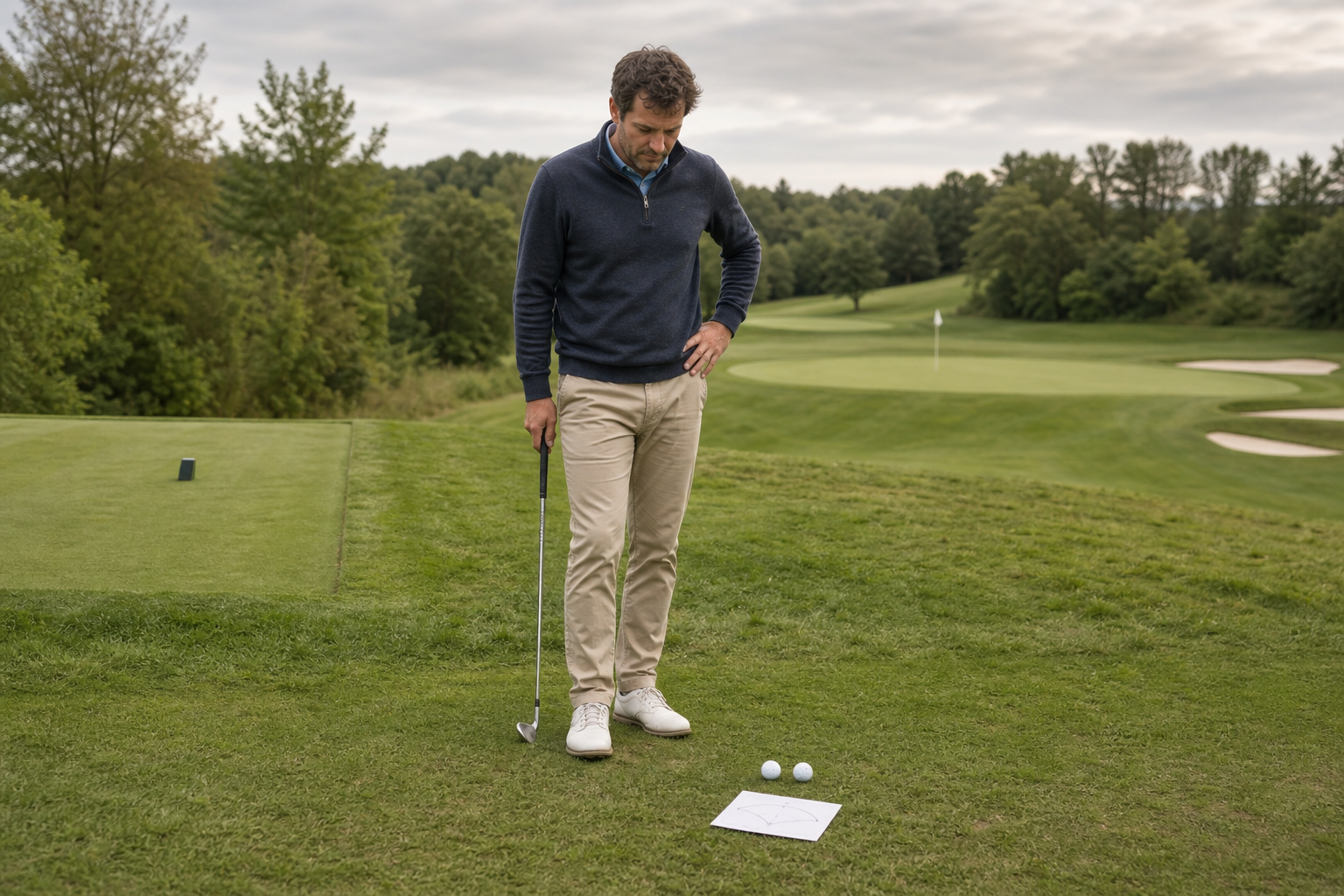
Built for: Golfers comparing golf-ball construction while balancing feel, durability, flight, and short-game control.
When a tee shot finds the fairway but the next pitch releases past the flag, it is tempting to blame the number on the ball box. Start instead with the shot pattern you can actually observe, then compare the ball information that speaks to that priority.
The quick verdict
Choose between two-piece and three-piece options only after naming one repeatable outcome you want to improve, such as keeping a ball in play longer, preferring a particular impact sensation, or seeking a more predictable result on greenside shots.
Best for Golfers willing to play one ball model through a short, structured comparison and judge it by a simple on-course pattern rather than a construction label.
Skip it if Skip a construction-led purchase if you regularly lose balls before reaching the green or cannot identify a repeatable shot situation to compare, because layer count alone cannot tell you which result you will see.
Begin with the ball you remember after the hole
The useful question is not, “Is three-piece better than two-piece?” It is, “What happened often enough in my last few rounds that I want a ball choice to address it?” A golfer who keeps a ball in play but dislikes how it feels on short shots has a different decision from the golfer whose main concern is how the ball looks after a round. Likewise, a player who repeatedly faces a particular approach or pitch has a clearer comparison task than someone trying to solve every part of the game with one label. Construction is a filter, not a verdict.
Guild recommendation: Write down one priority before shopping: feel, visible wear, a tee-shot flight observation, or a greenside outcome. If you cannot name one, postpone the purchase and track a round first.
How to read two-piece and three-piece labels without overreading them
A two-piece label and a three-piece label describe different construction categories, but neither label tells you by itself how a particular ball will perform for you. Treat the label as the starting point for a comparison, then read the manufacturer’s stated construction and cover information, and place the balls in the same shots you want to judge. A golfer choosing for a long practice session may put visible wear at the top of the list. Another golfer may accept a different tradeoff because the result around the green is the result that affects the score most often. Neither choice is automatically more serious or more skilled; it is simply tied to a different constraint.
Guild recommendation: Compare like for like: select one two-piece candidate and one three-piece candidate, state the single result you want to judge, and avoid drawing conclusions from the layer count before you hit both.
Match the choice to an observable priority
For durability, inspect the same areas of each ball after comparable use and note whether visible marks change your willingness to keep playing it. For feel, use a repeatable short shot and record which impact sensation you prefer; this is personal feedback, not a universal rating. For flight, compare balls during the same session with the same club and pay attention to the start line, height impression, and finishing area rather than relying on one unusually good strike. For short-game control, define control before you begin: it might mean landing near a chosen spot, finishing within a defined area, or producing a rollout you can plan for. These observations make the comparison useful even when neither ball solves every priority.
Guild recommendation: Choose the ball category and model that wins your most consequential recurring situation, not the one that appears to promise the broadest list of benefits.
Do not let construction distract from conformance
If you play in a setting where the Rules apply, the ball must meet the applicable equipment requirements. The USGA’s Conforming Golf Ball List identifies balls that were submitted and evaluated for conformance. That check is separate from your personal evaluation of feel, wear, flight, or greenside behavior, but it belongs at the front of the decision for competitive or rule-governed play.
Guild recommendation: Before using a ball in a competition or other rules-based round, verify its status through the applicable conforming-ball resource rather than assuming that a construction category establishes conformance.
A simple course test beats a cart-bag collection
Once a ball has passed your practice comparison, play it for a full round without changing models hole to hole. Mark the ball so you can identify it, then make a brief note after the round about the situations you chose to evaluate. A single round is not a final verdict, especially when weather, lies, and swing quality vary, but it can reveal whether the ball supports the priority you named. If your notes are mixed, keep the decision narrow: select the ball that creates fewer doubts in the shots that matter most to you.
Guild recommendation: Give each finalist the same number of rounds or the same set of comparable practice shots before deciding, and avoid switching balls after one poor hole.
Try this · 30 to 45 minutes.
One-Ball, One-Question Comparison
Bring two clearly different ball options, a marker, a wedge, and a short-game area or practice green where you can hit from one consistent lie toward one target. Mark each ball with a different simple symbol so you can record it without confusing the models.
- Choose one question before hitting, such as which ball leaves you more confident about the first bounce on a short pitch, which one looks less worn after a small set of shots, or which one gives you the impact sensation you prefer.
- Hit five shots with the first ball from the same general lie toward the same target, then hit five with the second ball. Alternate one ball at a time if the practice area allows, so changing conditions do not dominate the comparison.
- Record only observable notes after each group: landing area, finish relative to the target, visible cover marks, and whether the strike felt acceptable or unpleasant to you.
- Repeat for one additional set from the same spot. Do not change technique to force a result; the purpose is to compare your normal pattern under a controlled setup.
- Use the ball that better answers your chosen question as the one to take onto the course for the next round, then reassess after several comparable shots.
What progress looks like: You finish with a written preference tied to one repeatable observation, rather than a decision based solely on whether the box says two-piece or three-piece.
Put the guide to work
These searches are a starting point—not a substitute for the fit and comparison criteria above.
Compare two-piece golf balls
Use this search after deciding that your main comparison is durability, familiar feel, or another outcome you can track over several rounds.
Compare three-piece golf balls
Use this search after deciding that your main comparison is a particular flight, impact feel, or greenside result you want to evaluate on the course.
Compare golf ball assortments
An assortment can support a controlled side-by-side trial when you want to test a small number of options before committing to a single model.
If you buy through these links, Guild of Golf may earn a commission at no extra cost to you.
The practical takeaway
- Layer count is a starting category, not proof of a better result for every golfer.
- Choose one observable performance problem before comparing two-piece and three-piece options.
- For a fair test, keep the club, lie, target, and evaluation question as consistent as possible.
- Judge feel as a personal preference, and judge flight, wear, and short-game results with simple written observations.
- For play governed by the Rules, check that the ball meets applicable equipment requirements and consult the relevant conforming-ball resource.
Frequently asked questions
Should I choose a two-piece or three-piece golf ball for more distance?
The supplied construction label alone does not establish a distance result for an individual golfer. If distance is your priority, compare finalists with the same club in a consistent session and record a simple observable outcome, such as the finishing area of well-struck shots.
Can a three-piece ball be the right choice for a higher-handicap golfer?
Yes, if it best serves that golfer’s stated and observed priority. Handicap does not replace a useful comparison question, such as preference for feel, visible wear after play, or a repeatable greenside outcome.
Is a two-piece ball automatically more durable?
Do not assume durability from the layer count alone. Inspect candidate balls after comparable use and choose according to the amount of visible wear you are willing to accept.
How can I compare short-game control without trying to change my swing?
Use one lie, one target, and one short-shot type, then record landing area and finish relative to the target. Keep your normal motion and compare the resulting pattern rather than trying to diagnose the swing.
Do golf balls need to conform to play under the Rules?
Golf balls used under the Rules must meet applicable equipment requirements. The USGA Conforming Golf Ball List identifies balls submitted and evaluated for conformance.
Sources used for this draft
- USGA Equipment Rules — The requirement that golf balls used under the Rules meet applicable equipment requirements.
- USGA Conforming Ball List — The explanation that the list identifies balls submitted and evaluated for conformance.
Guild of Golf may earn a commission from qualifying purchases made through shopping links, at no additional cost to the buyer.