
comparison
Two-Piece or Three-Piece Golf Balls? Choose for the Miss You Can See
A problem-first framework for comparing golf balls marketed as two-piece and three-piece designs without assuming that construction alone will fix a scoring problem.
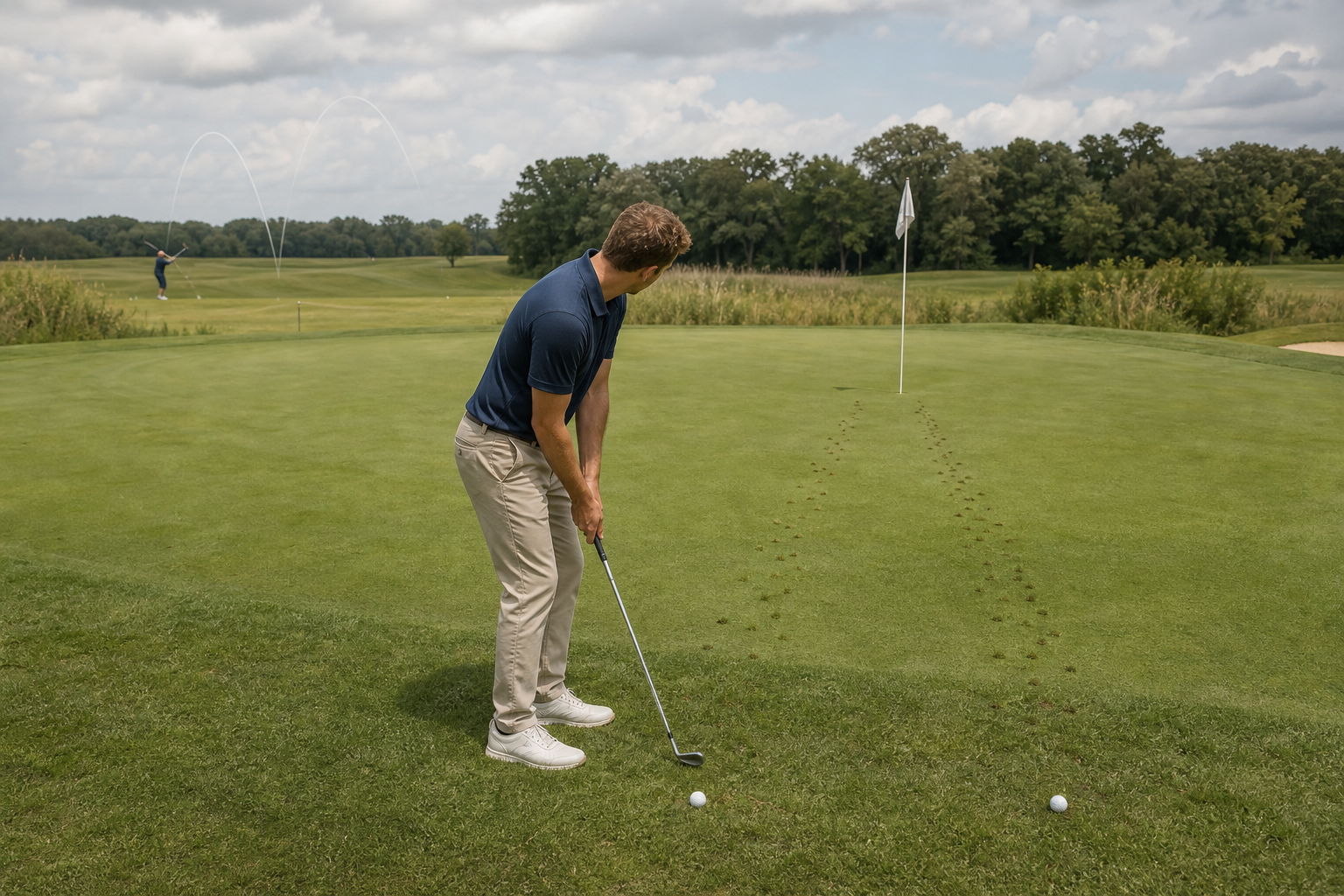
Built for: Golfers comparing golf-ball construction while balancing feel, durability, flight, and short-game control.
If a ball feels fine off the tee but leaves you guessing on 40-yard pitches, do not start by treating a layer count as a verdict. Start with the shot that repeatedly costs you a predictable outcome, then compare only the ball feature claims that relate to that shot.
The quick verdict
Choose between balls marketed as two-piece and three-piece only after identifying one repeatable, observable problem—such as uncertain landing distance on a greenside pitch or an inconsistent visual flight window—not because one construction label is automatically better.
Best for Golfers willing to play a short, controlled comparison with the same club, target, and starting lie before committing to a ball.
Skip it if Skip a construction-led purchase if your results vary widely from strike to strike; in that case, use one conforming ball consistently and judge it by a simple on-course outcome rather than chasing a layer count.
Begin with the shot that makes you change balls
The usual decision happens on the first tee: one sleeve promises a different construction, another claims a different feel, and the golfer tries to settle the whole bag in a single purchase. That is backwards. A ball decision becomes useful when it starts with a shot you can describe after the round.
Perhaps your approach shots routinely finish on the correct side of the green, but your partial wedges do not finish in a predictable band. Perhaps you lose track of ball flight against a pale sky. Or perhaps you are simply replacing balls often enough that durability is your first constraint. These are different problems. None is answered automatically by seeing “two-piece” or “three-piece” on a box.
Write down one priority before comparing: predictable finish distance on a greenside shot, a flight you can follow more easily, preferred impact sensation, or how the ball holds up through your normal play. A single priority creates a fair test. Four priorities at once turn every good and poor strike into a vague opinion.
Guild recommendation: Choose one outcome that you can observe without launch-monitor data, and postpone the purchase until you have compared it with the same club and target.
What the construction label can—and cannot—decide
Construction is a product-description category, not a personal performance result. A listing that calls a ball two-piece or three-piece tells you how that maker is presenting the ball’s design, but it does not tell you how your particular strike will fly, feel, finish, or wear. Those outcomes also depend on the individual model, the club used, the condition of the ball, the lie, the weather, and the quality of contact.
That distinction matters for golfers who have been disappointed after buying a ball for one advertised advantage and judging it from a single flushed drive. If your actual concern is a 30-yard pitch that repeatedly releases beyond the flag, a controlled pitch comparison is more relevant than a driver impression. If the priority is durability, inspect the ball after the same kind of play rather than inferring resilience from layer count.
Think of the label as a way to organize candidates, not as proof that one candidate will be the answer. Read the maker’s stated construction and other listed attributes, then give competing balls the same assignment on the course or practice green.
Guild recommendation: Do not make “more pieces” or “fewer pieces” your selection rule; make repeatable performance on your problem shot the rule.
A practical choice for the golfer who values feel and control
For the player who wants a more confident response on delicate shots, the choice is not “three-piece equals control.” The useful question is narrower: does a ball marketed with the construction you are considering produce a more repeatable landing-and-finish pattern on the shot you actually face?
Take the golfer who has a straightforward chip from fringe grass but cannot consistently judge whether the ball will finish pin-high. That player should compare two candidates from the same lie, with the same wedge and chosen landing point. If one ball repeatedly finishes in a tighter band, that is meaningful for this player. If both patterns are broad, changing balls has not yet identified the cause, and the sensible response is to keep one ball in play long enough to build a reliable reference.
Feel belongs in the decision, too, but it should be recorded after the outcome. A ball that feels preferable yet leaves a less predictable pattern may still suit a golfer who values feedback; it is simply a conscious tradeoff rather than a promised cure.
Guild recommendation: Players prioritizing greenside confidence should favor the candidate that delivers the most repeatable pattern in a fixed short-game comparison, regardless of its advertised piece count.
A practical choice for the golfer who values simple, durable play
A different golfer may have a more practical brief: play a familiar ball, keep it in service through normal rounds, and avoid introducing uncertainty every time a replacement sleeve is opened. For that golfer, construction is still worth noting, but the decision should focus on the evidence they can collect: visible cover condition after comparable holes, confidence at address, and whether the ball gives a familiar result on common shots.
Use an honest comparison. Do not compare a fresh ball to one that has already struck a cart path, tree, or other hard surface. Play or practice each candidate through a similar amount of ordinary use, then inspect both under the same light. If the visible condition and predictable performance are effectively tied, choose the ball that you are comfortable using consistently. Consistency gives your distance and short-game references a chance to settle.
This approach also prevents a common mistake: abandoning a ball after one unusual result. A single tree strike or one poor contact is not a useful durability or flight comparison.
Guild recommendation: Golfers who prioritize straightforward use should choose the candidate that stays in acceptable visible condition and supports familiar shot expectations over comparable play.
Keep the Rules check separate from the performance choice
For play conducted under the Rules of Golf, the ball must meet applicable equipment requirements. The USGA publishes equipment rules and a Conforming Golf Ball List identifying balls that have been submitted and evaluated for conformance.
That check is separate from deciding which ball helps your own decision-making on the course. First, verify the exact ball where conformance is required. Then compare your shortlisted options by the one shot or outcome that matters most to your scoring. A ball can be suitable under the Rules and still be the wrong personal choice if it does not give you a repeatable reference where you need one.
Guild recommendation: Before a competition or any round with a conformance requirement, check the exact ball against the applicable USGA resources rather than relying on a construction description.
Try this · 20 minutes.
The One-Shot Ball Comparison
Use a practice green with a clear landing area. Bring two balls whose listings state different construction categories, one wedge, and six tees or markers. Pick a single greenside shot you can repeat from the same short-grass or fringe lie, and choose a landing spot rather than aiming directly at the hole.
- Hit six shots with the first ball, returning each shot to the same lie when practical and using the same intended landing spot.
- Note only two observations: whether each ball reached the landing area and whether it finished short, near, or long of your chosen reference point.
- Hit six shots with the second ball under the same conditions, without changing club, target, or intended shot.
- Compare the two groups. If one group produces a noticeably more repeatable landing-and-finish pattern, use that ball for a second session or an on-course round before drawing a conclusion.
- If neither group separates clearly, keep the ball you already play or select based on a non-performance priority such as durability or preference for feel.
What progress looks like: A useful result is not a perfect shot; it is one ball producing a visibly tighter pattern around the same landing and finish references across the two groups.
Put the guide to work
These searches are a starting point—not a substitute for the fit and comparison criteria above.
Compare two-piece construction listings
Use this after defining a tee-shot or durability priority, then confirm the listed construction and compare the same observable shot outcome against another ball.
Compare three-piece construction listings
Use this after defining a short-game or feel priority, then compare listed construction alongside cover information and your controlled practice pattern.
Check balls against the conforming list
For rounds played under the Rules of Golf, verify that the exact ball appears on the applicable USGA Conforming Ball List.
If you buy through these links, Guild of Golf may earn a commission at no extra cost to you.
The practical takeaway
- A two-piece or three-piece label is a starting category, not a guarantee of distance, feel, durability, flight, or short-game control.
- Choose one visible problem before comparing balls, such as a repeatable landing-and-finish pattern on a greenside shot.
- Test candidates with the same club, lie, target, and intended shot so the ball is the variable you are comparing.
- If there is no clear difference after a controlled comparison, consistency with one ball is a better outcome than a construction-led guess.
- For play under the Rules where conformance matters, verify the exact ball using the applicable USGA resources.
Frequently asked questions
Is a three-piece golf ball automatically better than a two-piece golf ball?
No. The supplied construction label alone does not establish a better result for your game. Compare candidates on one observable priority, such as a repeatable greenside finish pattern or acceptable visible condition after comparable use.
Should I judge a new ball by driver distance first?
Only if tee-shot outcome is the specific problem you are trying to solve. If scoring shots around the green are your concern, compare balls on a controlled greenside shot instead of letting one driver shot decide the purchase.
How many shots should I use to compare golf balls?
Use enough shots to see a pattern while keeping the test controlled. The practice plan uses six shots per ball from the same lie, then recommends a second session or on-course use if one option appears more repeatable.
How do I know whether a ball is conforming?
Consult the applicable USGA Equipment Rules and verify the exact ball on the USGA Conforming Golf Ball List when conformance is required for your play.
Sources used for this draft
- USGA Equipment Rules — Golf balls used under the Rules must meet applicable equipment requirements.
- USGA Conforming Ball List — The list identifies balls submitted and evaluated for conformance.
Guild of Golf may earn a commission from qualifying purchases made through Amazon shopping links or searches, at no added cost to the buyer.