
comparison
Alignment Sticks vs. Tempo Trainers: Buy for the Feedback You Need
Choose an inexpensive practice aid by matching it to the ball-flight or movement pattern you can observe, rather than buying a gadget that promises to fix everything.
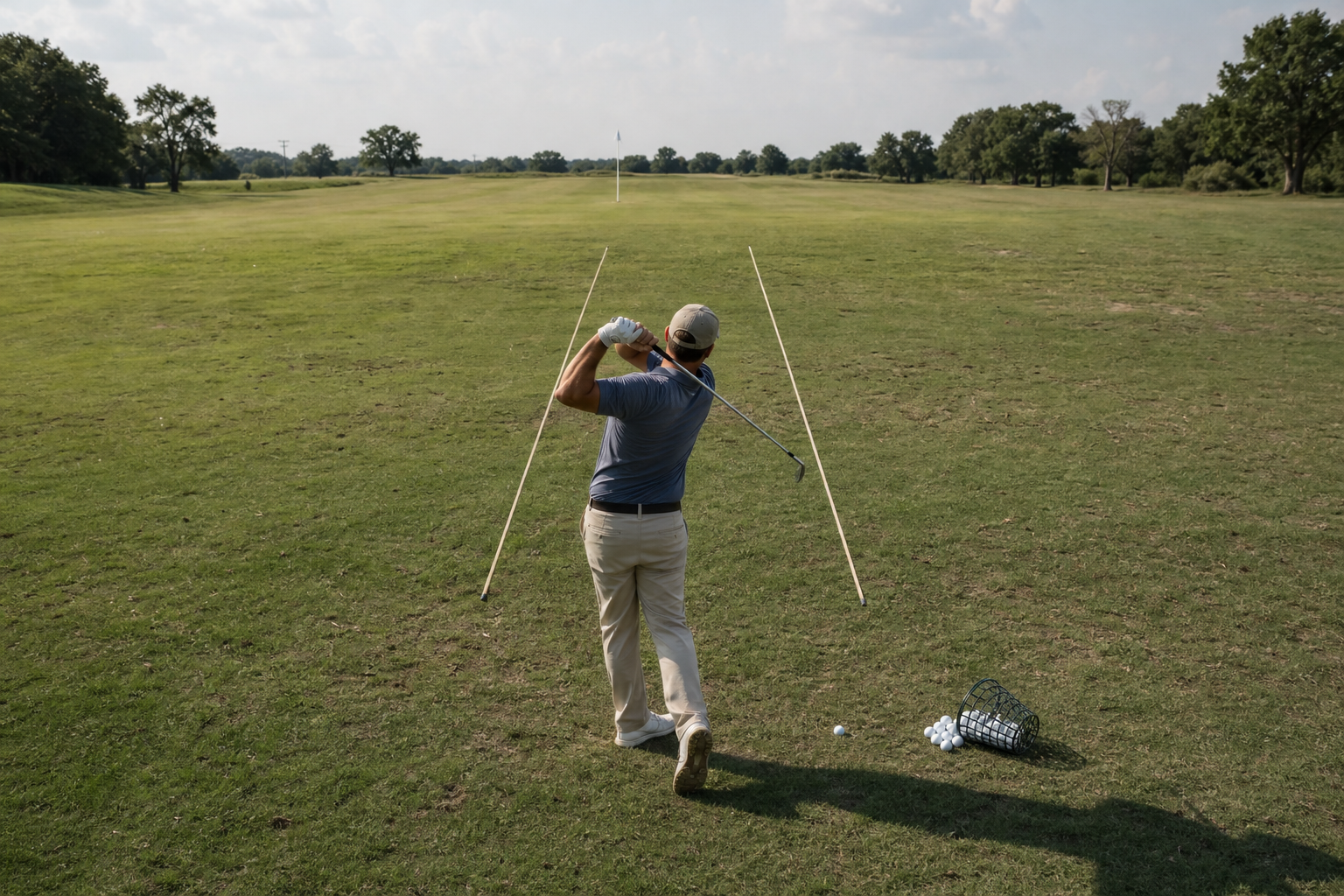
Built for: Golfers choosing between inexpensive practice aids for alignment, movement, rhythm, or speed awareness.
If your shots repeatedly start left or right of a clear target, use a visual reference. If your practice swings feel hurried, uneven, or hard to repeat, choose a trainer that gives you a rhythm cue. The useful aid is the one that makes one problem easier to see on the next swing.
The quick verdict
Choose alignment sticks when the problem is spatial and visible: aim, start line, stance position, or a repeatable practice corridor. Choose a swing tempo trainer when your specific goal is to notice and repeat a steadier movement rhythm. Neither is a universal swing fix; buy the aid whose feedback matches the result you can observe.
Best for Alignment sticks suit golfers who need a simple target-line reference during range practice. A tempo trainer suits golfers who can define a rhythm or sequencing goal and want a consistent cue while making rehearsal swings.
Skip it if Skip both for now if you cannot name the performance problem you want to work on. Also skip using either during a stipulated round unless its use is permitted under the applicable Rules of Golf.
Start with the miss you can describe
The familiar mistake is buying an aid after one ugly range session, then using it for a week without a defined target. A golfer who watches tee shots begin well right of a chosen fairway marker has a different practice problem from a golfer whose first few swings are smooth and whose later swings become rushed. Those are not interchangeable problems, so they do not deserve the same purchase.
Purposeful practice connects the activity to a specific goal. Before choosing anything, write one sentence that can be checked during the session: “I want a repeatable visual reference for where I aim,” or “I want to notice a steadier pace in my rehearsals.” If the sentence contains several fixes at once—aim, turn, speed, contact, and finish—make it smaller. The next swing should tell you whether the aid helped.
Guild recommendation: Choose one observable outcome for a session, not a list of mechanical explanations.
Alignment sticks solve a reference problem
Alignment sticks earn their place when you need an external line. On a range, a pair on the ground can define a corridor toward a target. That gives the golfer something concrete to compare with their feet, ball position, clubface setup, and intended start direction. The value is not the sticks themselves; it is the immediate answer to a simple question: “Was I set up to the line I chose?”
They are the stronger choice for the golfer who says, “I pick a target, but I am not sure my setup relates to it the same way each time.” They also fit a player who wants to vary drills without changing the fundamental feedback: one session may use a ground corridor, while another may use a stick as a reference point away from the hitting area. Keep the sticks out of the swing path and treat them as visual guides, not obstacles to hit around.
Guild recommendation: Buy alignment sticks if your goal depends on seeing a target line or a consistent setup reference.
A tempo trainer solves a cue problem
A swing tempo trainer makes sense when the issue you can observe is rhythm: a rehearsal that feels abrupt, a pace that changes from swing to swing, or an inability to carry a comfortable cadence from warm-up into a shot. Its job is narrower than “fixing the swing.” It gives the golfer a repeatable cue while rehearsing movement.
That narrower role is a strength when you respect it. A golfer who hurries when trying to hit a demanding carry can use a few controlled rehearsals, then compare the pace of the next normal swing with that rehearsal. But the trainer cannot tell you why a shot curved, where your clubface was at impact, or whether an alignment choice was correct. If your immediate problem is a ball repeatedly starting away from the intended target, a rhythm cue may be interesting but indirect.
Guild recommendation: Choose a tempo trainer only when you can judge success by a more repeatable rehearsal pace or movement rhythm.
Do not ask one tool to provide two kinds of feedback
The decision becomes easy when you separate external feedback from internal sensation. Alignment sticks create an external reference: a line, lane, or position that you can see. A tempo trainer is chosen for a movement cue that you can feel while rehearsing. One can complement the other over time, but they should not share the same job in the same drill.
For example, use sticks first if you are preparing for a hole with trouble on one side and want to rehearse an intended start window. Once the line looks consistent, put the sticks aside and make a handful of unhurried rehearsals if your pace tends to unravel under pressure. This sequence preserves cause and effect. You are not trying to decide whether a better shot came from changed aim, a smoother pace, or pure chance.
Guild recommendation: Use only one primary feedback source per block of practice so the result remains interpretable.
Compare the feature that protects your practice constraint
After you know the feedback you need, compare practical details rather than broad promises. For alignment sticks, prioritize visibility in your usual light, portability, and whether their form works cleanly for ground-based reference drills. For a tempo trainer, prioritize whether its cue feels usable at a comfortable pace, whether you have adequate safe space for rehearsals, and whether you can return to your normal club without losing the intended sensation.
Avoid turning practice into equipment tinkering. An aid that is awkward to set up may go unused, while a simple visible line can support a precise goal for months. Equipment and its use during a stipulated round are governed by applicable rules, so treat these as practice tools and check the Rules before bringing or using any aid in competition.
Guild recommendation: Compare setup friction and the clarity of the feedback before considering extra features.
Try this · 15 minutes.
The Start-Line and Rhythm Check
Use an open, safe practice area and a target you can clearly identify. Place two alignment sticks on the ground parallel to one another to form a corridor aimed at that target; keep enough space that neither stick interferes with your stance or swing. Use a ball only if the area is suitable and safe for hitting shots.
- Make five rehearsal swings beside the corridor, pausing at address to note whether your feet and clubface appear consistently related to the target corridor.
- Hit or simulate five shots with one simple intention: start the ball, or imagine starting it, through the corridor rather than trying to change several parts of your swing.
- Remove the sticks and repeat five shots or rehearsals toward the same target. Notice whether your chosen start direction remains easier to reproduce.
- For the final five rehearsal swings, use a tempo trainer if you have selected one. Make each swing at a comfortable, repeatable pace, then return to your normal club and try to preserve that same pace for five more rehearsals or shots.
What progress looks like: The session is useful when you can state one observable result, such as “my intended start direction was more consistent with the corridor” or “my rehearsal pace felt repeatable for five swings,” without adding a new swing thought.
Put the guide to work
These searches are a starting point—not a substitute for the fit and comparison criteria above.
Alignment sticks
Compare whether the sticks are visible enough for your practice setting, convenient to carry, and suitable for laying on the ground as a clear target corridor.
Swing tempo trainer
Compare the type of movement cue it provides, whether it can be used safely in your available practice space, and whether it supports comfortable rehearsal swings rather than encouraging you to force a faster motion.
If you buy through these links, Guild of Golf may earn a commission at no extra cost to you.
The practical takeaway
- Pick alignment sticks for a visible reference problem, such as a target line or repeatable setup corridor.
- Pick a tempo trainer for a repeatable movement-rhythm cue, not for confirmation of aim or ball-flight cause.
- Define success before practice with one result you can observe on the next few swings.
- Keep training aids for practice unless their use in a stipulated round is allowed under the applicable Rules.
Frequently asked questions
Can alignment sticks improve tempo?
They can structure a practice station, but their direct feedback is visual and spatial. If your stated goal is a repeatable rhythm cue, a tempo trainer is the more direct choice.
Should a golfer buy both aids?
Only if they have two distinct practice goals and can use one feedback source at a time. Start with the aid that addresses the problem you observe most often.
Can I use a training aid during a round?
Equipment and its use during a stipulated round are governed by applicable rules. Check the applicable Rules before using a training aid in that setting.
What is a good first practice goal with either aid?
Use a small goal that can be observed quickly, such as recreating the same intended target corridor for five rehearsals or maintaining a comfortable rehearsal pace for five swings.
Sources used for this draft
- PGA of America: Practice With Purpose — The principle that purposeful practice connects an activity to a specific goal.
- USGA Equipment Rules — The reminder that equipment and its use during a stipulated round are governed by applicable rules.
Guild of Golf may earn a commission from qualifying purchases made through shopping links, at no additional cost to you.