
comparison
Forged vs. Hollow-Body Irons: Solve the Miss You Can See
A fitting-first comparison that puts recurring approach-shot outcomes ahead of iron-construction labels.
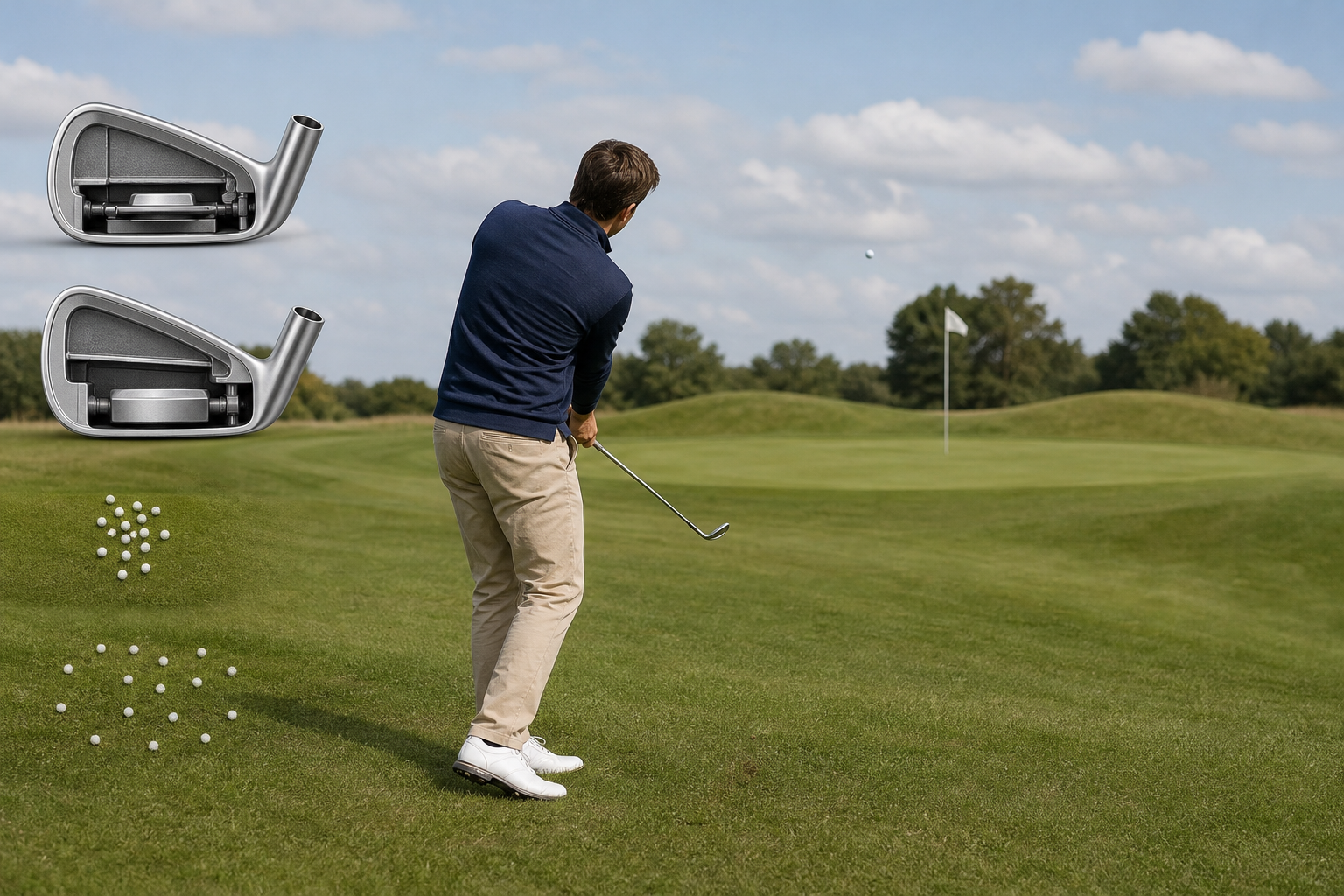
Built for: Golfers comparing iron constructions who want to separate manufacturing terms from on-course fit and performance.
A 7-iron that alternates between short of the green and through the back creates a club-selection problem, not a vocabulary problem. Start with the miss you can observe, then compare only the fitted options that improve that result.
The quick verdict
Forged and hollow-body are construction labels, not automatic solutions; choose the fitted option that produces the more useful result for your recurring approach-shot problem.
Best for Golfers who can identify a visible pattern, such as uncertain carry distance, an unhelpful flight window, or too many shots beginning away from the intended line.
Skip it if Skip a construction-led purchase if you have not compared candidates with measured results and fitting variables, because a label alone does not establish fit.
Begin where the stroke is actually lost
The decision often starts after a familiar approach-shot frustration. You catch a 7-iron cleanly, yet one ball finishes short of the green and the next reaches through the back edge. On another hole, a repeated left start line makes a bunker feel larger than it is. These are useful decision problems because they can be seen, recorded, and compared. The PGA of America advises golfers to consider fit and measured results when comparing club options, so the recurring shot outcome deserves more weight than the word stamped into a product category.
Guild recommendation: Arrive at a fitting with one specific pattern to investigate, such as shots that repeatedly finish short, long, or on one side of the target.
Keep construction terminology in its proper place
Forged and hollow-body identify construction categories, but neither label is a complete fitting answer. The category does not, by itself, tell you whether a particular club will address your carry-distance uncertainty, your preferred flight window, or your directional pattern. Treat the words as a way to organize candidates rather than as a verdict on which option belongs in your bag. Conforming-club requirements apply regardless of marketing category or construction method, according to the USGA Equipment Rules.
Guild recommendation: Ask which build variables differ between the clubs you are comparing, so a result is not credited to the construction label when another fitting variable may be responsible.
Choose only the feature that answers the visible miss
Suppose firm greens leave you needing approaches to finish closer to a chosen landing area. The relevant comparison is not whether one description sounds more appealing; it is whether one fitted option produces more usable outcomes at that distance. Conversely, a golfer whose solid shots too often reach the back edge needs an option that makes the front, middle, and back of the green easier to manage. The same principle applies to direction. If a preferred-looking head is paired with a wider starting pattern in a comparable session, that is a tradeoff to discuss rather than dismiss.
Guild recommendation: Set a target area before swinging and select the option that places more comparable shots in that area for the particular miss you are trying to reduce.
Let feel inform the choice without overruling the pattern
Feel can matter because golfers need enough confidence to make a committed swing. It is also personal, which makes it a poor shortcut for predicting another player’s result. When two fitted options create similarly useful groups of shots, the one that gives you greater comfort at address or through impact can be a sensible tiebreaker. When the preferred sensation accompanies a less usable target-area pattern, the decision is a clearer tradeoff between preference and outcome.
Guild recommendation: Make a brief confidence note after each shot group, then review it beside the recorded result rather than in place of it.
Use fitting to make the final call
A valuable comparison holds the task steady. Use the same target, similar effort, and a consistent ball type where possible. Then compare candidates with a fitter who can evaluate the complete setup and the resulting shots. The PGA of America identifies fit and measured results as important when comparing club choices. Your best result may come from either construction category, or it may point to a different fitted configuration than the one you expected to prefer.
Guild recommendation: Do not buy an identity label; choose the option that improves the one approach-shot outcome you brought to the comparison.
Try this · 25 to 35 minutes.
The One-Miss Iron Comparison
Use a range target at a comfortable iron distance, a consistent type of practice ball where possible, and two iron options prepared for comparison. Choose one target area rather than a single flag, and decide in advance whether you are tracking start line, finishing distance, or flight height.
- Warm up with easy swings, then select the one outcome that most resembles your on-course problem.
- Hit six shots with the first option at a consistent effort level toward the same target area.
- For every shot, note only the chosen outcome, such as whether it began near the intended line, finished short, finished in the target area, or finished beyond it.
- Hit six shots with the second option under the same conditions and record the same outcome.
- Review both groups with a fitter, including the loft, lie, shaft, and other build variables used for each option before drawing a conclusion.
What progress looks like: One option creates more shots in your intended target area or reduces the specific miss you selected, without requiring a different swing thought.
Put the guide to work
These searches are a starting point—not a substitute for the fit and comparison criteria above.
Compare forged iron candidates.
Use this search after identifying the loft, lie, shaft, and target-area result you need a candidate set to address.
Compare hollow-body iron candidates.
Use this search after defining the observable approach-shot issue that the fitted comparison must improve.
If you buy through these links, Guild of Golf may earn a commission at no extra cost to you.
The practical takeaway
- Name one observable approach-shot problem before comparing construction categories.
- Use forged and hollow-body labels to narrow candidates, not to decide the purchase.
- Compare target-area outcomes under similar conditions rather than relying on a single memorable strike.
- Keep confidence and feel in the decision, but weigh them alongside recorded shot results.
- Use a fitter to assess the complete club setup and the measured outcome.
Frequently asked questions
Is forged automatically the better-feeling choice?
No construction label settles a personal feel preference or proves a better on-course result. Compare your confidence with the recorded outcome from a controlled fitting session.
Will a hollow-body iron automatically fix distance control?
No. Define the distance-control issue you see, then compare fitted options to determine whether either creates a more useful target-area pattern.
What should I bring to an iron fitting?
Bring a clear example of the approach-shot problem you see on the course, any distance notes you already keep, and a willingness to compare measured results.
Can I choose by construction alone if both options conform?
No. The USGA states that conforming-club requirements apply regardless of marketing category or construction method, while fitting guidance emphasizes fit and measured results.
Sources used for this draft
- USGA Equipment Rules — Conforming club requirements apply regardless of marketing category or construction method.
- PGA of America: Club Fitting — Fit and measured results matter when comparing club options.
Guild of Golf may earn a commission from qualifying purchases made through shopping links, at no extra cost to the reader.