
comparison
Forged vs. Hollow-Body Irons: Choose From the Miss You Actually Hit
Forged and hollow-body labels describe construction categories, but the useful choice begins with the on-course result you want to improve and a measured fitting comparison.
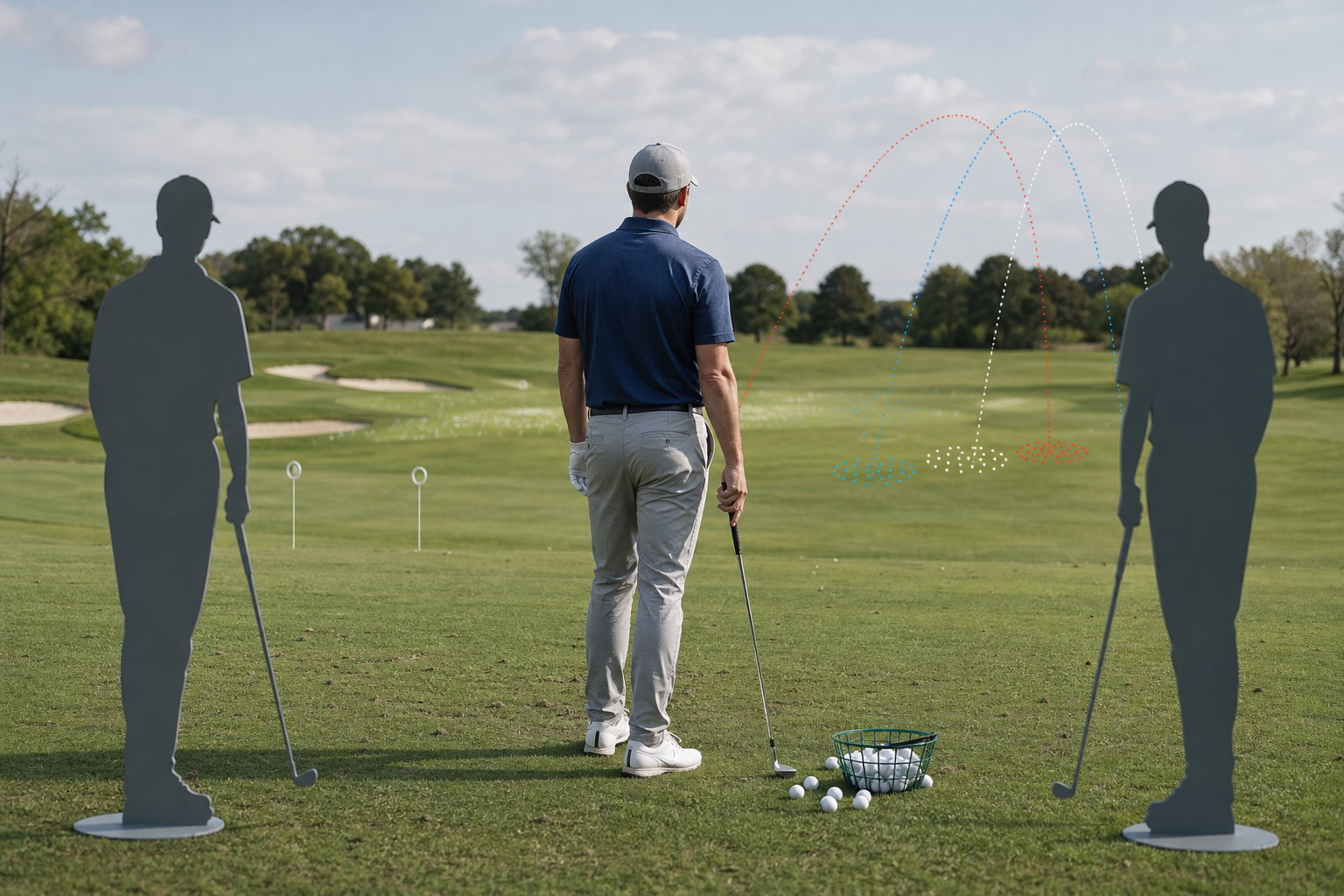
Built for: Golfers comparing iron constructions who want to separate manufacturing terms from on-course fit and performance.
When one iron feels appealing but another produces a more useful shot pattern, do not let the badge settle the argument. Start with the miss, trajectory window, distance pattern, and turf interaction you can observe, then compare fitted options on measured results.
The quick verdict
Choose neither forged nor hollow-body irons on construction alone; choose the fitted option that produces the most useful, repeatable result for the specific shot problem you are trying to solve.
Best for Golfers who can name an observable issue, such as inconsistent carry, an unwanted flight window, or unreliable contact, and can compare candidates in a fitting.
Skip it if Skip a category-first purchase if you have not established the loft, lie, shaft, and head combination that gives you usable measured results.
Begin with the shot that costs you strokes.
The difficult decision usually arrives after a familiar round: one iron produces a satisfying strike on the range, while another seems easier to place on the green. “Forged” and “hollow-body” can become shortcuts for that feeling, but a construction label does not tell you which result will appear when you need to carry a bunker or hold a back pin. Start by naming one visible problem. A golfer who repeatedly flies an approach long needs a different comparison from a golfer whose common result is a ball starting too far right. The first task is not to select an identity for your iron set; it is to define the result you want to make more predictable.
Guild recommendation: Write down one recurring iron-shot outcome before comparing any models, and use that outcome as the standard for every candidate.
Treat construction as a category, not a verdict.
Forged and hollow-body are manufacturing and design-category terms, not complete fitting instructions. Either label leaves important questions unanswered: which lofts are in the set, how the lie fits your delivery, which shaft is installed, and whether the club produces a useful launch and distance pattern for you. This matters because the rules for a conforming club apply regardless of its marketing category or construction method. In other words, construction does not exempt a club from the same equipment framework, and it should not exempt a buyer from comparing real results. A player drawn to a forged option for its feedback still needs to see whether that choice supports the intended shot. A player considering hollow-body options for a particular performance goal still needs to verify the actual outcome.
Guild recommendation: Use construction to narrow the models you want to compare, then judge those models by the shot pattern they produce in suitable specifications.
Match the comparison to the observable problem.
Use a narrow question at the fitting bay or practice area. If your issue is a broad left-to-right start pattern, compare how consistently each candidate begins near your intended line. If your concern is approaches finishing in an unpredictable long-short window, compare carry and landing results at a steady effort. If a certain iron looks good behind the ball but makes you reluctant to commit to a target, include that confidence response in your notes, but do not let it replace the shot record. One golfer may prefer the option that tightens a mid-iron landing window; another may value the option that makes a long approach more manageable. Neither conclusion follows automatically from the word forged or hollow-body.
Guild recommendation: Ask for a comparison built around one club number, one target, one intended shot, and a record of repeated results.
Fitting is where the labels become useful.
The PGA of America advises that fit and measured results matter when comparing club options. That is the practical bridge between a construction label and a purchase decision. Bring your current iron when possible, establish a baseline, then compare candidates with the specifications available to you. Observe whether a candidate changes the result you identified at the beginning: the distance window, starting direction, flight window, or contact consistency. Avoid declaring a winner from a single flushed shot or one poor swing. A useful choice is the one that repeatedly gives you a better decision on the course, such as aiming at the center of a green with a more predictable finish pattern.
Guild recommendation: Prioritize a fitting comparison that records multiple shots and explains which fitted variables were changed alongside the head choice.
What to compare before you shop.
After you understand your own performance question, compare listings and fitting options for set composition, stated loft and lie options, shaft choices, and the ability to evaluate or return the clubs under the seller’s terms. Do not assume two sets with similar club-number labels will serve the same distances or trajectory needs; establish the gapping you require through measured comparison. Construction can be part of the shortlist, but the useful shopping question is simpler: can this specific configuration be fitted and evaluated against the result you need? The focused searches below are starting points for building that shortlist, not substitutes for a measured comparison.
Guild recommendation: Compare configurations and fitting access first, then use the construction category as a secondary filter.
Try this · 25 minutes.
The Three-Target Iron Pattern Check
At a practice range, choose one iron and three clearly visible targets at short, medium, and longer practical carry windows. Use the same ball type if possible, a level hitting area, and a notebook or phone to record only start direction, approximate landing window, and contact quality.
- Hit three relaxed shots toward the middle target without changing your intended shot shape or trying to force extra distance.
- Repeat for two more sets of three shots, pausing after each set to record whether each ball started left, near, or right of the target and whether it finished short, near, or long of your intended landing window.
- If you are comparing irons, repeat the identical nine-shot sequence with the other candidate. Keep the target, intended shot, and effort level the same.
- Compare the two simple records. Look for the club that creates the tighter usable landing window and the more predictable starting pattern, rather than selecting the club from one especially good strike.
- Take the notes to a fitting session and ask to compare the same observable pattern with appropriate specifications and measured results.
What progress looks like: You finish with a repeatable description of your usual pattern, such as a consistent short-right window or a scattered distance window, rather than a conclusion based only on feel from one shot.
Put the guide to work
These searches are a starting point—not a substitute for the fit and comparison criteria above.
Forged iron sets
Compare the stated loft, lie, shaft offerings, set makeup, and return or fitting policies after you have defined the shot pattern you need to improve.
Hollow body iron sets
Compare the same fitting variables and set composition rather than treating the hollow-body label as a guaranteed on-course outcome.
Golf iron fitting tools
Use this search only if it helps you arrange a comparison that records results consistently rather than encouraging a label-only purchase.
If you buy through these links, Guild of Golf may earn a commission at no extra cost to you.
The practical takeaway
- A forged or hollow-body label is a starting category, not evidence that an iron will solve your particular on-course problem.
- Define one observable issue before comparing clubs, such as a scattered carry window or an unreliable starting direction.
- Keep the target, intended shot, and effort level constant when comparing candidates.
- Fit and measured results should guide the decision, because loft, lie, shaft, and head choice work together.
- All conforming clubs remain subject to the equipment rules regardless of construction method or marketing category.
Frequently asked questions
Are forged and hollow-body irons automatically suited to different skill levels?
No construction label alone establishes fit for a particular golfer. Compare the specific club configuration against your observable shot pattern and measured results.
What should I bring to an iron fitting?
Bring your current iron if possible, a clear description of one on-course problem, and notes from a simple target practice session. Ask to compare repeated shots rather than relying on one memorable strike.
Should feel decide the choice?
Feel can be a valid preference, especially if it helps you commit to a target, but it is best used alongside measured results and an observable shot pattern.
Do construction categories change whether an iron must conform?
No. The USGA states that conforming club requirements apply regardless of marketing category or construction method.
Sources used for this draft
- USGA Equipment Rules — The point that conforming club requirements apply regardless of marketing category or construction method.
- PGA of America: Club Fitting — The recommendation to use fit and measured results when comparing iron options.
Guild of Golf may earn a commission from qualifying purchases made through shopping links, at no additional cost to you.