
evergreen guide
Choose a More Playable Driver From Your Strike Pattern, Not Its Label
A practical way to narrow driver choices by the miss you can observe, then compare launch, dispersion, strike pattern, and confidence with measured results.
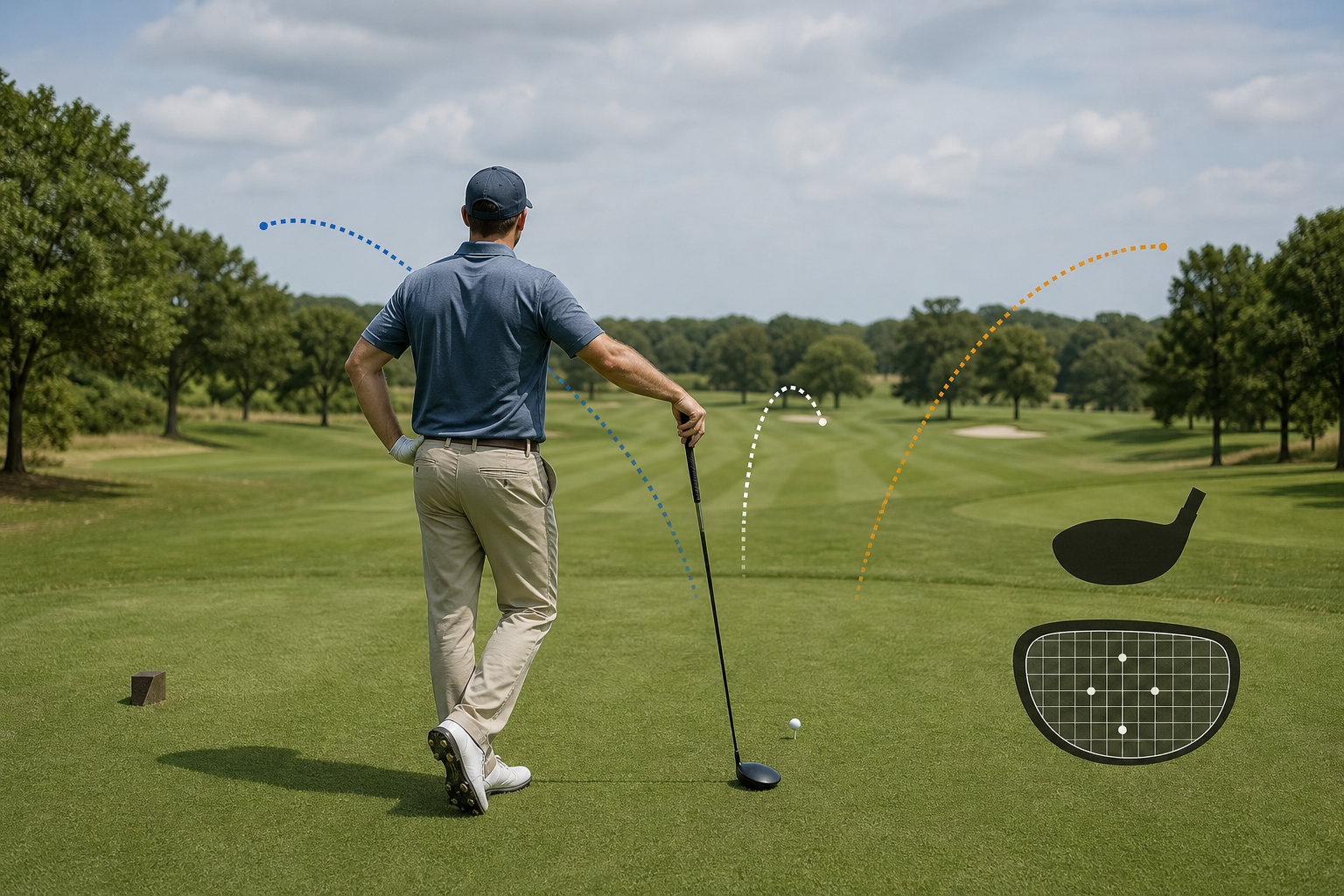
Built for: Golfers seeking a more playable driver who want to evaluate strike consistency, dispersion, launch, and confidence without relying on a vague game-improvement label.
The tee shot that ruins a hole is rarely an abstract lack of forgiveness. It is the heel strike that starts right, the low-face contact that falls short of a carry hazard, or the occasional left ball that makes a tight driving hole feel unplayable. Start there, then test only the driver feature that gives your real miss a better outcome.
The quick verdict
Choose a driver as a response to an observable pattern, not because a broad game-improvement label promises a cure. Keep the candidate that produces the most playable group of shots at a launch and flight you can use, with a setup that leaves you willing to hit driver on demanding holes.
Best for Golfers whose tee-shot problem is repeatable enough to describe in plain language, such as a common contact location, start direction, curvature, flight window, or one-sided miss.
Skip it if Do not make a driver change yet if your results vary so widely that no pattern emerges in a short, comparable session; first gather more shots or work with a qualified fitter using measured results.
Name the shot that costs you the hole
A golfer standing on a narrow par 4 does not need a label; they need to know whether their ordinary miss leaves a second shot. Begin with the consequence. A ball that starts right and stays right is a different purchasing problem from a ball that starts on line but regularly finishes too short to clear a hazard. A cluster of heel strikes is different again from a broadly scattered pattern with no repeating contact. Write down what you can observe: contact location, start direction, final side of the target, flight height, and whether the finish would be playable on your home course.
Guild recommendation: Choose one dominant problem from a comparable 12-ball sample. Do not select a feature to solve a miss that appears only once.
Match one feature category to one question
Driver features are tools to evaluate, not guarantees. If your main issue is a flight window that does not carry far enough or climbs beyond what you can control, prioritize a comparison of loft and any available adjustment while keeping the shaft and test conditions comparable. If your common contact is away from the center of the face, prioritize head designs presented as forgiving and compare the actual finish of those strikes. If your ordinary miss is consistently on one side, be cautious about buying a club merely because it is associated with a directional tendency; test whether it reduces the problem without turning the opposite side into the new penalty.
Guild recommendation: Ask a narrow question for each candidate: does this option make my common miss more playable, while preserving an acceptable good shot?
Treat dispersion as a boundary, not a beauty contest
The longest individual drive can make a poor comparison look convincing. Instead, imagine the fairway boundaries that matter on the holes you actually play. Count how many balls finish in a usable corridor, then inspect the misses outside it. A candidate with one exceptional shot but several severe misses may be less useful than one whose best ball is modestly shorter but whose usual result stays in play. Confidence belongs in this assessment as well: if a driver makes you reach for a conservative club on holes where driver is the sensible choice, that is an observable cost.
Guild recommendation: Rank candidates by playable shots first, severity of the worst common miss second, and standout distance last.
Keep the comparison fair enough to learn something
A driver comparison becomes noisy when every variable changes at once. Use your usual ball, a consistent tee height, the same target, and similar effort. If a club offers adjustments, test one deliberate setting at a time and record the result before changing anything else. A qualified fitting can add measured results to that process; the PGA of America emphasizes fit and measured performance when comparing club options. The best decision is not a theoretical answer about what a category should do, but evidence that one setup gives you a better playable pattern.
Guild recommendation: Bring your baseline notes to a fitting or retail comparison and ask to see strike consistency, dispersion, and launch results under repeatable conditions.
Confirm the club is appropriate for play
A useful driver still has to meet the applicable equipment requirements for the competitions you enter. The USGA Equipment Rules set conforming club requirements regardless of how a club is marketed. Check conformity through the relevant official process if tournament eligibility matters to you, especially before treating a marketing category or an adjustment claim as the deciding factor.
Guild recommendation: For competition play, verify conformity independently rather than relying on a product label or seller description.
Try this · 25 minutes.
The 12-Ball Playable-Miss Baseline
Use the same ball type and normal tee height for all shots. Pick a real fairway-width target or a clearly defined target line on a practice range, and use an alignment stick on the ground to mark that line without placing it in your hitting area. Bring a note on your phone or a scorecard.
- Hit 12 normal drivers with the same intent you would use on a demanding tee shot; do not chase extra distance or try a new swing thought.
- After every shot, record four observations: strike location as low, center, high, heel, or toe; starting direction as left, near line, or right; final result as left, playable, right, or short; and whether you would have chosen the next shot from that result.
- Circle the most common combination rather than the single worst ball. For example, seven heel strikes that finish right are more useful evidence than one dramatic pull.
- If you are comparing drivers, repeat the same 12-ball routine with each candidate and preserve the same target, tee height, and intent. Compare the number of playable outcomes first, then the common strike location and your willingness to use the club again.
What progress looks like: A useful result is a repeatable description of your pattern and, when comparing clubs, a candidate that creates more playable outcomes without introducing a more damaging opposite-side miss.
Put the guide to work
These searches are a starting point—not a substitute for the fit and comparison criteria above.
Compare adjustable driver options after identifying a flight-window problem.
Use this search only if your baseline shows a recurring flight that is too low, too high, or otherwise difficult to play, and compare settings through measured results rather than assumptions.
Compare drivers when off-center contact is the dominant pattern.
Use this search after you have recorded a consistent heel, toe, high, or low strike pattern, then judge candidates by whether that common contact finishes in a more usable area.
Compare driver fitting tools and appointments.
Use a fitting when you want measured comparison of launch, dispersion, and strike pattern across options, as fit and measured results are more useful than category labels.
If you buy through these links, Guild of Golf may earn a commission at no extra cost to you.
The practical takeaway
- A game-improvement label is not a diagnosis; your recurring contact, direction, and flight pattern are more useful starting points.
- Define success as more playable tee shots, not simply one longer shot.
- Change one comparison variable at a time so launch, dispersion, and confidence can be judged fairly.
- Use measured results and fitting when possible, particularly when several drivers appear close.
- Confirm conformity separately if you play in events governed by equipment rules.
Frequently asked questions
What is a playable miss with a driver?
A playable miss is one that leaves a realistic next shot according to the boundaries and hazards you face. Define it for your course before comparing drivers, rather than treating every off-line or shorter shot as equally bad.
Should I choose a driver based on heel and toe strikes?
If heel or toe contact is your most repeatable observation, it is a sensible basis for comparison. Test candidates with the same tee height and target, then keep the one that turns more of that common contact into usable outcomes.
Should I prioritize distance or dispersion?
Start with the outcome that most often costs you shots. For a golfer regularly blocked by hazards, trees, or out-of-bounds after a driver miss, a more playable dispersion pattern may matter more than a single longest drive.
Can adjustability replace a fitting?
Adjustability gives you settings to compare, but it does not tell you which setting or club is best for your delivery. Use measured results where possible, because club fitting is most useful when options are compared by fit and performance.
Do game-improvement drivers conform to the rules?
Marketing categories do not determine conformity. Conforming club requirements apply regardless of marketing category, so verify a particular club through the appropriate official process when competition eligibility matters.
Sources used for this draft
- PGA of America: Club Fitting — The recommendation to compare options through fit and measured results.
- USGA Equipment Rules — The note that conforming club requirements apply regardless of marketing category.
Guild of Golf may earn a commission from qualifying purchases made through affiliate links or shopping searches, at no additional cost to the reader.