
comparison
Two-Piece vs. Three-Piece Golf Balls: Choose by the Shot You Need
A practical way to compare two-piece and three-piece golf balls by starting with an observable on-course problem, then checking whether a ball’s stated design and conformity fit the priority.
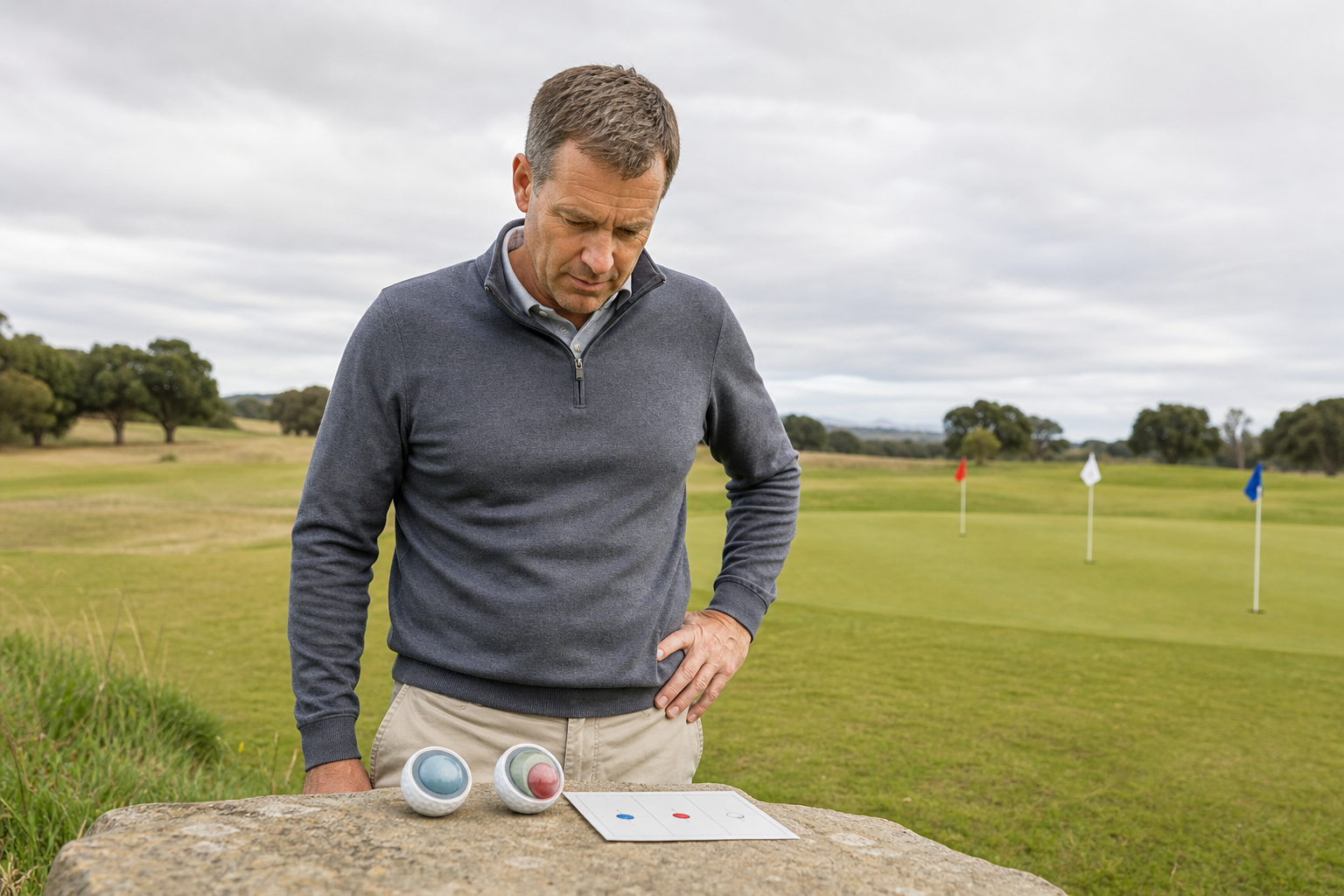
Built for: Golfers comparing golf-ball construction while balancing feel, durability, flight, and short-game control.
When a tee shot survives the fairway but a pitch releases past the hole, it is tempting to blame—or buy—a different ball immediately. Start smaller: identify the shot and result you want to change, compare only the ball information relevant to that result, and test one variable at a time.
The quick verdict
Neither two-piece nor three-piece construction is automatically the better choice. Choose the ball whose stated characteristics you can connect to one repeatable, observable priority in your game, then keep it in play long enough to judge that priority.
Best for A two-piece-versus-three-piece comparison works best for golfers willing to define a single decision target, such as confidence on repeated tee shots, the response of routine pitch shots, or whether a cover remains acceptable through a round.
Skip it if Skip a construction-led purchase if you have not identified a recurring shot outcome to improve, or if you are changing ball model every few holes and cannot make a fair comparison.
The first question is not how many pieces are inside
Picture a familiar round: your driver is in play, your iron reaches the front of the green, and your next decision is a short shot that needs a predictable finish. A label saying two-piece or three-piece does not, by itself, tell you what will happen on that shot. Construction is one item to compare, but the useful starting point is an outcome you can see: repeated tee shots that stay within your intended window, approach shots that finish in a manageable area, routine pitches that arrive near a chosen target, or a ball cover you still find acceptable after normal play.
Guild recommendation: Write down one priority before shopping. If the priority cannot be observed on the course or in practice, it is too vague to guide a ball choice.
Use construction as a filter, not a promise
A two-piece ball has two pieces in its construction, while a three-piece ball has three. That distinction can help organize a shopping comparison, but it is not a substitute for reading the individual ball’s stated information or hitting comparable shots. Avoid the common shortcut of assigning every three-piece ball one outcome and every two-piece ball another. Models within either category can be presented differently by their makers, and your decision should rest on the result you can repeat rather than a layer-count assumption.
Guild recommendation: When comparing candidates, keep a short note for each: construction label, the maker’s stated characteristics, the shot you intend to assess, and the result you observed. Do not add unrelated variables during the test.
Match the comparison to the problem in front of you
If your concern is durability, inspect the cover after a similar number of holes or practice shots and decide what level of wear you accept. If feel is the concern, hit the same short shot with each candidate and record whether either gives you a response you can recognize consistently. If flight is the concern, compare similar shots in similar conditions and look for a repeatable pattern rather than one unusually good strike. If short-game control is the concern, select a landing spot and judge where the ball finishes. Each approach turns a broad construction debate into a decision with an observable outcome.
Guild recommendation: Choose the ball that addresses the one problem you actually encounter most often. A golfer who is satisfied with tee-shot and approach outcomes need not change balls solely to pursue a construction category.
Keep the test honest enough to teach you something
Ball comparisons become muddy when the golfer changes club, target, lie, swing intention, and ball all at once. Use the same club and a simple shot first. Alternate models when possible, because practice conditions can change during a session. Record ranges or groups rather than trying to measure a perfect answer from a single shot. A result that repeats over two sessions is more useful than a first-impression verdict formed from one good strike or one poor strike.
Guild recommendation: Test at least six comparable short shots per ball before drawing a preliminary conclusion, then revisit the winning candidate during ordinary play.
Conformity belongs in the final check
Golf balls used under the Rules of Golf must meet the applicable equipment requirements. The USGA Conforming Ball List identifies balls that have been submitted and evaluated for conformance. If you play in a competition or other setting that requires a conforming ball, verify the exact model on the applicable list rather than relying on a construction label, packaging impression, or a similarly named model.
Guild recommendation: Before an event, check the exact ball name against the USGA Conforming Ball List and follow the competition’s conditions.
Try this · 30 minutes.
One-Ball, Two-Shot Comparison
Use a practice green with a clear landing area and choose two ball models, one labeled two-piece and one labeled three-piece. Mark a single landing spot with a tee placed safely off the intended line, select one simple chip or pitch you can repeat comfortably, and use the same club for every shot.
- Hit six shots with the first ball toward the same landing spot, alternating no more than one rehearsal swing between attempts.
- After each shot, note only two observations: whether the ball finished short, near, or long of your intended finishing area, and whether its response matched what you expected at impact.
- Repeat the same six-shot set with the second ball, keeping the club, target, landing spot, and intended shot unchanged.
- Choose the ball that produced the more predictable finishing pattern for this shot, not the one that produced a single best result.
- On a later day, repeat the comparison with a stock tee shot or approach shot if that is the priority you are trying to solve.
What progress looks like: One ball produces a tighter, more repeatable group of finishing positions for the same shot, or you learn that construction alone did not create a meaningful difference in your own controlled comparison.
Put the guide to work
These searches are a starting point—not a substitute for the fit and comparison criteria above.
Compare two-piece options
Use this search after deciding that you want to evaluate balls labeled two-piece, then compare the manufacturer’s stated design details and conformity status rather than assuming a result from the layer count.
Compare three-piece options
Use this search after defining the shot outcome you want to examine, and keep the comparison limited to models you can test under the same conditions.
Verify conforming options
Use this search as a reminder to verify that a ball is appropriate for the format you play, especially when your competition requires a conforming ball.
If you buy through these links, Guild of Golf may earn a commission at no extra cost to you.
The practical takeaway
- Start with an observable problem, such as a pitch finishing unpredictably or a cover showing more wear than you accept.
- Treat two-piece and three-piece labels as a way to organize comparison, not as a guaranteed performance result.
- Test one shot, one club, one target, and one variable at a time.
- Choose the ball that gives the most repeatable outcome for your priority.
- Verify conformity when the format you play requires it.
Frequently asked questions
Is a three-piece golf ball automatically better than a two-piece ball?
No. The construction count alone does not establish which ball is better for your game. A better choice is the one that gives you the most repeatable result on the specific shot outcome you are trying to improve.
Should I choose a ball based on feel or durability?
Choose the priority that affects your round most often. If cover condition is your concern, inspect it after comparable use. If feel is your concern, compare the same short shot with both candidates and see whether one produces a response you recognize more consistently.
How can I compare ball flight without guessing?
Use similar shots in similar conditions, keep the target and club unchanged, and look for patterns across several shots or sessions. One unusually good or poor strike is not a reliable basis for choosing a ball.
Do I need to check whether my golf ball conforms?
Check the exact model when you are playing under conditions that require a conforming ball. The USGA Conforming Ball List identifies balls submitted and evaluated for conformance.
Sources used for this draft
- USGA Equipment Rules — The requirement that golf balls used under the Rules meet applicable equipment requirements.
- USGA Conforming Ball List — The explanation that the list identifies balls submitted and evaluated for conformance.
Guild of Golf may earn a commission from qualifying purchases made through shopping links, at no extra cost to the buyer.